Edward the Exile

220px-Edward_the_Exile4/5th January 1066

King Edward the Confessor dies at the Palace of Westminster, according to the Bayeaux Tapestry with his wife Edith the sister of Harold Godwinson at his side. Although he had promised to support William, Duke of Normandy’s claim to the English throne, Harold allowed himself to be elected King as soon as Edward is dead. However these two weren’t the only claimants to the English throne.  There were also:

  • Edgar the Atheling
  • Tostig, Harold Godwinson’s brother
  • Harold Hardrada, King of Norway.

Edgar the Atheling’s claim to the throne came from his bloodline.  King Ethelred the Unready or ‘the Redeless’ who died 23rd April 1016 was his great grandfather.  He was the chap who paid the Vikings huge sums of Danegeld to go away but they never did.

Edgar’s grandfather was Edmund Ironside who briefly succeeded his father but who died in November that year, probably assassinated, and than replaced by the Scandanavian King Cnut or Canute.  Canute went on to marry Ethelred’s widow, Emma of Normandy (who just to confuse matters nicely was also the mother of Edward the Confessor – so Edmund Ironside was  Edward the Confessor’s half-brother.  There’s nothing like keeping it all in the family- makes me glad I’m descended from a long line of peasants.)

But back to Edgar and his family tree.  Edmund Ironside, assassinated and quietly buried in Glastonbury Abbey, left  two sons -Edward and Edmund (Obviously history was going through the letter E at the time). Florence of Worcester writes that the brothers were twins.  They went first to Sweden on the orders of King Canute who sent with them a nice letter suggesting that it would be perfectly acceptable for the royal orphans to have a nasty accident – according to Florence of Worcester again.  Apparently Canute’s half-brother who was king of Sweden drew the line at murdering small children and sent them on their way to Kiev.  They eventually ended up in Hungary where the  queen was an aunt of some description on their mother’s side and where they lived in relative obscurity but as handy pawns in a hugely complicated game of early medieval politics.  Edmund died but Edward married Agatha, a niece of Henry III, Emperor of Germany, by whom he had three children. There was one son – Edgar born in 1050 who made a claim to the English throne on the death of Edward the Confessor and then again after the Battle of Hastings.  There were also two daughters, Margaret and Christina.

From here the plot thickens somewhat- if it hasn’t been convoluted enough already.  England went through a series of kings with lively Norse attitudes to life – from Canute via Harold Harefoot to Harthacnut.  Both the later were Canute’s sons and seemed to have retained an essential Viking approach to life. For instance Harthacnut had Harold Harefoot excavated from his grave and his corpse thrown into a nearby fen.  Harthacnut who had a wider reputation for being a rather nasty piece of work aside from his approach to family was Edward the Confessor’s half-brother.  Eventually the Scandinavian types expired without issue – Harthacnut choked at a wedding feast.

Edward the Confessor was then invited back to be king.  He’d spent most of his life in Normandy by this time.  His dress was Norman and his chosen advisors were Norman but Earl Godwin of Wessex soon put paid to that sort of behaviour until he was briefly exiled in 1051.  Edward (the Confessor) took the opportunity to invite his half-nephew Edward (that’s Edmund’s son – the one married to Agatha) to come back to England with his family, delighted not only that Edward was alive but also that he was a solution to problem forming around the pro-Norman and pro-Saxon factions at court.


Edward the Atheling also known as Edward the Exile for pretty obvious reasons returned to England in 1057.  He was the solution to Edward the Confessor’s lack of children and the fact that the Normans under Duke William and the Godwinssons (Earl Godwin’s disgrace  didn’t last long) were all set to fight over the kingdom.  Edward the Exile was of noble blood and was the son of Edmund Ironside so had he lived might have been able to hold the English crown.  The Witan (Edward’s council) seconded the invitation as they also recognised the need for an heir that would avoid bloodshed.  In addition to which coming from Hungary, Edward the Exile had no links to Normandy.

When Edward finally did arrive in England, Florence of Worcester says “We do not know for whatever reason that was done that the atheling was not allowed to see his relation, Edward King.”  It’s a shame that chroniclers can sometimes be so tight lipped.  Why was Edward not allowed to meet Edward?  It’s all a matter of supposition.

And sadly it didn’t get any better, two days after his boat docked Edward the Exile was dead.  His death is shrouded in mystery but generally speaking most historians seem to agree that it was murder. None of the chroniclers mention that Edward the Exile was in ill health.  A man with such a good claim to the throne was inevitably going to make enemies and it is highly likely that someone somewhere decided to remove Edward before he became a problem.  In all good murder mysteries the advice is to look in the direction of the person who benefits – so that’ll be William of Normandy or Harold Godwinson assuming that Edward got on well with his wife and hadn’t left anyone feeling particularly aggrieved in Hungary.

The Bury Psalter, an eleventh century text, contains a family tree showing some of the descendants of Edward the Exile.  One daughter, Christina became a nun but the other one – Margaret- became St Margaret of Scotland having fled to Scotland in 1067 where she eventually married King Malcolm. As for Edward’s son, Edgar the Atheling his was a life of rebellion, captivity and ultimately death on crusade.

Baile Hill, York

Baile Hill, YorkBaile Hill is the site of William the Conqueror’s second motte and bailey castle in York. It lies across the Ouse from Cliffords Tower. Both castles were destroyed following an eight day siege in 1069.  Very few of the garrisons of either castle survived the experience – although the sheriff’s wife and children were allowed to escape with their lives.

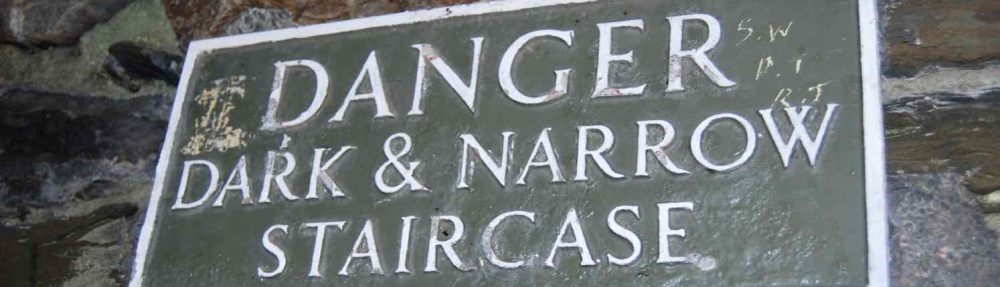
It’s easy to miss Baile Hill.  These days its one more set of steps on the way round York’s city wall, though there is a handy plaque with an explanation about building technique for motte and bailey castles.

Archeological survey in the 1970s revealed that William utilised the remnants of earlier fortifications, a practice seen elsewhere including the Tower of London and Colchester Castle where he used Roman fortifications.  At Almondbury in the West Riding the Normans made the most of an Iron Age Hill fort.  In this case, as in London and Colchester,  there are Roman remains buried deep within the motte. The archeologists also discovered the remnants of a timber palisade and a wooden building that dated from the twelfth century along with assorted small medieval finds.

The castle was no longer required by the early fourteenth century and by 1322 it had become part of York’s city wall. There is further recorded reference to it as there was some debate about who had responsibility for the upkeep of that part of the wall.  Edward II ordered the city’s defences to be repaired, not surprising given the Scots had the upper hand in the Scottish Wars of Independence at the time.  The land and stretch of wall that Baile Hill was part of lay in the bishop’s remit, hence the other name for the area Bishops Hill. In the end the archbishop William de Melton complied, albeit unwillingly.

Leland, the Tudor mapmaker, was not impressed with the remnants of the castle when he visited “ it is of no very great quantity.”

The find on Baile Hill that intrigues me most is an early nineteenth century discovery  of a hoard comprising  silver pennies of Edward the Confessor and coins from the early part of William I’s rein.  (‘The Old Baile’, An Inventory of the Historical Monuments in City of York, Volume 2: The Defences (1972), pp. 87-89. URL: http://www.british-history.ac.uk/report.aspx?compid=125178 Date accessed: 27 July 2014.).    Who buried them and why did they not return for their savings?  Was it a Norman soldier who met a sticky end in 1069 or was it a local who buried his or her savings to secure them from the Normans?


The Heimskringla Saga

reading linkEngland became a prize for the taking when Edward the Confessor died on 5th January 1066 England.  The man on the scene, Harold Godwinson lost no time staking his claim but his brother Tostig, furious not to be reinstated to the Earldom of Northumbria attempted to take the throne for himself.  First he crossed the channel with a fleet of sixty  ships from Flanders.  He initiated his attempted invasion by attacking Harold’s lands on the south coast.

Harold proved equal to the occasion when Tostig finally fled he had only twelve vessels remaining.  Harold 1: Tostig 0.

Tostig fled via Scotland to Denmark and then on to Norway where he and King Harold Hardrada – the Hard Rider- prepared another invasion.  In September 1066, when the wind stood against William of Normandy’s invasion fleet, a Scandinavian armada  of some three hundred and thirty ships sailed first for Scotland and then down the east coast towards the Humber Estuary pausing only to do nasty things to Scarborough.

On the 20th September 1066 having sailed up the Humber  and making anchor at Riccall, Hardrada advanced on York.

The Earls of Northumbria and Mercia (Morcar and Edwin) met the Scandinavians in battle just outside York.  The Battle of Fulford Bridge saw an English defeat.  The earls were lucky to escape with their lives.  The best primary account of the battle can be found in the Heimskringla Saga.

It also offers the best account of the Battle of Stamford Bridge which is sometimes described as Harold’s Saga.  Harold hearing of the invasion made a forced march north and caught Hardrada and his brother by surprise and proceeded to beat them – having first of all overcome a beserker who occupied the bridge at Stamford Bridge until one of Harold’s men crept under the bridge and speared him from below (nasty but typical of sagas). Harold 2: Tostig 0.

Having said all that the words of the saga weren’t committed to paper – or parchment- until 1225 by Snori Sturlson, a story teller and historian in the the Scandinavian skaldic tradition, who wrote a chronicle of the Kings of Norway.  As A L Binns  comments:

The earliest survIving Norse account of the events of 1066 is
probably the brief passage from Grkneyinga saga. The four long
Old Norse accounts of Stemford Bridge here compared for the first
time in English are by no means independent either of each other,
or of English sources. So one should not think of a single account
(usually Heimskringla, of which many translations already exist) as
‘the saga account’; and one should not regard them as contemporary
sources, but rather the work of historians who had very definite
views on the characters and motives ofthe participants and selected
their material in order to express them.

Binns, A.L. (1966). East Yorkshire in the Sagas. Hull: East Yorkshire Local History Society p.5

The full text including the sagas can be accessed by clicking on the image at the start of this post.  I’ll be using this image in future to sign post links to a range of texts – and indeed any other images of folks reading that I come across.


Rebellion in the North

Clifford's TowerWilliam faced a rebellion each year for the first five years after his conquest of England in 1066.  The problem for the Saxons was that their uprisings from the West Country to Northumbria via Herefordshire were localised.  There was no one central figure to unify and organise resistance.

Earls Morcar of Northumbria and Edwin of Mercia were powerful and politically dangerous men.  In part their failure to march south to support King Harold in 1066 had led to his defeat. They’d submitted to William along with Edgar the Atheling in late 1066 at Berkhamstead but they swiftly became dissatisfied with their new lord and rebelled against him in 1068.  It couldn’t have come as much of a surprise to William given that he’d taken them with him to Normandy in 1067 amongst the hostages he demanded. Perhaps it was his suspicions about the northern earls that led to him not promoting a marriage between Edwin and one of his daughters and perhaps (that’s many perhaps’s) it was for this reason that Edwin and Morcar decided to revolt, although it could have been William’s new taxes that did the trick.

In any event, William marched north via Warwick and Nottingham.  Resistance crumbled and the two earls submitted again. There is no evidence that the two men took part in any further uprising in the north.  Edwin managed to get himself killed by his own men in 1071 when he left William’s court once more and headed off towards Scotland.  Morcar took part in the uprising in Ely and ended his days a prisoner of the Normans.

The inhabitants of York seeing which way the wind was blowing in 1068 sent hostages and the keys to the city before William could arrive to express his irritation.  William  did what he always did when he wanted to stamp his authority on an area.  He built a motte and bailey castle in York and left a garrison of five hundred men to guard it.

The north did not remain at peace for long.  In January 1069 William’s man Robert de Commines  was burned to death in the Bishop of Durham’s house by an angry mob who had already slaughtered his men according to the Orderic Vitalis.  The people of York were not slow in getting in on the act.   The garrison withstood the attack. The Victoria County History for York records,  “Edgar and his supporters began an attack on the castle, whence the sheriff William Malet reported to the king that in default of assistance he would be driven to surrender.”

If one castle is good then two must be better!  William had a second castle built (Bailes Hill) which he gave into the care of William Fitz Osbern (the Earl of Hereford) before heading back south to Winchester.

There was a brief third uprising that was swiftly suppressed by Fitz Osbern.

At this point you’d think that the citizens of York would have had enough but in August 1069 King Sweyn of Denmark,  who had formed an alliance with Earl Waltheof of Northumbria, anchored his  fleet of 240 vessels on the Humber. This was a much more sustained and serious attack upon William’s rule.

The Normans facing the combined forces of the Danes and the northerners took refuge in their two new castles.  They attempted to clear a field around the castles by burning the nearby houses.  It has to be said that it doesn’t seem wildly clever to believe that in a city of wood and straw that fire can be controlled.  It certainly wasn’t in this case.  Even the Minster found itself being scorched.  According to Florence of Worcester the town was still burning two days after the initial conflagration.


But then again the Normans knew that they were fighting for their lives.  One of the castles sheltered the sheriff’s wife and children.  The slaughter was terrible.  Waltheof  was remembered by later generations in song for slaying Normans one after another with his battle-axe. William of Malmesbury’s account is according to the Cambridge History of English Literature taken from a ‘ballad’ or rather from a professionally worked song written by a Scandinavian scald or storyteller. William’s nice new castles were both destroyed.

Quite what the alliance of Danes and Saxons expected William to do next is unclear.  The Danes took themselves back to their boats with their booty and then set about a spot of ‘viking’ – William found one party of them plundering Lindsey but sent them scuttling back across the Humber.

What followed next wasn’t particularly pleasant if the chroniclers are to be believed and although William kept Christmas on 1069 in York there was little cause for celebration amongst the locals.  However, the North had been put in its place.

Not that their problems were over, far from it.  Malcolm Canmore, King of Scotland, took the opportunity to do a spot of his own harrying in the summer of 1070 and would return several times more before his death at the Battle of Alnwick.

For a chronology, which remains ongoing – I add dates as I come across them- double click on the picture.


St Margaret of Scotland

margaretMargaret, the sister of Edgar the Atheling, was the child of Edward the Exile  and Agatha, a German princess.  She was born in Hungary in 1046.  When Edward the Confessor took the throne he invited the last of the Royal House of Wessex to return from their exile.  Edward, Agatha and their children – Edgar, Margaret and Christina cam back to England but Edward died in suspicious circumstances shortly after their arrival.

Edgar submitted to William the Conqueror but became involved in a rebellion in 1068.  His family fled England.  They initially, possibly, intended to return to Hungary but bad weather drove their vessel to Scotland where Margaret married the King, Malcolm Canmore at Dunfermline Abbey in 1069.  Incidentally Canmore translates according to Alison Weir as ‘big head.’

The widowed king who was aged about forty loved his young Saxon bride and trusted her advice.  Queen Margaret became known not only for her piety but also for her learning. Malcolm could not read but such was his love for his wife that he would send her books to be ornamented with covers of gold.  She wielded so much power that she changed the way that the Scottish court behaved and dressed.  She bought the sophisticated continental behaviour of her childhood to Canmore’s court which included closer links with the Roman Catholic church.  During this time Mass was said in Latin in Scotland rather than Gaelic.  She was also the patron of Benedictine monks who arrived on Scottish shores for the first time.  Malcolm allow this wife to support the church and to guide the policies as to its practice.  She supported monks, hermits and spent much of her time and money providing charity to the poor and to orphaned children.

Inevitably relations with William of England were difficult.  Malcolm took advantage of the difficulties that William faced in his early years to extend the border of Scotland south so that it included most of Cumberland.  Malcolm was killed at the Battle of Alnwick along with Margaret’s eldest son Edward in 1093.  She died three days after receiving the news of her bereavement in Edinburgh Castle which was being besieged by Malcolm’s brother Donald Bane on 16th November. Margaret’s remaining sons escaped from the castle in a thick mist along with the body of their mother which they carried to Dunfermline Abbey where it was buried as she had wished.  It was she who’d commissioned the ferry that crossed the Firth of Forth taking pilgrims to the abbey.

Margaret bore Malcolm Canmore  eight children including Edward.    Her daughter Edith married one of William the Conqueror’s sons (King Henry I) and took on the Norman name Matilda.  Her other daughter Mary married the Count of Boulogne and her daughter (Margaret’s granddaughter married King Stephen becoming yet another Queen Matilda.)  One son, Ethelred, became the Abbot of Dunkeld while four more sons became kings of Scotland in their turn – Edmund, Edgar, Alexander I  and  David I.

For further information including St Margaret’s Chapel in Edinburgh Castle the Freelance History Writer http://thefreelancehistorywriter.com  has a great entry about the life and times of a Saxon Princess who became a queen and a saint.


Odo, Bishop of Bayeux and Earl of Kent

B_T_, 55, Bishop Odo in battle_jpgOdo may have been made a bishop at the age of twenty but it have very little to do with a spiritual vocation.  Not only did William the Conqueror’s half-brother play an active military role but he was also notorious for his womanising and greed.

William, Odo and Robert of Motain shared a mother – Herleva, the tanner’s daughter.  William’s father, Duke Robert of Normandy, married Herleva off to Herluin de Conteville. The Bayeux Tapestry depicts Odo as playing a leading role in the planning and execution of the invasion of England in 1066.  Of course, given that he probably commissioned the embroidery it would relay that particular message.  He certainly supplied one hundred ships for the expedition and is depicted virtually sharing a seat with William at the feast before the battle.  He is shown on numerous occasions with his club or mace in hand during the battle.  As a cleric he was not supposed to spill blood – so bashing in his enemies skulls was an effective alternative.

In the aftermath of the battle Odo was given control of Dover where he managed to make himself unpopular by using the guildhall as his own place of residence and allowing a mill to be built at the mouth of the harbour.

In the spring of 1067 Odo took on the role of William’s deputy in England when William returned to Normandy.  So he played an active role crushing English revolts in East Anglia and in the north of the country.

Perhaps it’s not surprising that he became, according to the Domesday Book, one of the wealthiest landholders in the country.  He held; 184 lordships, manors in twelve other counties besides Kent and had an income somewhere in the region of £3,000 a year.  In fact, the Domesday Book shows him to be the richest tenant-in-chief in the kingdom by far.

The Anglo Saxon Chronicle and the Orderic Vitalis make clear that his spiritual capital was rather less significant describing the bishop as ‘destitute of virtue,’  ‘a ravening wolf,’  ‘ambitious,’ ‘rapacious,’ ‘greedy,’ ‘ruthless,’ ‘arrogant’ and ‘tyrannical’ – in short a real charmer.


Unfortunately for Odo, his ambition matched that of his half brother and it was discovered that the Bishop of Bayeux was plotting to become pope.  William locked his brother up and he was only released upon William’s death.  By way of gratitude Odo led a rebellion in 1088 against William Rufus in favour of Robert Curthose, William’s elder brother who was Duke of Normandy at that time.

Odo never returned to Britain, something for which the people of Kent were probably deeply grateful.  He died and was buried in Palermo, Sicily on his way to the First Crusade.

To find out more about the chronology of the period click on the picture to open the page relating to the eleventh century in my ‘timeline of history’ or use the tabs at the top of the blog.

Eldred of Workington – an enigma.

norman frenchWho was Eldred of Workington?

Ivo de Taillebois was succeeded by Eldred or Aelfred of Workington. He’s one of those people in history who remain elusive. We’re not sure who he was – or even what his first name might have been- or who he married. We do know that he had a son called Ketel Fitzeldred who went on to inherit the estates in and around Kendal.

Eldred is not a Norman name – its Saxon. This raises some interesting questions as to how he assumed Ivo de Taillebois’s lands.

It is possible that he might have been Ivo de Tailbois’s son by his first marriage to Elgiva, daughter of Ethelred (of Unready fame). He certainly wasn’t a young man if this was the case because she fled to Normandy during the reign of Canute. Further more, there is some dispute as to who his mother was and even whether he was Ivo’s son.

It is plausible that Eldred took on the Taillebois name because he gained lands previously associated with Ivo.  This is the most straight forward of the suggestions but is, as these things tend to be, complicated by the consideration that his title was cemented through his marriage to one of Ivo’s daughters – possibly Beatrice according to some secondary sources. However, we know that Beatrice married Ribald who was the brother of Alan the Red of Richmond.  History also tells us that Ribald eventually took himself off to St Mary’s Abbey in York following the death of Beatrice – which rather puts a crimp in the plausibility of the argument that Eldred married Beatrice; so another daughter perhaps?


The fact is that studying Eldred is like trying to do a jigsaw puzzle without a picture and without all the pieces.  One piece of the jigsaw that we do have come from the records of Cockersand Abbey near Lancaster  which identifies Eldred as Ivo’s son. But which is it? Son or son-in-law? Is it even the same person?  Yes, definitely a case of ever decreasing circles…and potential fuel for the historical novelist.

Eldred (whoever he was) is  a reminder that the Normans, Saxons and Norse peoples intermarried both before the Norman Conquest and after. There is also the intriguing possibility – yes, there’s that word again- that he was neither son nor son-in-law but simply a Saxon who’d accepted the Norman invaders and had been given the lands around Kendal when Ivo popped his clogs in the hope that a local might be able to rule the troublesome northerners of the region on behalf of his Norman overlords….three intriguing options: all offering a degree of plausibility and none of them having sufficient evidence to answer the question.

Ivo de Taillebois

norman frenchIvo de Taillebois arrived in England in 1066 with William of Normandy. Accounts are not clear cut as to who his parents were, Fulk of Anjou is a possible contender for the title. There is also a suggestion that like William, Ivo may have been illegitimate.

Many of the records related to Ivo are vague or lost.  One thing is clear.  He did well from the invasion. He gained parts of Lancashire, Westmorland and also Lincolnshire. He became Sheriff of that County two years after the invasion and features as an extensive landowner in the Domesday Book. There is some debate as to how Ivo acquired Kendal or Kendale, which later became a barony. The Strickland sisters say that he married a Saxon Noblewoman, Lucy, Countess of Chester, sister of the earls Edwin of Mercia and Morcar of Northumbria. Lands in Kendal would have come to him through his marriage but it is also evident that he was given lands by William Rufus. It is certain that he gave the church in Kendale to St Mary’s Abbey in York. It should also be added that the Scots were only driven out of Cumbria in 1092 – so Kendal was no sinecure.  The remains of his motte and bailey castle can be viewed at Castle Howe, the stone castle is from a later period.


But back to Lucy. She held lands in and around Spalding. This may have been part of the reason, along with his role as King’s man, that Ivo found himself in Ely taking up arms against Hereward the Wake in 1071. Lucy’s brothers were also caught up in the rebellion against the conqueror – making their lands forfeit- so Ivo seems to have done quite well out of it all. No one seems to have recorded what Lucy thought of all this or the fact that she appears to have been married not once, not twice but thrice (her third husband being Ranulf le Meschin) dying in 1131. One thing is clear though Lucy has disappeared into history leaving some very fragmentary and tantalizing historical evidence behind her.


In addition to Kendal, Ivo was also overlord of Furness. The man’s family tree is complicated. Evidence suggested that he may have been married twice before marrying Lucy. Other evidence taken from Ingulph de Croydon- the Croyland Chronicle- and reproduced in Some Records of Two Lakeland Towns by Brydson paints an unappealing picture of Kendal’s first Norman lord:


“All the people in his domains were very careful to appear humble before Taillebois, and never to address him without bending one knee to the earth, but though they were anxious to render him all homage, he made no return of goodwill. On the contrary he vexed, tormented, and imprisoned them, and loaded

them with daily cruelties ; his truly diabolical spirit loved evil for evil’s sake. He would often set his dogs to pursue other men’s cattle, would scatter the animals far and wide, drown them in the lakes, maim them in various ways, and make them unfit for service by breaking their limbs or backs. Ivo was not only absolved, but praised for all he had done in extortion, pillage, and murder.”


Sounds charming!  And he was a forebear of Katherine Parr, Henry VIII’s sixth queen and also of George Washington.

William le Meschin

shiled ringRanulf le Meschin, Earl of Chester and his brother William le Meschin were the sons of Ranulf de Briquessart and Matilda. Meschin simply means ‘younger’ so Ranulf the Younger was used to identify the son from the father. William ended up with the same name because he was very much his brother’s man.

Ranulf was given much of Cumberland by William the Conqueror. Cumberland was then divided into eleven baronies in an attempt to control the region. The Cumbrians took to their Lakeland hills and fought a guerrilla war against their invaders.  This meant that the Normans could, initially at least, only secure the coastal and less mountainous regions.  Rosemary Sutcliffe’s excellent  book entitled The Shield Ring explores the history of the region and the role of Ranulf – she was not his greatest fan. There’s also a book entitled The Secret Valley which covers the same period and the battle of Rannerdale. The Scots took advantage of the ensuing difficulties  to extend their boundaries south.  It was no sinecure when Ranulf gave William the baronies of Copeland and Gilsland.  The latter meant he was responsible for guarding the northern approaches to Carlisle.  It proved a task too far.   He built a castle at Egremont but lost Gilsland. He was compensated for the loss of Gilsland by Henry I with land in Allerdale. He also acquired land through his wife Cecily de Rumilly, Lady of Skipton.


As William acquired land he also founded religious houses including St Bee’s Priory in 1120 which was a daughter house of St Mary’s in York. It was founded after the sinking of the White Ship that saw Henry I’s only legitimate son drown on a journey between Normandy and England. Richard, Earl of Chester -William’s cousin- died in the same disaster. The charter for St Bees prays for the souls of the drowned men.  In part he was demonstrating his religious belief and buying ‘time out’ from purgatory but he was also showing support for foundations who enjoyed the patronage of kings.   Thurstan, who was the Archbishop of York would have welcomed an alliance with a strong northern magnate such as le Meschin so perhaps it is not surprising that he came in person to bless St Bees.


In addition to giving land and funding buildings William went on the First Crusade and was at the Siege of Nicaea.


William: soldier, invader, crusader, castle builder, monastery endower- call him what you will,  died sometime between 1130 and 1135. He left a son called Ranulf but he died shortly after his father leaving the great estates that le Meschin had built to be divided between William’s three daughters.

Edwin’s Place

KSCN0001King Edwin’s kingdom stretched from Edinburgh – Edwin’s Town- to the River Trent.   This was the Kingdom of Northumbria He was accepted as the High King or Bretwalda.  Following his marriage to Ethelburga of Kent (daughter of Ethelbert) in AD 627 he became Britain’s second Christian king. Bede described Edwin  as more powerful than any earlier king and as time passed he extended his kingdom to the Isle of Man and Anglesey.

His invasion of North Wales resulted in Cadwallada of Wales and Penda of Mercia forming an alliance against him and invading his kingdom in 633.  He and two of his sons were killed at the Battle of Heathfield  which could be near Cuckney or alternatively at Hatfield near Doncaster – though it would be unlikely for the next part of the story to be true if this were the case.

Edwin’s comrades carried his body from the scene of the battle and buried it in the forest.  They carried his head back to St Peter’s in York., though another version has Cadwallada displaying Edwin’s head on the ramparts of York’s city walls following a veritable  Saxon-killing spree.  In either event the battle was bloody and decisive.


Eventually it was decided that Edwin’s body should be buried in Whitby Abbey where his niece St Hilda was abbess.  By that time people were calling him a saint.  The spot where his body had been buried was deemed a holy place and a wooden chapel built on the site.  This became known as the ‘place of Edwin’ or Edwinstowe.

Edwinstowe was part of the royal manor of  Mansfield in 1066.  Inevitably, given the Norman kings love of hunting the land around Mansfield and Edwinstowe became part of a royal forest.  The Domesday Book of 1086 records the church, a priest and four bordars – these were essentially slaves working the priest’s land.  Twenty years later there was even less land being cultivated.


In later times King John, who had a hunting lodge at Ollerton, paid a priest to live in a nearby chantry to say prayers for his soul and for the souls of the people he had wronged.

The local people probably felt they ought to have been included in the number as they were bound by the strict forest laws that protected the timber and the game of royal forests.   Those caught breaking the law were taken before the Forest Court or Eyre which was held every six or seven weeks.  More serious offences were tried at the Nottingham Eyre.