
 Bess of Hardwick disowned her eldest son Henry but he had still inherited Chatsworth despite the fact that Bess entailed what she could to William and his heirs. Due to his debts Henry sold Chatsworth to his brother William.
William was not what might be called dynamic. He was still living at home in Hardwick with his mum when he was a middle aged man with a family. Nor was he interested in a London based career as a courtier. Instead he concentrated on the role of administration traditionally allotted to the gentry. He was for example the Lord Lieutenant of Derbyshire.
 In 1605 thanks to the auspices of his niece Arbella Stuart he became a baronet. In 1618 with the aid of £10,000 paid to James I he became an earl. In addition to his land holdings in Derbyshire he was also investing in foreign trade – the East India Company, the Muscovy Company, the Bermuda Company and also in the settlements in Virginia.
The first earl was Anne Keithley of Yorkshire with whom he had three children. Two of them died young. His daughter Frances married the first baron Maynard. His second wife was also from Yorkshire and this marriage produced one son, John, who was knighted in 1618 when Prince Charles became Prince of Wales. He died soon afterwards.
William’s eldest son was another William, called Wylkyn within the family. It was intended that he should marry Christian Bruce of Kinross when he was eighteen. She was only twelve but the matter had been arranged to King James’ approval. The dowry was a very lucrative £10,000. The problem was that young William didn’t want a wealthy bride of the kind that his father and grandmother Bess might have approved nor was he unduly concerned about the first earl’s political aspirations. No, what William wanted was his mistress Margaret Chatterton who had been one of Bess’s ladies. It didn’t help that Christian was still a child to William’s eighteen years. Despite Wylkyn’s dislike of the marriage he was wed to Christian Bruce. The Devonshires would not be known for their love matches.
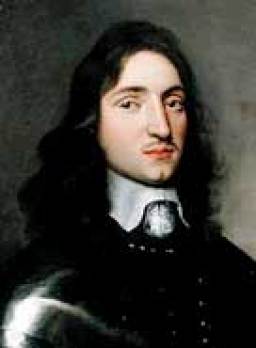
 By the time he was in his twenties young William was a polished courtier (pictured left). He also had a reputation of brawling, drinking and womanising. He also spent money as though it was water. This Cavendish was behaving as though he was a member of the aristocracy.
Perhaps in a bid to curtail his son’s rather un-Cavendish habits William senior appointed him a new tutor in the form of Thomas Hobbes. The reason for this was that married men could not attend university and William senior saw that his son required a layer of culture to add to his fashionable persona. The pair were sent on a tour of Europe. These days we tend to think of the Grand Tour as an eighteenth century phenomenon but despite the on-going religious wars the English were keen to visit foreign climes – especially when Prince Charles (to be Charles I) made it a fashionable thing to do.
In addition to all the gallivanting he found time to become the MP for Derbyshire and on account of the Cavendish investments was also Governor of the Bermuda Company. However he had managed to get himself into a huge amount of debt and ultimately an act of parliament would have to be sought to break Bess’s entail on part of the estate so that land could be sold to save the rest of the estate.
The second earl died in 1628 in London of “excessive indulgence.” His heir, another William, was a minor so for a while at least the Cavendish lands were in the hands of Christian Bruce who was by now thirty-two-years old and a canny woman managing to secure full wardship for her son. An economy drive was instituted and Thomas Hobbes was given the boot, only returning when finances recovered and there was further need for a tutor. William was knighted at Charles I’s coronation in 1625. His royalist credentials are evidenced by the fact that he spoke against the attainder on the Earl of Strafford in 1641. The network of family ties was strengthened with a marriage to Elizabeth Cecil, daughter of the Earl of Salisbury in 1639.
 Which brings us to the English Civil War. Christian Bruce was a friend of Henrietta Maria. The Cavendishs were Royalists. In 1642 the 3rd Earl presented himself in York with his younger brother Charles who joined with Prince Rupert and his cavalry, took part in the Battle of Edgehill and ultimately became the Royalist commander for Derbyshire and Lincolnshire prior to his death at the Battle of Gainsborough. Meanwhile the earl, no doubt on his mother’s advice, took himself off to Europe until 1645 when he compounded for his Royalist sympathies – paid a fine of £5000 and returned to live in England at Leicester Abbey where his mother had her residence (it had been purchased by the first earl in 1613) and from there he went to Latimer Place in Buckinghamshire until the Restoration when he returned to Chatsworth.
The third earl laid the foundations for Chatsworth’s library, was a fellow of the Royal Society and a friend of the diarist John Evelyn. He does not seem much like his father, or indeed his son.
 Born in 1641, yet another William became the fourth earl upon his father’s death in 1684. There had been an older brother but he died in his infancy. The third earl had preserved the Cavendish estates largely by keeping his head down and letting his cousin (William Earl, Marquis and the Duke of Newcastle) of and younger brother get on with Royalist soldiering. The fourth earl was described by Bishop Burnet as being of “nice honour in everything except the paying of his tradesmen.” Like his father he had been sent on the Grand Tour and like his Uncle William (Newcastle) he fancied himself as a bit of a poet. It is easy to see how this particular Cavendish fitted into the court of King Charles II who was also known for his late payments. Like his monarch Cavendish also had a reputation for womanising. He had several children by a mistress called Mrs Heneage. Apparently Charles II had told Nell Gwynn not to have anything to do with him – re-arrange the words pot, kettle and black into a sentence of your choice. It could be that Charles took against William Cavendish because he publicly snubbed the Duke of York (James) at Newmarket on account of his catholicism. Aside from seduction the fourth earl also seems to have spent a lot of time picking fights and duelling.
In 1661 the fourth earl entered Parliament and the following year married Lady Mary Butler the daughter of the Duke of Ormonde. Ormonde had been at the forefront of the Irish campaign against Oliver Cromwell and had been with Charles II in exile. Upon the Restoration he became a key political figure. In this instance the Cavendish alliance was for political advancement.
Somehow or other the brawling, womanising, verse-writing earl became a serious politician. By the 1670s he was using his position to wage war on behalf of Parliament against James III. This particular Cavendish was not a die-hard royalist like his father or uncles). The Fourth earl was a Whig – he was anti-court and anti-Catholic and, of course alongside that, he was first and foremost a Cavendish.
Part of the reason for his being involved in the Glorious Revolution, to depose James III in favour of his daughter Mary and her husband William of Orange, was because of a dispute over land. Colonel Culpepper, a supporter of James III, had made a claim to some Devonshire lands stating that they should have come to him as part of his wife’s dowry. The pair had a brawl when Culpepper called Cavendish’s loyalty to the Crown into question and Cavendish called Culpepper a liar.Culpepper ended up in the Marshalsea Prison was released and the pair met again. Culpepper having been imprisoned for fighting refused a further confrontation so the earl grabbed him by the nose and dragged him from the room before beating him about the head with his cane. It was the earl’s turn to be imprisoned unless he paid a £30,000 fine. The earl had no intention of paying so he simply walked out of the prison gates and headed for Derbyshire. A warrant for his arrest was issued but in the short term everything was smoothed out with a letter of apology and an I.O.U. – which the earl clearly had no intention of paying.
It was a short step from that event to conspiracy in Whittington and a letter inviting William of Orange to come to England – William Cavendish was able to stand up for Protestantism and get one over on Colonel Culpepper. It also made him one of the so-called “Immortal Seven” having signed the letter inviting William to come and take the crown. The new king was very grateful to the fourth earl who would shortly become the First Duke of Devonshire. The two times great grandson of Bess of Hardwick had moved the family further up the social hierarchy.
Hattersley, Roy. (2014) The Devonshires: The Story of a Family and a Nation. London:Vintage Books
Pearson, John. (1984) The Serpent and the Stag. New York: Holt Reinhart

 Initially Brereton tried to take hold of Chester for Parliament but was unable to capture it. Instead having taken Nantwich for the Parliamentarian cause in 1642 he made that his headquarters. From there he ranged along the Welsh marches on Parliament’s behalf and down through Cheshire to Stafford. He came with Sir John Gell of Hopton in Derbyshire to the siege of Lichfield and was concerned at the later siege of Tutbury that his colleague was far too lenient on the Royalist defenders. Across the region Brereton was only defeated once at the Battle of Middlewich on December 26 1643 but he swiftly recovered from this as he had to return with Sir Thomas Fairfax to Nantwich when Sir George Booth managed to get himself besieged by Lord Byron and Cheshire was more or less completely in the hands of the Royalists not that this stopped Brereton from establishing an impressive network of spies loyal to Parliament.
 In January 1644 Sir Thomas Fairfax crossed the Pennines with men from the Eastern Association Army. On the 25th January his men were met by a Royalist army headed by Byron who was defeated. The place where the two armies collided was Necton but the disaster for the royalists has become known in history as the Battle of Nantwich. It meant that the king could not hold the NorthWest. Even worse Royalist artillery and senior commanders were captured along with the baggage train. None of this did any harm to Sir Thomas Fairfax’s reputation nor to Brereton who had command of the Parliamentarian vanguard.
 From there Brereton became involved in the siege of Chester – at Nantwich Byron had been outside the town whilst at Chester he was inside the walls. In September 1645 Bristol in the command of Prince Rupert surrendered. The only remaining safe harbour to land troops loyal to the king was Chester. Lord Byron had withdrawn there following his defeat at Nantwich and Brereton had followed him. Byron held the river crossing and in so doing was denying the Parliamentarians a way into North Wales which was Royalist.
 Let us return today to the Royalist summer of victories in 1643. It was really only in the east of the country that events did not go all Charles I’s way. On 20 July 1643, Lord Willoughby captured Gainsborough in Lincolnshire for Parliament. This meant that the Earl of Newcastle could not now communicate so easily with the royalists at Newark and he could not simply march south expanding royalist territory. The Committee of Safety scratched their various heads and then sent Oliver Cromwell and Sir John Meldrum from the Eastern Association Army to back up Lord Willoughby as he was being threatened by the Royalist military commander – Colonel Charles Cavendish – who was the nephew of the Earl of Newcastle.
 As with all civil wars some people change their minds. Having described the Hothams (father and son) shutting the city gates of Hull in Charles I’s face in 1642 it comes as something of a surprise to discover that John Hotham (junior) was executed for treason on 1st January 1645 for conspiring to let the royalists in! John Hotham senior was executed the next day. Unfortunately for them their coat turning tendencies had been proved by the capture of the Earl of Newcastle’s correspondence after the Battle of Marston Moor.
 1644 was a year where no one gained the upper hand and the casualties of war grew. The arrival of the Scots in the Civil War ultimately tipped the balance of power in Parliament’s favour but as a result of amateur approaches to warfare the Second Battle of Newbury failed to end matters once and for all. This had the knock on effect of ensuring the rise of the New Model Army and Cromwell’s Ironsides.
 Meanwhile two of the Parliamentarian generals were at loggerheads with one another. Robert Devereux, 3rd Earl of Essex felt that Edward Montagu, Earl of Manchester (pictured above) was getting the better part of the deal from Parliament. Montagu, married to a cousin of George Villiers in the first instance married for a second time to Ann Rich, the daughter of the Earl of Warwick – the Parliamentarian Lord Admiral. He turned from Court towards a more Puritan way of thinking and did not support the king in the Bishop’s War. He was also the peer who supported John Pym at the opening of the Long Parliament and was the one member of the House of Lords who Charles I wanted to arrest at the same time as the five members of the House of Commons. In 1642 he was on his third wife (another member of the Rich family) and had become the Earl of Manchester upon his father’s death. Manchester had been at the Battle of Edgehill but his was one of the regiments that had fled the battlefield. After that he was eventually appointed to the command of the Eastern Association Army – regiments covering Hertfordshire, Suffolk, Norfolk, Essex and Cambridge. By the end of 1643 East Anglia was very firmly in Parliamentarian hands and Manchester’s men had broken out into Lincolnshire and Yorkshire. This should be contrasted with Essex and the Western Association Army performance. It is perhaps not surprising that Parliament effectively allowed Manchester to by pass Essex and to liaise with the Scots and with the Fairfaxs.
 Fairfax opposed Goring on the right wing: Goring 1 – Fairfax O. Goring and his men got side tracked by the baggage wagons. Crowell was on the left wing facing Lord John Byron (pictured right): Ironsides 1 – Royalists 0. Prince Rupert turned the fleeing royalists round and sent them back into battle. Rupert and his men were evenly matched with the Ironsides. Essentially they hacked one another to a standstill at which point the Scottish cavalry charged in on the Royalist flank and scattered them.
 Essentially we have covered the fact that during 1643 the Earl of Essex’s parliamentarian Western Association army did not have a great deal to shout about. Meanwhile in Yorkshire the same Commissions of Array were delivered and like their counterparts in the SouthWest the gentlemen of Yorkshire and the Midlands were forced to decide where their loyalties lay. Hull and Leeds were important towns. Both declared for Parliament, Hull rather noticeably by refusing to let the king into the town in 1642.
 By contrast the Parliamentarians had men whose names reverberate through history. Sir John Hotham was the governor of Hull; Sir Hugh Cholmley led the garrison at Scarborough and then in the West Riding there was Ferdinando Fairfax (pictured right) and his son Thomas (pictured at the start of this post). The only difficulty was that Hotham didn’t appreciate Fairfax being the senior commander. The Fairfaxes controlled the West Riding and extended their hold from there to Tadcaster. Their main opponent in the West Riding was Sir William Savile.
 Gloucester is one of the key locations for Parliamentarian and Royalist confrontation. It is the victory that Parliament desperately needed in 1643 and it is perhaps also written about by historians as much as it is on account of the fact that there’s so much primary source material to support the story. The Earl of Stamford arrived in Gloucester in about November 1642 and left a regiment there for its defence.
 It’s interesting that in January 1643 the king was still receiving petitions asking him to return to London and his parliament. A Parliamentary committee even visited Oxford where the king was based in order to promise him his safety if he returned to London.
 The royalist command in Cornwall was held by Ralph Hopton featured at the start of this post with his wife Elizabeth. In 1642 he and his men had driven the Parliamentarians from Launceston. Whilst Hopton was unable to secure Devon at this time, Cornwall was firmly royalist. This position was confirmed on the 19th January 1643 when Hopton won the Battle of Braddock Down and from there went on to besiege Plymouth which was in Parliamentarian hands. In early 1643 there were a number of skirmishes between both sides but places like Parliamentarian Exeter continued to petition and negotiate for peace between the warring factions. In London, Parliament urged the Devon Committee to raise more money and troops.
 t that point the Royalists realise that they could control the whole of the southwest. On the 24th July Prince Rupert (pictured above) and his men rock up outside Bristol (England’s second city at this time) and suggest very nicely that its Parliamentarian Governor Colonel Nathaniel Fiennes might like to surrender. Fiennes declines the invitation and on the 26th Rupert and his forces storm Bristol. By nightfall Fiennes asks for terms and at the beginning of August King Charles visits. Fiennes will ask for a parliamentary investigation into the fall of Bristol as he is widely castigated on account of the fact that Waller has far more success with Gloucester than he has with Bristol – Gloucester requires its own post and besides which is just outside the region I am covering today.
 Robert Devereux was the son of the Queen Elizabeth’s favourite – the dashing one that managed to get himself executed for treason in 1601. Grandpapa on his mother’s side was Sir Francis Walsingham, Elizabeth’s spymaster. Obviously having been attainted for treason the entire Devereux family, including young Robert who was ten at the time of his father’s misdeeds, were tainted as being of bad blood and all property returned to the Crown.
 the grand tour. Whilst he was securing a gentleman’s education Frances Howard took up with the king’s favourite Robert Carr and married him instead having divorced Robert for impotency in 1613 (and I should imagine that no 20 year-old wants that particular label)- France’s marriage would end in murder, a visit to the Tower and a Jacobean scandal that historians are still writing about but that’s beside the point. The marriage ended amidst much hilarity and popular balladry. Robert insisted that even if he was impotent so far as Frances was concerned he was more than capable with other ladies of his acquaintance. To add insult to injury, Frances who had been carrying on with Robert Carr, was declared to be a maiden – the mirth this enjoindered can only be imagined.
 There are three earls of Essex during the Tudor/Stuart period – the title was not used after the third earl’s death in 1646 until the Restoration. The First Earl of Essex was Walter Devereux – he is associated with Tudor rule in Ireland and is more famously Lettice Knollys’ husband. Lettice was the daughter of Catherine Carey – making her the grand-daughter of Mary Boleyn. Historians speculate whether Catherine was the daughter of Henry VIII – Lettice certainly looked rather a lot like her cousin Queen Elizabeth I. In fact Lettice managed to get into rather a lot of trouble with her cousin after the first earl of Essex’s death when she secretly married Elizabeth’s long time squeeze, Robert Dudley, Earl of Leicester.
 The second Earl of Essex was Robert Devereux. He was Walter and Lettice’s fifth child and after Robert Dudley’s death became a favourite with the aging Elizabeth I. Like his father he was associated with Ireland. His campaign was not a rip-roaring success from Elizabeth’s point of view. Handsome but petulant the earl rebelled in 1600 having already sailed pretty close to the wind when he returned from Ireland and burst in on Elizabeth having been expressly forbidden from crossing the Irish Sea and winning no friends when he saw the queen without all her finery. He was executed for treason on 25th February 1601 – leaving a young son, also called Robert, who would eventually become the third earl.
 I am currently feeling slightly out of kilter time wise as I have classes running on topics ranging from Kathryn Swynford to the English Civil War with a side interest in the names on my local war memorial – the research for which in the hundredth anniversary is proving fascinating. I almost feel that I should do more blogs to give every area of History an airing!