Jean de Wavrin, Lord of Forestel

De Wavrin’s Chronicle – The British Library Board: Royal 15 E iv vol 1, f. 14

De Wavrin was born at the turn of the fifteenth century. Jean’s father was killed at Agincourt as was his brother. Jean having lost his family, and being an illegitimate descendent of the house of Artois, continued to fight alongside the French army until 1435 when he entered into the employment of the Duke of Burgundy who was an ally of the English. Eventually de Wavrin retired from a career as a professional soldier, married and settled down with a wife in Lille. It helped that she was a rich widow.

He was an avid book collector and amateur chronicler. In effect history was one of his hobbies. From 1445 onwards he began to write a chronicle of English history in four volumes which he finished in 1455 with the death of King Henry IV. Before long he commenced a fifth volume and continued writing about the history of England until 1471 by which time he was on his sixth volume.

Wavrin’s work was not undertaken for patronage and as such the work is not only extensive it is also uncritical. The period covering the Wars of the Roses is not so disinterested. It should be remembered that de Wavrin favoured the House of York because of his association with Burgundy and its alliance with the Yorkist kings. He even presented a copy of his history to Edward IV which can, today, be found in The British Library.

http://www.bl.uk/manuscripts/FullDisplay.aspx?ref=Royal_MS_15_E_IV

What makes the chronicle unique is that he knew the people that he was writing about and presents the Wars of the Roses from a European perspective. What’s not helpful is that he is not always accurate- perhaps in part because he was not a fan of the Lancastrians. My current interest comes from his description of the relationship between Edward IV, his brother George and the Earl of Warwick and the role played by the Woodville family in the breakdown of the family relationship.

Robin of Redesdale or Robin Mend-all

In April 1469 parts of the north rose in rebellion against Edward IV. John Neville, the Earl of Northumberland – the Percy family having been displaced for a time – put down the rebellion killing Robin, if Polydore Vergil is to be believed. A second leader took on Robin’s authority and name and the rebellion continued. it’s worth pointing out that John was the Kingmaker’s brother and that the Kingmaker, a.k.a the Earl of Warwick, orchestrated the uprising. Amongst the rebels demands was the removal of the Woodville family from power.

The real identity of Robin is unknown. He may have been Sir John Conyers or his brother William. Sir John was Middelham’s steward, related by marriage to the Nevilles and would fight alongside the kingmaker at the Battle of Edgecote in July 1469. Conyers was one of the casualties of the battle. Equally, it seems unlikely that Warwick’s brother would put down a rebellion fermented by the Kingmaker. An alternative source for the uprising might be the Percy family who had suffered a serious setback at Towton when their rivals the Nevilles emerged victorious and the Lancastrian king was toppled from power. The north became a Neville stronghold and in 1464 Neville became the Earl of Northumberland – which did not go down well with the locals. It should also be added that the rebels weren’t keen on the tax situation. None-the-Less the Warkwarth Chronicle places the blame for the rebellion squarely on the shoulders of Warwick.

Part of the problem in terms of understanding the rebellion, or even rebellions, and its participants is that the chronicles are often written at a later date and/or by writers living in the south. The Croyland Chronicler was not a fan of anyone who lived north of the River Trent – which isn’t even the north in He-who-is-occasionally-obeyed’s opinion but then he comes from Cumbria and most of the country is the south so far as he’s concerned. The other problem is that there’s no record of trials – there is a set of records sent to Calais (remember Warwick was the Captain of Calais)

The Dacre beasts

The Dacre beasts on display at the V & A

Not royal but impressive none-the-less standing at 6ft tall. Thomas Lord Dacre fought at Bosworth. Fortunately for him he backed Henry Tudor. Three years later he eloped with the heiress Elizabeth Greystoke. Think I might want to do a bit more research about that – one person’s elopement is another person’s kidnap and abduction of an heiress. Anyway, Henry VII didn’t seem bothered about the abrupt nature of the union and in 1503 Thomas was knighted. Henry VIII made him a knight of the garter after the Battle of Flodden.

Dacre died in 1525 and the Dacre beasts were used for his funeral. All four of the animals were carved from a single piece of oak and its speculated that they were created before 1525 for a tournament of some description. They avoided disaster in 1844 when Naworth Castle went up in flames.

The creatures are the so-called Dolphin of Greystoke; a ram which is probably the Multon lamb; the red bull of Dacre and the de Faux griffon.

A Talbot

Lacock Unlocked: https://wshc.org.uk/lacock/lacock-unlocked/our-favourite-documents/item/the-talbot-dog.html

Talbots were medieval hunting dogs, apparently something like a beagle – short legs, long ears and a curling tail. Oh, and they were white. They may have been quite heavy and slow but no one is quite sure how they worked within a hunting situation because the breed no longer exists. Given the number of monarchs who seemed to have spent their time crashing around in the undergrowth for one reason or another it is not unreasonable to blog about them at this time. There is even a theory that William the Conqueror arrived with the breed of dog.

The Talbot Earls of Shrewsbury took over the title from the Montgomery family. Henry I removed the earldom from his rebellious subjects. The title was given by Henry VI to John Talbot who fought during the Hundred Years War in 1442. Talbots feature on the Shrewsbury Coat of arms as charges and as supporters.

more medieval animals -supporters, sigils, charges and livery badges

I’m changing tack slightly this evening having skipped through bestiaries and peered into menageries it’s now time to take a look at medieval royal animals in heraldic terms. Supporters usually appear in pairs holding a shield up. Charges are depicted on the shield and a sigil is the symbol that appears on a seal. Livery badges were personal devices. Hope this isn’t too boaring…

Yup – tonight its the turn of the white boar which was used by Richard, Duke of Gloucester who ascended the throne as King Richard III. It’s not entirely certain why Richard used a boar by preference. It is often suggested that it was a play on Ebor or York. Richard’s wife, Anne Neville, used a white boar as well but her livery badge was chained and muzzled and was in fact associated with the earldom of Warwick. It has even been suggested that Richard chose this symbol when he was little more than a child based on the carvings at St Mary and All Saints at Fotheringhay.

A quick search of the Internet reveals plenty of white boar related posts – so I’ll keep this one short. Richard’s boar turns up on his standard, as supporters in the York Minster, as a badge and on livery collars. It even turns up as graffiti (Carlisle Castle).

Henry III’s elephant

Matthew Paris, British Library (CCCC MS 16, f. ivr)

It’s neither medieval nor an elephant but Cardinal Wolsey owned a pet cat. Just thought I’d throw it in. Anyway, King Louis IX of France gave Henry III, his brother-in-law, an African elephant – as you do. Inevitably it was packed off to the Tower where Matthew Paris saw and drew it. The poor elephant did not survive long in medieval London. It arrived in 1255 but was deadly 1257.

Apparently the elephant arrived at its destination having been traded during the Crusades. Louis led a crusade to Egypt. Louis was presented with the elephant as part of peace negotiations. The elephant was sent to France, et voila.In 1254, Henry III who was in Gascony at the time met up with Louis and the elephant was hastily passed on. As Louis gave Henry the elephant whilst in France it was Henry who had to transport the beast home – it gave the Sheriff of Dover a bit of a problem as Henry delegated the task,

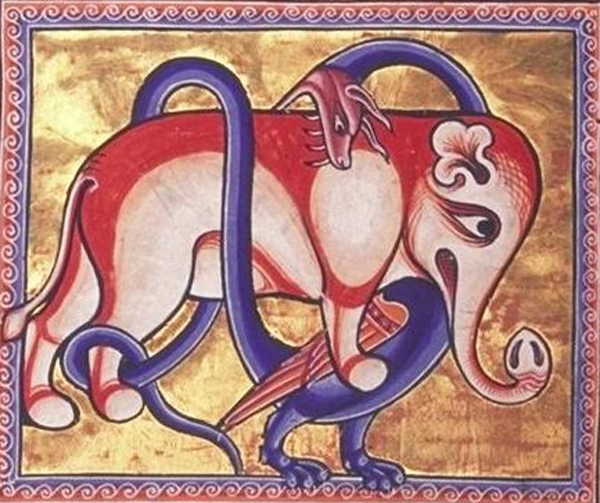
Meanwhile monastic writers described the elephant as a symbol of Christ and hope of redemption. The writers of bestiaries listening to tales from travellers convinced themselves that elephants lacked knee joints and that if they fell over they couldn’t get up again. Apparently dragons were fond of baby elephants …as a light snack and elephants were also afraid of mice.

The Aberdeen Bestiary – elephant and dragon in combat.

Matthew Paris and Henry III’s elephant Richard Cassidy and Michael Clasby

King Henry I’s porcupine

Henry I had quite a collection of exotic animals including a porcupine and some hyaenas which he kept at Woodstock. Thankfully he built a large wall around it. The local population may initially have thought that he was establishing a deer park – so it may have come as something as a shock when the hyaenas arrived with the lions, leopards and camels. Henry arranged for fodder to be strewn for his non carnivorous pets by Henry de La Wade of Stanton Harcourt who also came to have responsibility for the royal falcons.

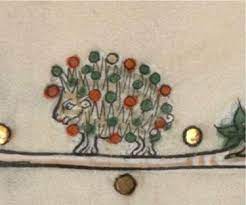
Which leaves us with the porcupine. It was a gift from William V of Montpellier who had gone on the First Crusade. Medieval bestiaries describe porcupines using their quills to spear fruit. They were also symbolic of sin -the fleshly ones apparently so an eminently suitable pet for womanising King Henry I. If you don’t fancy that particular sin othe bestiaries pinned avarice and covetousness on the porcupine and hedgehog – all those spikes collecting up everything around it.

Henry III would develop the menagerie Woodstock to form the basis of his own menagerie at the Tower of London which was initially founded by King John.

Grigson, Caroline, Menagerie: The History of Exotic Animals in England, 1100-1837, (Oxford University Press, Oxford 2016)

Poole, Austin Lane, From Domesday book to Magna Carta, 1087-1216 (Oxford University Press, Oxford, 1951)

Three camels and an ostrich

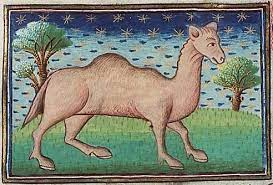
Nicholas Jone was an Italian merchant during the fifteenth century married to an Englishwoman. Like most men of his time he realised that patronage was essential. In 1442 or early in 1443 he went to Turkey and he came home with gifts – three camels and a turkey (bet he was popular during the voyage.). Henry VI was delighted with the new additions to the royal menagerie and gifted Jone the office of the brokerage of the exchanges and securities of carracks, ships, and galleys coming to England – if I’m honest I think I can see who got the better end of the deal.

They were not the only camels and ostriches to be given as gifts. Edward IV was presented with a camel and in 1472 sent to Ulster, ‘She resembled a mare and was of a yellow colour’.1

https://www.englandsimmigrants.com/page/individual-studies/i-saw-this-camel-and-thought-of-you

1 The Irish Digest, vol 36, issues 1-3, 1950, p.84

King Henry III’s polar bear

I know its not a polar bear!

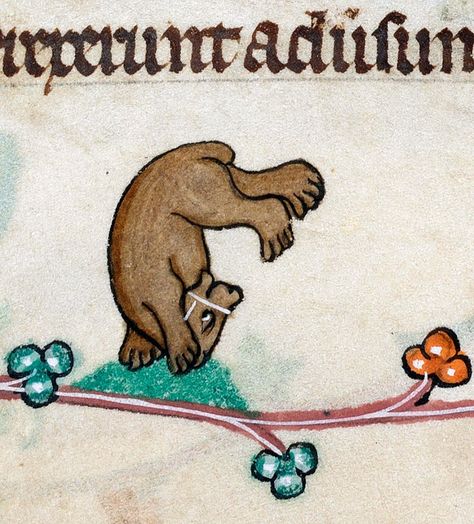
What do you give a Plantagenet monarch in 1251/52? Well if you are the king of Norway (Haakon IV) you send a large white bear – possibly a polar bear although such a thing would not have been recognised by writers at the time – hence the reference to white bear. The bear, whose name is unknown, was duly ensconced in the Tower which must have come as a surprise to the lions and before long the bear was catching his own fish in the Thames. In addition to fishing rights, Henry III ordered that London’s sheriffs contribute 6d a day to support the bear and a strong rope for the handler who had to muzzle the creature before leading him down to the river to allow the bear to swim- presumably the bear and the handler got on well as there are no references to the need for regular replacement handlers.

It’s possible that a local tavern took up the name the White Bear’ because of Henry III’s pet – but that’s only speculation.

Samuel Pepys’ lion

Tower of London, lions

Alright – I know that the seventeenth century is not medieval by anyone’s stretch of the imagination – however, I just couldn’t resist.

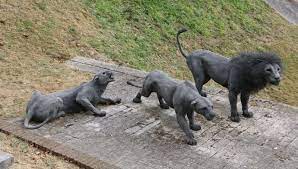
Samuel Martin, a consul in Algiers and husband of one of Samuel’s old flames, sent Pepys a ‘tame’ lion as a gift in 1674. Sam decided that the lion would be best accommodated in his admiralty office in much the same manner as any other moggy. He wrote with his thanks and the information that ‘as tame as you sent him, and as good company.’ The cub eventually grew too big to be accommodated in Sam’s office at Derby House and he joined the menagerie in the Tower of London. Samuel had written about visits to the zoo in 1660 to see a lion named Crowly who was very tame.

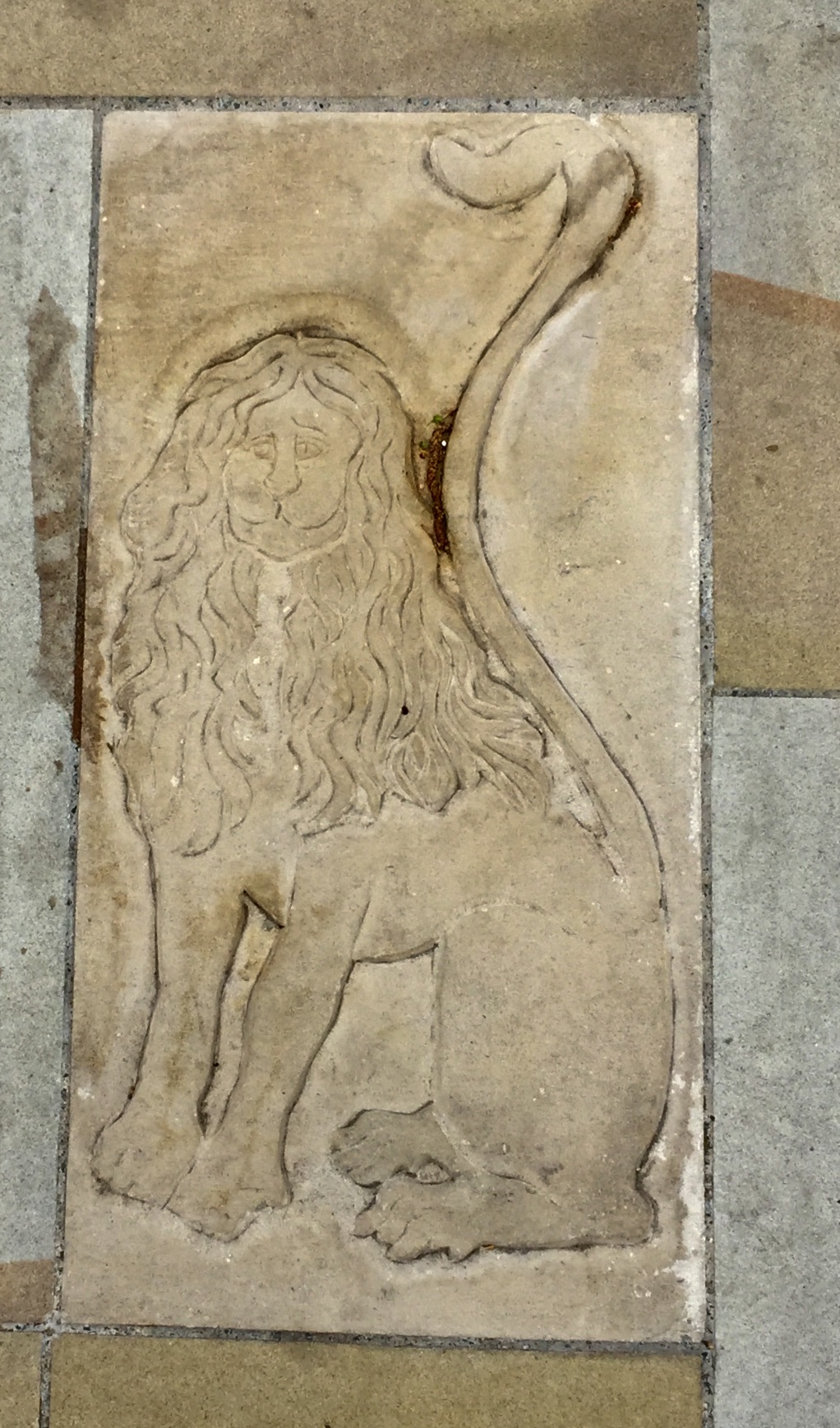
Should you happen to be wandering near Seething Lane Garden where Pepys had his home you can find a carving of a lion.

The Tower of London has had a menagerie since the 1200s – which is definitely medieval. In medieval times, in order to get into the Tower visitors would have to cross a drawbridge to the lion tower built by King Edward I in about 1275 before entering. The tower was demolished during the Victorian period . In addition to lions the barbican also housed leopards.

Eventually it came to be believed, so it is said, that if a lion died someone in the royal family was about to die. The rumour was given credibility when a lioness died in 1603 shortly followed by Queen Elizabeth I.