Edward IV’s wily mistress…or should that be elusive mistress?

images-17I’ve become side tracked by Edward IV’s mistresses and illegitimate children. I’ve already posted about his holiest mistress – Lady Eleanor Butler and I posted last year about the ‘merriest mistress’ Jane, or rather Elizabeth, Shore. I may write another post about her in due course. That just leaves the wiliest mistress – who would appear to be Elizabeth Lucie or Lucy nee Wayte and who often merits only a sentence in works on Edward IV  because unlike the other two very little is known about her.

There were other women as well but they seem to have been so numerous and so unimportant in the great scheme of things that no one bothered to jot down their names. Polydore Vergil writing after 1505 for his Anglica Historia commissioned by Henry VII suggests that Edward may have made overtures in some very inappropriate places – including the Earl of Warwick’s wider household “and yt caryeth soome colour of truthe, which commonly is reportyd, that king Edward showld have assayed to do soome unhonest act in the earls howse; for as muche as the king was a man who wold readyly cast an eye upon yowng ladyes, and loove them inordinately.” Obviously it wasn’t in Vergil’s best interest to sell the York king as a choir boy but then neither did anyone else. Commines noted that much of Edward IV’s problem was his interest in pleasure. Mancini described him as “licentious in the extreme.” He also wrote “he (Edward) pursued with no discrimination the married and unmarried the noble and lowly: however he took none by force.”  According to Ross, the Croyland Chronicle was amazed that Edward was able to rule a kingdom whilst partaking of so many “sensual enjoyments.” Gregory’s Chronicle, which Ross notes is the most contemporary of the reports, commented that Edward wasn’t very chaste…something of an understatement it would appear.


Sir Thomas More, who was only four when Edward died, wrote about Elizabeth Lucy and seems to have mistaken her with Eleanor Butler – either that or Edward spent his time running around the countryside promising to marry unsuitable widows whenever they put up a bit of resistance to his advances. He writes, “The Duchess (Cecily, Duchess of York, Edward IV’s mother), with these words nothing appeased, and seeing the King (Edward IV) so set thereon that she could not pull him back, so highly she disdained it that under pretext of her duty to God, she devised to disturb this marriage [to Elizabeth Woodville], and rather to help that he should marry one Dame Elizabeth Lucy, whom the King had also not long before gotten with child. Wherefore the King’s mother objected openly against his marriage, as it were in discharge of her conscience, that the King was betrothed to Dame Elizabeth Lucy, and her husband before God….Whereupon Dame Elizabeth Lucy was sent for. And although she was by the King’s mother and many others filled with good encouragement-to affirm that she was betrothed unto the King-yet when she was solemnly sworn to say the truth, she confessed that they were never betrothed. However, she said his Grace spoke so loving words unto her that she verily hoped he would have married her, and that if it had not been for such kind words, she would never have showed such kindness to him, to let him so kindly get her with child.”


So just who was Dame Elizabeth Lucy? Ashdown-Hill, pro-Richardian historian, identifies her as the daughter of Thomas Wayte of Hampshire. Further digging around reveals that this is not necessarily the case. Michael Hicks notes that  More was wrong about the pre-contract and goes on to suggest that he was also wrong about the lady’s name as there is no one by the name of Elizabeth Lucy in the records – at least not some one of reasonably noble birth. Digging around on the Internet yielded an interesting forum discussion which identifies Margaret FitzLewis widow of Sir William Lucy. Its perhaps not surprising then that historians have placed her social status as anything from the wife/daughter of the peer of the realm to good-time girl or  as the Seventeenth Century historian Buck described her – a ‘wanton wench.’


Byrne is much more clear cut in her introduction to the Lisle Letters. She places Elizabeth Lucy as being a nineteen-year-old widow  of  Lancastrian connections from an established Hampshire family holding a number of manors when she met the king.


Whoever the elusive Elizabeth really was she is the mother of Arthur Plantagenet (born anytime between 1461 and 1475 depending upon which source you read but Byrne opts for 1462) who is referenced as having family in Hampshire, a fact which is corroborated in the Lisle Letters which locates the Wayte family, or parts of it, in Titchfield. Arthur also had a sister called Elizabeth (born 1464 ish), though apparently we can’t even agree on that, some researchers argue that actually she was called Margaret…so there’s either a name error or possibly two daughters.  And of course, some historians argue that because of the possible difference in their ages Arthur and Elizabeth might not have had the same mother (yes I know, if there’s only about three years between them that its not an issue but there is a reference which suggests Arthur was born in 1475 -so a lot of ifs, buts and maybes.)

Any way, Elizabeth daughter of Edward IV married Thomas Lumley of Durham. The Duchess of Cambridge is numbered among her descendants. Further evidence as to Elizabeth’s royal father is provided by the papal dispensation which allowed Elizabeth’s son Roger to marry Anne Conyers – the two of them being related within the prohibited degrees of affinity (something like fourth cousins) Testamenta Eboracensia 3 (Surtees Soc., vol. 45) (1865): 355).

History isn’t totally sure what happened to Elizabeth Lucy nee Wayte. She simply disappears from the records which suggests that either the king was no longer interested in her, she died or if she was from the lower social orders simply got on with her life along with countless other undocumented medieval people.  Putting a post on Elizabeth Lucy together is rather like a composite character exercise!

Edward IV did have other illegitimate children, not counting his children with Elizabeth Woodville who found themselves delegitimised by their Uncle Richard, but history doesn’t provide them with mothers. Grace Plantagenet, for example, turns up at the funeral of Elizabeth Woodville but beyond that we know very little.  There is a tantalising hint of an unknown daughter marrying into the Musgrave family but it was unsupported by any evidence. There’s a better evidenced possibility of the wife of the 6th Baron Audley being one of Edward IV’s daughters – though I’m sure that there are probably arguments for her being someone else entirely!


Ashdown-Hill, John (1999) ‘The Elusive Mistress: Elizabeth Lucy and Her Family’ in The Richardian  11 (June 1999), pp. 490–505. 31

Crawford, Anne. (2007)  The Yorkists: The History of a Dynasty. London: Continuum

Given-Wilson & A. Curteis (1984) Royal Bastards of Medieval London:Routledge and Keegan

England

Hicks, Michael. (2002) English Political Culture in the Fifteenth Century.  New York: Routledge

Hicks, Micael (2004) Edward IV London: Bloomsbury

Ross, Charles Derek. (1997)  Edward IV (English Monarchs Series)  New Haven and London: Yale University Press

St. Clare Byrne, Murial (1983) The Lisle Letters: An Abridgement

Weir, Alison (1994) The Princes In The Tower  London:Random House

http://www.thomasmorestudies.org/docs/Richard.pdf

Elizabeth Waite, in Lundy, Darryl. The Peerage: A genealogical survey of the peerage of Britain as well as the royal families of Europe.

Eleanor Butler -the holiest harlot or an unrecognised queen

images-17Edward IV has a bit of a reputation for liking, and being liked by, the ladies… he once said that his mistresses were the merriest, wiliest and  holiest in the land. The merriest naughty lady was Jane Shore, the best known of Edward’s mistresses. Lady Eleanor Butler nee Talbot finished up in a nunnery, so presumably she was the holy mistress and the topic of today’s post. The wiliest mistress was Elizabeth Lucy/Lucie or Wayte by whom Edward had at least two children.  Sir Thomas More thought that it was Elizabeth Lucy with whom Edward was pre-contracted but there are other sources including Mancini and later Philip de Commines who discuss Edward’s marriage to another woman before Elizabeth Woodville.


History, in order to be fact relies on evidence which can, of course, be misleading.  Much of the evidence relating to Edward’s marriage to Eleanor Butler is circumstantial and the sources are often rather biased.  Wagner makes the very good point that Margaret of Anjou and the Lancastrians never made any reference to a pre-existing marriage…but then the marriage was a secret. Mancini wasn’t a big fan of Richard III so the fact that he reports a sermon which identified the king’s children as illegitimate has to have some clout.  For the sake of fairness I should point out that Vergil wrote an account of the same sermon and categorically states that no one mentioned illegitimacy…feeling confused yet?  The Croyland Chronicle was troubled by no doubts at all.  It very clearly states that the whole thing was cooked up by Richard to justify the usurpation of the throne.  The Richard III Society have rather a lot to say on the subject and plenty of evidence to support the view that Richard wasn’t making up the marriage but none of the evidence is incontrovertible.  It is a deductive process.


We can be sure that Lady Eleanor Butler, nee Talbot, was daughter to the Earl of Shrewsbury and Margaret Beauchamp. When she was thirteen she was married off to Sir Thomas Butler who was the son and heir of Lancastrian Lord Sudeley.  Thomas died in 1461 but before the Battle of Towton – though there was a Thomas Butler who died during the Yorkshire battle on the Lancastrian side. The evidence for the date of Thomas’s death is discussed by Ashdown-Hill (who frequently writes in the Ricardian) who notes that the inquisition post mortem was dated to Henry’s reign rather than Edward IV’s.  It is possible he died from injuries sustained at the Battle of Blore Heath.  Eleanor should have been a wealthy widow.


In the rather complicated game of chess that was landownership Eleanor’s father-in-law took back one of the two manors that had been settled upon her with her marriage to his only son. A licence was required for the transfer. This was neither applied for nor issued so the Crown promptly confiscated both properties that were Eleanor’s inheritance.  By this time the king was not Henry VI but Edward IV.  The confiscation may or may not have been because of Sudeley’s Lancastrian sympathies – it might simply have been part of a strengthening of the York hand.


Eleanor went along to petition Edward for the return of her property (you may be familiar with a similar story – there are several parallels between Eleanor’s plight and that of Elizabeth Woodville.)  At which point the teenage Edward became very friendly indeed with the pretty widow who was slightly older than him. In fact he became so friendly that he may have promised to marry Eleanor.  Interestingly if its a question of a pattern repeating itself it’s worth noting that Edward attempted to bribe Elizabeth Woodville’s father and when that didn’t work there was the story of the threat of violence which didn’t work either so that Edward found that the only way to enjoy rather more of Elizabeth Woodville’s company was to offer her marriage…note the word story…hard evidence is in short supply.   Had Edward been much more naive three years earlier when he is supposed to have pre-contracted to Eleanor Butler?  Or did he want to avoid marriage already having one secret wife?   Ashdown-Hill speculates that Edward’s promise  to Eleanor took place just after his coronation.

In the Middle Ages, the promise of marriage followed by intercourse was marriage and recognized as such by the Church although it required the irregular marriage to be regularised before any children could inherit. No priest was required for an irregular marriage and actually there really would be no witnesses around (one hopes) to testify as to whether a promise of marriage had been made prior to any activity that could be deemed naughty.

In 1483 Duke Richard of Gloucester claimed that Edward’s children were all illegitimate because Edward was pre-contracted to another woman before marrying Elizabeth Woodville. Cue Robert Stillington to step forward. He claimed that not only had the pre-contract existed but that he had witnessed an exchange of vows – so, much more organized that a quick promise to marry Eleanor at some point in the future whilst muttering sweet nothings and fumbling with the laces of her dress.  The next thing you know Parliament was merrily constructing the Titulus Regius which proclaimed Edward’s bigamy to the world and bastardized all his children including the young King Edward – who swiftly lost his crown to his uncle.  It is worth mentioning at this point that Henry VII had the Titulus Regius reversed prior to his marriage to Elizabeth of York who was also bastardised by the proceedings.


This all leaves many, many problems. Firstly, you’d have thought that Eleanor Butler might have had something to say about her spouse getting re-hitched. Certainly you’d have thought her family might have had something to say on the subject – it is often suggested that Eleanor was a poor widow rather like Elizabeth Woodville with no one to speak up for her but Eleanor’s sister was the Duchess of Norfolk. Her mother was Margaret Beauchamp – the eldest daughter of Richard Beauchamp the Earl of Warwick – her half-aunt was Anne Beauchamp, Countess of Warwick meaning that the Kingmaker was her uncle and yes you’d have thought that Talbot being the husband of the eldest sister would have been the Earl of Warwick, he certainly thought he should have been and it definitely caused ill will amongst the Beauchamps and their respective spouses. But all that aside, Eleanor was not on her own in the world and even if she had been she’d already demonstrated that she was capable of speaking for herself when she petitioned Edward for the return of her manors. There was a large network of noble relations who surely to goodness would have taken a dim view of Edward doing the dirty on Eleanor? Unless they had something to gain perhaps? Or to lose?


Of course, since Edward married Elizabeth Woodville in secret it would have been impossible for anyone to jump up and down about just causes and impediments at the time of the marriage.  Also it has been suggested that Eleanor Butler had no children and seems to have been disposed to a contemplative life. She may have been quite happy to let sleeping dogs lie…sadly she didn’t leave a deathbed confession witnessed by a posse of nuns that would have settled the issue without further ado.


Thirdly, how very convenient it was for Richard that Edward was dead before he chose to mention the embarrassing news that his brother had made one too many marriage vow – and just before Edward V’s coronation as well, such a co-incidence!  However, if Stillington didn’t tell Richard about the marriage until after Edward’s death Richard could hardly be expected to take action any sooner.

Fourthly, just why didn’t Stillington spill the beans earlier? That’s easier to explain- though still circumstantial. Stillington managed to move from being someone fairly insignificant to the keeper of the Privy Seal as well as Bishop of Bath and Wells during the reign of Edward IV– co-incidentally at the same time the marriage of Edward to Elizabeth Woodville became public knowledge.


Interestingly Stillington found himself in the Tower in 1478 along with Edward’s other brother, George, Duke of Clarence. It has been alleged that Clarence, who may or may not have been drowned in a vat of Malmsey, had been told by Stillington of the pre-contract – hence the private execution…although if I was Edward, I would probably have ensured that Stillington had a nasty accident with some marbles at the top of a steep set of steps at about the same time, if he had indeed been telling tales or there was even the remotest possibility of tale telling.  Edward was capable of that sort of behaviour – just look what happened to Henry VI on the very night that Edward arrived in London on May 21, 1471.


Legally speaking Richard should have had the matter tried in an ecclesiastical court to be absolutely certain that his nephew didn’t have a claim to the throne and equally if Edward had been married to Eleanor Butler presumably he could have got a Papal Dispensation in order to then marry Elizabeth Woodville – though his grandson, Henry VIII, knew all about the difficulties of that particular route.   Richard Neville, Earl of Warwick – Kingmaker and Eleanor Butler’s uncle might have had a view on it…a good reason for saying nothing, especially as Elizabeth Woodville was introduced to the court as Mrs Edward Plantagenet at the very point that the Kingmaker was in France negotiating for the marriage of a French princess to Edward.


Edward married Elizabeth Woodville in 1464 three years after his supposed marriage to Eleanor – historians tend to accept that she was definitely his mistress. The only real difference between Eleanor’s so-called marriage, if it happened, and Elizabeth’s was that Edward acknowledged Elizabeth as his bride.  Elizabeth had taken the precaution of having her mother as an additional witness but none of the testimonies survive today, or if they do they’re tucked away in some dark corner of the archives.  This means that either Edward made false promises to Eleanor in order to have his wicked way; he intended to marry Eleanor but then the political situation changed and besides which he’d had his wicked way; he was married to Eleanor but both parties decided to pretend it had never happened; or Richard made the whole thing up in order to usurp his nephew’s throne.


And whilst we’re on the subject of irregular marriages – which Edward and Elizabeth Woodville’s marriage was then a papal dispensation was required to ‘regularise’ the whole thing and preferably before children were born because if the marriage remained irregular then whilst the union itself was legal the children of the union couldn’t inherit. As it happens there is no evidence of Edward seeking a papal dispensation to regularize his marriage to Elizabeth – it would appear that Richard III was quite right – he was the heir not his nephews – but there was absolutely no need to go dredging up a pre-contract.  It has been suggested that Edward IV didn’t ask the pope for a dispensation to regularise his irregular marriage to Elizabeth Woodville because that would have meant deceiving the Pope about his marriage to Eleanor Butler – which moves us from circumstantial evidence to mind reading.


Eleanor took herself off to a convent where she died in June 1468 in the Convent of the White Carmelites in Norwich as a lay sister. She’d been a benefactress to the nuns before joining them behind the convent walls. Interestingly, because there is something of a mystery in the whole business Ashdown-Hill identifies the fact that Eleanor held land that she didn’t inherit, didn’t gain through her marriage and which she couldn’t have afforded to buy – indicating that someone had given Eleanor the land…that someone – well, Edward IV…though Ashdown-Hill doesn’t provide the reader with a handy grant signed and sealed with the Crown stamp meaning that it is possible that someone else might have given her the land – though we don’t know who.  It’s also worth mentioning that Ashdown-Hill is very much in favour of Richard III.   You never know though, all sorts of interesting documents turn up in archives around the world from time to time – perhaps one day someone will uncover some incontrovertible evidence about Lady Eleanor Butler and Edward IV, in the meantime there’s plenty to speculate about.

Edward V was born in 1470, two years after Eleanor Butler died – if his father had been pre-contracted the fact that Eleanor was dead would still not have made his marriage to Elizabeth  Woodville legal and even if it was his only marriage it was still an irregular marriage.  It wasn’t as though Edward didn’t know that a papal dispensation was required to regularise the union – his own grandparents Anne Mortimer and Richard of Conisbrough required one- and you’d have thought that one of his advisors might have mentioned it in passing.


Ashdown-Hill, John. (2010) Eleanor the Secret Queen: The Woman who put Richard III on the throne. Stroud, The History Press

Wagner, John A. (2001) Encyclopedia of the Wars of the Roses Oxford: ABC Clio


Arthur Plantagenet -not quite royal and not a traitor.

200px-ArmsOfArthurPlantagenet_ViscountLisle.jpgWho would have thought that Henry VIII had a maternal uncle  whom he loved very much. He once said that Arthur had the kindest heart of anyone he knew.

Arthur Plantagenet was Elizabeth of York’s illegitimate half-brother. His mother was Elizabeth Lucie or Lucy or possibly Wayte. Thomas More describes her as a naïve girl who believed Edward IV’s blandishments. There were other mistresses and other children. History has not provided a clear list of which children belong to which mother or how long Edward’s various relationships lasted or indeed whether he was pre-contracted to any of them before his marriage to Elizabeth Woodville.

In any event, young Arthur was born in Calais and is mentioned in an exchequer account of 1477 – assuming that Edward didn’t have any other natural male sons kicking around Calais at that time, and then vanishes into historical mist and fog  for a time or, depending upon which source you read, is brought up in Edward IV’s court. He emerges after the difficulties of 1483-1485 in Elizabeth of York’s household. On her death he moved into Henry VII’s household. He then appears to have been inherited by his half-nephew in 1509. He became an ‘esquire of the king’s bodyguard,’ and was apparently much loved by Henry – a dangerous position to hold as poor Arthur came to recognize.


In 1511 he married Elizabeth Dudley the widow of Henry VII’s tax collector. The position of husband having fallen vacant because young Henry VIII had executed his father’s two foremost tax collectors in a move guaranteed to win friends and influence people. Elizabeth also happened to be the daughter of Edward Grey, Viscount Lisle (who just happened to be the younger brother of John Grey of Groby who was married to Elizabeth Woodville prior to his death at the Second Battle of St Albans in 1461- making for a very complicated family tree.)   Now would probably also be a good time to mention the fact that Elizabeth Grey is Robert Dudley’s granny – which just makes things even more incestuous when you consider Elizabeth I’s interest in that young man.


Back to Arthur:
 he turns up in the records on 8 February 1513 having obtained protection from his creditors- he seems to have been frequently troubled by there being too much month for his money- on the proviso of going to sea with an expedition to Brittany. The ship in which he sailed had a nasty accident with a rock and he was saved from death by something close to a miracle. Understandably he took himself off on a holy pilgrimage to Walsingham to give thanks for his safe return from the sea.

His experience didn’t stop him from returning to Europe where he joined his nephew on his European military adventure culminating in the Battle of the Spurs  which was more of a skirmish than a battle whilst the real action was taking place at home on the English Scottish Border – the Battle of Flodden.

By the following year Arthur, who was in Henry’s good books, was Sheriff of Hampshire and a captain on the vice-admiral’s vessel, the Trinity Sovereign. He turns up at the Field of the Cloth of Gold and was one of the king’s carvers. He also seems to have played an important role in the life of young Henry Fitzroy, Henry VIII’s natural son by Bessie Blount. In 1524 he became a Knight of the Garter.   As is the way of these things he became a widower and remarried in 1528 to Honor Basset nee Grenville.


On March 24 1538 he was made Deputy of Calais and then things started to go very wrong. In addition to personal debt; there were the shifting sands of the king’s religious preferences and the faith of the locals; keeping Calais’s garrison fed and watered; keeping the local elite happy- and they frequently weren’t very happy and spent a lot of time trying to stab him in the back; keeping Cromwell informed as well as providing him with a new pet dog (no I’m not making that up – it’s all there in Arthur’s letters) and then there was keeping his wife happy and ensuring his children received an appropriate education. Ultimately things did not go well – there were simply too many plates to keep spinning. Arthur was summoned back to London in 1540 and sent to the Tower whilst his wife and daughters were kept under house arrest in Calais.

Rumour had it that it was Honor who was the traitor rather than her unfortunate spouse – whatever the case it seems to be agreed by Bishop Foxe (who didn’t like her- suspecting that she was a closet Catholic) and another chronicler that she lost her senses and never fully recovered them as a consequence of  Arthur’s arrest and imprisonment.


Unfortunately for Arthur  there was a plot. His chaplain, Gregory Botolph had come up with the idea of handing Calais over to the Pope in the person of Cardinal Pole, who was of course, a Plantagenet and Arthur’s cousin.  Margaret Pole, Countess of Salisbury styled Arthur ‘cousin’ in her correspondence a fact which Henry VIII must have been aware.  By now the Tudor monarch was ageing and vicious.  Being a Plantagenet had become exceedingly dangerous to one’s health as Margaret Pole was to discover.  Botolph managed to evade capture even though an act of attainder was passed against him. He evaded the king’s wrath, unlike his fellow conspirators – Edmund Brindholme, Clement Philpot and Adam Damplip- who presumably paid the full price for their treason – though I need to find confirmation of that.


There was no direct evidence against Arthur. So naturally he was released? Er, actually – no, he wasn’t. Arthur remained a prisoner in the Tower until 1542. It seems unfair that Arthur should have been rounded up as a consequence of Botolph’s misdemeanours as Arthur had spent considerable time and effort trying to get his chaplain a living, first in Lowestoft and then in Kettlebarston in Suffolk as demonstrated in his various letters.  It seems even more unfair that Arthur who had served the Tudors most loyally should have been so poorly treated. At the beginning of Henry VIII’s reign a family member could be looked upon with warmth, especially one who could never make a claim on the throne because of his illegitimacy but by 1540 Henry VIII had contemplated forwarding the claims of his own illegitimate son so the bar-sinister wasn’t the protection it had once been.  Arthur languished in the  Tower – Cromwell fell, Katherine Howard was married and discarded, her various lovers executed along with the erstwhile queen.

In March 1541 Honor Plantagenet, Lady Lisle and her daughters were released. Their jewels were returned to them and £900 made available to cover their debts and transport them wherever they wanted.  Honor ultimately returned to her home county of Cornwall where she died in 1566.

Arthur remained in the Tower, although he was allowed to walk upon the ramparts.  According to one story Arthur saw his nephew sailing along the Thames in the royal barge, shouted and waved at him reminding henry that he’d locked his uncle up and left him there.  As you might expect, this is anecdotal and not back by any concrete evidence.  Arthur must have thought that things were looking up when his collar of the Garter was restored to him. Two months later Henry VIII sent him a diamond ring via the person of his secretary Sir Thomas Wriothesley– Arthur was possibly so overwhelmed by relief “immoderate joy” was the way that Holinshed phrased it that he had a heart attack. He died in the Tower, of old age rather than a sharp pain in the neck, and was buried there, leaving his wife distraught with grief whilst he himself became a footnote in Ambassador Marillac’s letter to Francis I. “Lord Lisle, formerly deputy of Calais, being out of trouble and his Order, honour and goods restored, died a few days afterwards.” (4 March 1542)


Papers were seized in Lisle’s house at the time of his arrest – 3,000 of them. They were mainly letters to him and his wife, ranging in date between 1533 and 1540, from ambassadors, princes, governors of French and Flemish frontier towns: he knew them through his role of courtier, politician and Deputy of Calais. There were letters to and from friends and agents in England; including one which suggests that sending Anne Boleyn a pet monkey wasn’t one of Arthur’s better ideas. There was also letters between him and his wife during visits of one or the other to England.  Thomas Cromwell complained about Arthur’s letter writing. He said that Arthur wrote trivia that was of no political interest what-so-ever and to please get a grip on his meanderings.  Of course, so far as historians are concerned they couldn’t disagree more. The Lisle Letters are one of the most important collection of Tudor documents that we have available to us.  They can be purchased in six volumes or one abridged selection.


As an aside it is worth noting that Arthur’s daughter Frances was an ancestress of George Monck who famously, or infamously depending on your viewpoint, fought on both sides of the English Civil War


‘Henry VIII: March 1542, 1-10’, in Letters and Papers, Foreign and Domestic, Henry VIII, Volume 17, 1542, ed. James Gairdner and R H Brodie (London, 1900), pp. 62-71 http://www.british-history.ac.uk/letters-papers-hen8/vol17/pp62-71 [accessed 18 January 2016].

Notes and Queries (1926) CLI (aug21): 129-130. doi: 10.1093/nq/CLI.aug21.129.

Plantagenet Ancestry: A Study In Colonial And Medieval Families, 2nd Edition

Cards at Christmas


elizabeth of yorkIn 1461 Edward IV’s parliament  passed a law that permitted the playing of card and dice games at Christmas…they were banned the rest of the time.  It was an old problem.  One of Edward II’s parliaments banned dice games because they interfered with archery practise.

Henry VII passed a similar law but his law banned servants from playing cards and dice throughout the year except for the twelve days of Christmas.  Henry’s accounts reflect the fact that he liked the odd flutter at a game of cards and that he lost more often than he won.  Henry’s spouse, Elizabeth of York is the model for the queen on English cards.


Barnard Castle, Anne Beauchamp and oriel windows.

IMG_6617Barnard Castle was built by the Baliol family. It remained in their hands until the reign of King Edward I when it was confiscated and passed into the ownership of the Earl of Warwick. Two centuries later it was in the hands of the Neville family but the Earl of Warwick at that time- the Kingmaker- ultimately backed the wrong monarch and managed to get himself killed at the Battle of Barnet in April 1471 as was his brother John.

Warwick left two daughters who became joint heiresses to the title and estates. Isabel Neville, the older daughter, was married to George, Duke of Clarence (brother of Edward IV) while her younger sister Anne had been married off to Prince Edward, son of Henry VI and Margaret of Anjou demonstrating the Kingmaker’s ability to swap the colour of the rose in his lapel at the drop of.. er…a rose.

Detail from door grill leading to the vault where George Duke of Clarence and his wife Isobel Neville are buried in Tewkesbury Abbey.

Detail from door grill leading to the vault where George Duke of Clarence and his wife Isobel Neville are buried in Tewkesbury Abbey.

Anyway, to cut a long story short Prince Edward got himself killed scarcely a month after his father-in-law at the Battle of Tewkesbury on the 4th of May 1471. Anne was placed, by Edward IV, in the custody of her brother-in-law.  George calmly tried to ensure all the titles, estates and loots ended up in his fat little paws. It arrived at the point where Anne was hidden in the kitchen as a maid of work to prevent Richard, Duke of Gloucester and George’s little brother, from finding her. If you’re a romantic Richard and Anne had liked one another since childhood when Richard was part of Warwick’s household. If you’re a pragmatist – an heiress at the altar is a bankable asset. So Richard married Anne and there followed an undignified squabble about which husband was getting what – Richard landed Barnard Castle amongst other Northern estates. After George managed to get himself drowned in a vat of Malmsey in 1478 (two years after Isobel died) the rest of the Warwick inheritance found its way into Richard’s keeping along with his small nephew Edward and niece Margaret. Tewkesbury Abbey continued to play its role in the history of the period by being the final resting place for both George and his wife, due in part to the fact that Isobel’s grandmother was the last Despenser heiress. Tewkesbury has strong links to the Despenser family.

You have to feel a degree of sympathy for Warwick’s widow, Anne Beauchamp, who was actually the daughter of Richard Beauchamp, the previous Earl of Warwick and his wife Isobel Despenser. Her brother died in 1446 and her niece died in 1449 making her husband- Richard Neville- the Earl of Warwick. So, actually neither of her daughters should have inherited anything at that point because it was Anne – the widow of the Earl of Warwick- who came with the lands and titles. Not to worry, Edward IV swiftly ensured that for legal purposes poor Anne was declared legally dead allowing his brothers to divide up the Warwick estates between them despite the assortment of letters that Anne Neville nee Beauchamp wrote from Beaulieu Abbey demanding that her rights be recognised.

Ultimately Anne emerged from sanctuary and was handed into the care of her son-in-law Richard – we have no idea how she felt about her daughters or indeed their respective spouses.  Rous, no supporter of Richard, wrote that Anne was kept in close confinement but there is other evidence that demonstrates that the countess must have had an allowance and must have travelled around the northern estates that had once been hers.

It wasn’t until 1486 that Anne had some restitution for the loss of her money and lands and that came from the Tudors. Henry VII granted her 500 marks a year and the following year Parliament gave her estates back which she promptly gifted to the king….which suggests some shady double dealing somewhere along the line or perhaps a bid to keep her grandson the young Earl of Warwick, Isabel and George’s son safe. He was after all in protective custody in The Tower at that point.

DSC_0014Having gone all around the houses – or castles- it’s back to Barnard Castle which overlooks the Tees. Richard seems to have spent a lot of time at Barnard Castle.  He also carried out renovation and extension works.  His tenure is evidenced in the remnants of the great hall. He added an oriel window – a bay window supported by corbels- on the first floor and caused a white boar to be engraved in the ceiling above it – where it can still, just about, be seen today as can an English Heritage artist’s interpretation of what it might have looked like originally.DSC_0012

King Henry VI

images-17It was possible for medieval kings to be too nice; too pious and too scholarly. Henry VI was the last Lancastrian Plantagenet king. The chaos that spiralled out of control during his reign came about, in part, because of the king’s inability to control his nobility.

In October 1421 Catherine of Valois, wife of Henry V became a mother for the first time at Windsor. Nine months later the infant boy became King Henry VI although he was not crowned in Westminster until 1429. According to the treaty that the French signed after the Battle of Agincourt the boy, following his maternal grandfather’s death was King of England, Wales, Ireland and France.

Indeed, the boy was crowned in Paris on 16th December 1431 to popular acclaim in Paris but much disgust that the English form of coronation was used rather than the French form. Unfortunately most of the rest of France wanted the dauphin, the son of Charles VI, to rule. The future Charles VII had luck on his side in the form of Joan of Arc; the death of the Duke of Bedford’s wife (Anne of Burgundy) resulted in the Duke of Burgundy changing sides; the death of the Duke of Bedford and faction politics back in England. It probably also helped Charles that Henry VI loathed bloodshed and felt that it was his Christian duty to make peace. This duly occurred in 1445 when Henry married Margaret of Anjou and handed back huge tracts of land to the French.

The Duke of Gloucester was furious but his fall from power was just round the corner. His wife Eleanor was found guilty of witchcraft. Ultimately Gloucester would be accused of treason and then found dead in his bed a couple of days later. It wasn’t long before people were whispering that ‘Good Duke Humphrey’ had been murdered and that the queen had somehow been involved.

Henry, who had no mistresses and had an abhorrence of nudity in both men and women, was unlucky in his queen. He thought she was one of the wisest people that he knew but his people never came to love her. She was French and her marriage, without much in the way of dowry, had cost them hard won lands in France. In later years she headed south with a band of ferocious northerners at her back, something that London never forgave her for.

Money, which had flowed readily enough when the English were winning the Hundred Years War, became a problem the older Henry got. It wasn’t helped that when he achieved his majority he gave away approximately two hundred manors and insisted on spending £2,000 on endowing his colleges at Eton and Cambridge. Before long the crown was in debt to the tune of £400,000.

Inevitably the peace in France could not be sustained and before long the roads were filled with English refugees fleeing the French. It didn’t go down well with the English. Henry V, the victor of Agincourt, successful charismatic warrior king was a hard act for his son to follow. As is usual in these occurrences the people blamed the king’s ‘bad advisers’ for the king’s own failings and bad luck. In 1450 Adam Moleyns, the Bishop of Chichester, managed to get himself lynched by an angry mob in Portsmouth who blamed him for the fall of Normandy. The mob’s wrath then turned on the Duke of Suffolk who found himself on the wrong side of the law for pursuing the policies that Henry wanted him to pursue. Henry insisted that Suffolk was set free but he was forced to leave the country. It didn’t help him. Suffolk, on his way to Calais, was hijacked and beheaded.

In June 1450 Kent revolted. This was Jack Cade’s rebellion. The name Mortimer was tangled up in proceedings. People were reminded that Henry IV, our Henry’s grandfather had usurped the throne from his cousin Richard II, and that actually the Duke of York through his mother Ann Mortimer had a much better claim to the throne – it helped that he had a reputation as an effective warrior.

After the rebellion was quelled, Henry VI turned to the Duke of Somerset for guidance. The peer was very unpopular and York, who was owed huge sums of money for his work in France, felt excluded from his rightful role in government. It didn’t help that Somerset used resources in France that might have enabled York to maintain his garrisons. He returned to England from France with an army. On this occasion Henry VI had a larger and better-led army. The enmity that York felt towards Somerset and Margaret of Anjou would become progressively more bitter as did the in-fighting between the various factions which sought to gain power through the king or his wife. However, this is not a post about the Wars of the Roses.

One of Henry VI’s chaplains wrote that the king was a simple man, incapable of lying. This was not necessarily the best news for the English. Medieval kings needed guile and they needed to be strong. Henry was aware of this and perhaps it was why he chose the advisors he did. He appointed bishops, often men he knew personally and who had reputations as theologians; he administered the law diligently. He spent much of his year on progress dispensing justice.

He was also an intensely pious man. On state occasions he wore a hair shirt. Part of the role of Eton was that it should be a chantry for priests to say Masses for his soul. His end of the deal was to provide the foundation and the money to educate poor boys.

Unfortunately for Henry being a likeable man wasn’t going to help rule a country riven by faction and suffering from a dearth of ready cash due to the on-going problems in France which became much worse. At Clarendon, August 1453, Henry VI received news that his army had been defeated in Gascony. The king fell into a coma where he remained until Christmas 1454, missing his son’s birth in the process.

Leaving aside the various tooings and froings of the Wars of the Roses the Battle of Towton on 29th March 1461 was the bloodiest battle fought on English soil if the figures are correct. Henry’s men fought to the death and when the remaining men finally broke and fled they were slaughtered on the road. Those who were captured faced execution. The king and his immediate family fled to Scotland. In payment Berwick was ordered to surrender itself to the Scots. Lancastrian forces began to take over key fortifications in Northumberland but in May 1464 Henry was almost caught following Lancastrian defeat at the Battle of Hexham. By that time Margaret of Anjou and Prince Edward were in France.

Henry spent almost a year on the run hiding in the hills and moors of Westmorland and Lancashire. We know that he found a welcome at Muncaster Castle. But in June 1465 he was betrayed and taken south to London and the Tower where someone tried to assassinate him but where he was able to spend time in prayer and contemplation.

The Earl of Warwick – the Kingmaker had expected that King Edward IV would be extremely grateful for being given a crown. Edward made a bit of a fool of Warwick who was trying to arrange an advantageous foreign match by secretly marrying the widowed and impoverished Elizabeth Woodville, then proceeding to shower all kinds of goodies on her family. Warwick was not amused.

On the 6th October 1470 Henry VI discovered that he was king again on the say so of the Kingmaker who promptly married his youngest daughter off to Prince Edward having already married his oldest daughter off to Edward’s younger brother, the Duke of Buckingham (possibly known as having your cake and eating it.) After the service in St Paul’s, where he was re-crowned, Henry was rarely seen in public.

DSC_0049-47In March 1471 Edward returned and Henry was led by the hand through the streets of London by Bishop Neville in a bid to raise London’s loyal support. Edward swiftly took London, secured Henry and took him with him to Tewkesbury. After the Yorkist victory which saw the death of Henry’s son, Prince Edward, Henry was returned swiftly to the Tower where the Edward claimed he died of melancholy but in reality where the pious, scholarly, likeable and weary man was murdered by the Yorkists. He was forty-nine years old and had been on a troubled throne for thirty-nine years.

DSC_0047-49

Nicholas and Ralph Fitzherbert – a glimpse of the Wars of the Roses.

DSCF1562Norbury in Derbyshire is mentioned in the Domesday Book. By 1125 it was in the hands of the Fitzherbert family who initially rented the estate from Tutbury Priory. The remains of the Fitzherbert’s medieval hall stands next door to the church. It was in this building, according to George Elliot’s imagination that milk maid Hetty Sorrel could be found. Historically speaking the building is a mishmash of reconstruction including a beam dated to 1483. One side of the beam is beautifully worked the other, not meant for public view, is still covered by bark.

The Fitzherberts built a fine hall and an even finer church. The glass dated originally from the beginning of the fourteenth century – not much of it remains but the chancel is a beautiful ‘lantern’ flooded by light on three sides. Three alabaster tombs dominate the church. The stone came from just nine miles away and with the right camera traces of the original paints can still be glimpsed.

IMG_6007Nicholas Fitzherbert, shown left, died in 1473. He was the eleventh lord. He’s wearing a collar decorated with suns and roses. The suns are representative of the sun in splendor reflecting Edward’s victory at Mortimer’s Cross in 1461 when a parhelion, which could have struck mortal dread into his army, was used by Edward as a sign of forthcoming victory – each one of the suns represented one the Earl of March’s surviving sons – Edward, George and Richard. The roses are, of course, the white roses of York. At the bottom of Nicholas’s collar, a pendant can be glimpsed beneath marble hands raised in prayer. It is a pendant of a lion. The white lion is representative of the House of March – and Edward’s Mortimer descent: a reminder that the House of York came from a line senior to that of the House of Lancaster. Anne Mortimer, Edward IV’s grandmother, was the great-granddaughter of Lionel of Antwerp. He was the second son of Edward III.IMG_5997

So Nicholas, even in death, is declaring his allegiance to the House of York. He is also fully dressed in plate armour and his head rests on his helm but as Mercer states in The Medieval Gentry: Power, Leadership and Choice During the Wars of the Roses history does not know what Nichols’s role was during the Wars of the Roses or how he demonstrated his loyalty to Edward IV.

One thing is sure, livery badges as these collars are often known were important indicators of political affiliation during the Wars of the Roses. It is known that King Richard III gave away huge numbers of his livery badges made from cloth at the time of his coronation in 1483.   Richard’s personal badge – the white boar- a play on the Latin ebor  meaning York and a reminder of Richard’s northern powerbase has been found on pendants and hat badges across the country including Richard’s home at Middleham Castle in Yorkshire.

IMG_5973In Norbury, on the opposite side of the chancel from Nicholas there is a second alabaster tomb. It depicts Nicholas’s son Ralph, shown left and in the first picture in this post, and his wife. Like his father Nicholas is wearing a collar depicting suns and roses but the pendant is different. Nestled under Ralph’s hands is a tiny boar. Ralph died in 1483 shortly after making his will requesting that he should be buried in Norbury Church so he could not know that a mere two years later the white boar would be evidence of untrustworthiness so far as the new Tudor kings of England were concerned.

DSCF1560

The Fitzherberts did not thrive under the Tudors; not because of their Yorkist fealties but because of their Catholicism. Like many of the old established families the Fitzherberts were conservative in their religious beliefs.  By the reign of Elizabeth I the Fitzherberts faced severe financial penalities for their continued beliefs and Sir Thomas Fitzherbert would spend thirty years in prison because of his faith.

Mercer, Malcolm. (2012). The Medieval Gentry: Power, Leadership and Choice During the Wars of the Roses. London: Continuum Books.

IMG_5987 - Version 2

Jane Shore

The Penance of Jane Shore in St Paul's Church c.1793 by William Blake 1757-1827Jane, or rather Elizabeth, Lambert was  a Londoner.  Her father John Lambert was a successful merchant who ensured his daughter received a good education and  spent time at court.  It is probable that John loaned money to King Edward IV to pursue his campaign against Margaret of Anjou and the Lancastrians.  By 1466  Jane was married to a goldsmith by the name of William Shore on account, it is thought that young Jane attracted rather a lot of attention at court from wealthy men – sadly all of whom appeared to have been married.  One of her admirers was Lord Hastings another one was the king himself – Edward IV.

In 1467 Jane’s marriage to William Shore was annulled.  The cause given is Shore’s impotence which is a bit puzzling because he wasn’t an old man, even though Sir Thomas More described the goldsmith as ‘frigid.’  Even more peculiar, some ten years later, King Edward  gave his protection to Shore and his servants.  It is difficult to know whether William stood back to make way for his king – he certainly never remarried- or whether he just wasn’t interested in women.  In any event, Jane swiftly became King Edward’s favourite mistress.  He described her as the ‘merriest harlot in the realm.’  Her concern for others didn’t just extend to her ex-husband.  Even Sir Thomas More admitted that rather than profiting from her relationship with Edward IV herself she used her influence to help other people – a bit of a contrast with Edward’s lady wife who managed to irritate rather a lot of people by lining her own pockets and those of her family.

When King Edward died she became the mistress of Thomas Grey, stepson of the King and then took up with Lord Hastings- who’d admired her for more than two decades at this point. She was then implicated in a plot purported to have been formulated by Lord Hastings to bring about the overthrow of Richard, Duke of Gloucester.

According to Margaret Beaufort who had it from her husband Lord Stanley, Richard  had concluded the best thing to do was to become king himself.  Hastings had summoned Richard from Middleham when Elizabeth Woodville set a plan in motion to keep all the power within Woodville hands.  As a result of Hastings sending a messenger north, Richard was able to intercept the young king on his way from Ludlow to London and scupper the Woodvilles chances of controlling the kingdom.  Elizabeth Woodville had immediately sought sanctuary in Westminster along with her daughters and the Duke of York.  Hastings apparently had a change of heart once he realised that Richard was contemplating changing the role of protector for that of monarch and immediately began plotting against Richard.

Jane was apparently a key figure in this murky world of royal conspiracy – bizarrely Margaret Beaufort (yes, the mother of Henry Tudor – Lancastrian claimant to the throne), sent a letter explaining all of this to Elizabeth Woodville.  It’s not so far fetched because Margaret had made her submission to the Yorkist king following the Battle of Barnet in 1471.  At that stage no one thought of her teenage son as a possible king.  In the intervening years Margaret had become sufficiently friendly with Elizabeth Woodville to be a godparent to the Princess Bridget. And, in order to support her story she mentions Jane because, equally oddly, Elizabeth was on friendly terms with Jane… and who better to carry messages than Jane. (Who needs soap operas when the Plantagenets are available?)

Whatever the truth of the plot, whether there even was one, Richard swiftly accused Lord Hastings, Jane Shore and Elizabeth Woodville of conspiring against him.  Hastings was sent to the Tower and executed without a proper trial.  The whole affair was so hasty that there wasn’t even a block in place. Jane, deprived of her latest protector and incarcerated was accused of witchcraft (as incidentally was Elizabeth Woodville)  but the case was eventually dropped.  Instead Jane was charged with being a harlot – and having been Edward IV’s mistress, Thomas Grey’s mistress and also Lord Hastings floozie it was a charge that was going to stick. Jane, like Eleanor Cobham before her and countless other women, was  forced to walk through London barefoot in her shift with a taper in her hand in  penance for her sins – apparently the Londoners who had come out to mock her were moved by her dignity.

Jane was clearly a woman of some importance in this murky dangerous world. Richard was  troubled by her and sought to remove her from the picture altogether.  Edward usually discarded his mistresses pretty swiftly but Jane had remained friendly with him until his death – suggesting friendship and respect.  Certainly the king’s wife liked her and Margaret Beaufort felt able to trust her to carry messages -a reminder perhaps that England was ruled by a family rather than a bureaucracy (albeit a family who appeared to have joyously murdered, executed and plotted against one another). And yet her role in history is the one given to her by medieval society which sought to diminish her- a harlot.

Jane must have been a looker and had a sparkling personality because you’d think that this was going to be a story with a very unhappy ending but even after being unceremoniously dumped in Ludgate Prison she found a new man – not a turn key or a felon but the King’s solicitor.  Thomas Lynom must have fallen in love because he married her  even though the newly minted King Richard III told him that it was an inappropriate marriage.

Jane died in 1527 at the age of 82 having spent the rest of her life with Thomas Lynom and even become friends with Thomas More who admired her wit.

William Blake was interested in her story as this water colour demonstrates.

George Neville, Archbishop of York

georgenevillearms2George Neville was the younger brother of Richard Neville, Earl of Warwick (a.k.a the Kingmaker) and also John Neville who was briefly the Earl of Northumberland.


He was only fourteen years old when the Pope made him a canon not only of York Minster but also of Salisbury. It can be no surprise that his meteoric rise in the church was followed by the Bishopric of Exeter – though he wasn’t legally old enough to run things (he received a dispensation to take the profits though) and in 1465 he was translated to the Archbishopric of York. This later move was by way of a reward given by King Edward IV to the Neville family.

George did study at Balliol College, Oxford in the 1440s so although his role within the spiritual estate reflects the politics of the time he did at least take the job seriously. Prior to become one of the ‘great men’ of the country he had time for a youthful fling with Elizabeth de Beauchamp and had a daughter called Alice.  He was chancellor of the college for a period and also fulfilled the role of chancellor in Edward IV’s government.  He went on diplomatic missions to Scotland. He even  found time to open two of Edward IV’s parliaments.


However, things were not going smoothly between the Nevilles and their royal cousin in the 1460s. All Europe – well the Scots and the French- agreed that Edward would not have become king without the support of his cousin the Earl of Warwick. But by 1465 Edward was expressing his own opinions. He wanted a treaty with Philip of Burgundy rather than with Louis XI of France. Warwick favoured France. There was also the unfortunate issue of Edward’s marriage to Elizabeth Woodville to take into account. Warwick had been negotiating for the hand of a French princess at the time. It made him look a tad foolish and contributed to the cousins’ relationship deteriorating into open rebellion.


George appeared to broker a peace between Edward and Warwick but in reality he was providing his brother with a smokescreen while he planned the marriage of his eldest daughter, Isobel, to George, Duke of Clarence and then when he felt that his power had been eroded too far into rebellion. It should be added that George played a key role in the marriage; not only did he perform the nuptial service for the happy couple in Calais, he was also instrumental in applying for the papal dispensation that permitted George to marry Isobel – they were both descended from John of Gaunt after all. George’s mother (Cecily Neville) was the Earl of Warwick and the archbishop’s aunt.


Edward appeared tolerant of his archbishop though – he had a reputation for letting bygones be bygones. After the Battles of Tewkesbury George found himself in prison for a few months and then returned to his offices – business as usual so as to speak.

Then things went badly wrong for the archbishop.  Edward  said he would visit George at his palace in Hertfordshire to go hunting but the day before his intended arrival the king had the bishop arrested and his property confiscated.

Why?  Perhaps Edward remembered that it was the bishop who captured him at Olney near Coventry when the Earl of Warwick made his bid for power in 1469.  Perhaps he remembered all those occasions when George’s words were cast like oil upon troubled waters to disguise Warwick’s machinations.  Perhaps it was because the king remembered that it was also the archbishop who’d been responsible for defending London against Edward when Edward returned to claim his crown in 1471. The bishop summoned Lancastrian sympathisers to St. Pauls -600-700 armed men turned up. In fact when George paraded Lancastrian King Henry VI through the streets of London in a bid to raise support he’d had to hold Henry’s hand. It could have reasonably been either of those reasons that led to the archbishop’s re arrest –  Except of course, George Neville Archbishop of York wasn’t an innocent victim of a king’s mental accounting for past events. The last remaining son of the Earl of Salisbury should have learned not to rebel against Edward. It hadn’t got Warwick very far in the end but for all his learning George got himself entangled in a new plot against the king. Once again Northerners were involved just as they had been in 1469- then Edward had dawdled, had trusted his Neville cousins…now, he was older and wiser and George found himself languishing in a prison in Calais.

George Neville, last of the four Neville boys born to the Earl of Salisbury and his duchess died soon after his release from Calais four long years later – presumably chastened by the whole sorry experience.  He was on his way back to York but died in Staffordshire.

The Battle of Tewkesbury

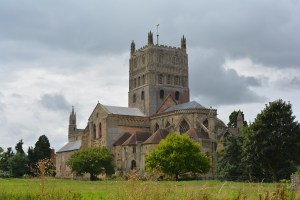
Tewkesbury AbbeyThe Battle of Barnet in April 1471 saw the defeat and death of the Earl of Warwick. A Lancastrian defeat was not the kind of news that Queen Margaret (of Anjou), wife of Henry VI, wished to hear when she came ashore with her son Prince Edward  at Weymouth on the same day.


Her only option was to meet with Jasper Tudor in Wales. The Yorkist king, Edward IV, needed to prevent this from happening. The two armies came face to face with one another on the 3rd of May 1471. Margaret managed to avoid Edward at Sodbury and was heading for Gloucester when the armies finally met. A battle would be fought the following day that would see Margaret and Henry’s only child, Prince Edward, killed.


The Lancastrians held the land to the south of the abbey. Edward used artillery and bowmen to attack the Lancastrians. The Lancastrian right wing came to the aid of its center and caught the Yorkists by surprise. Things could have gone very wrong for Edward had not his brother Richard, then Duke of Gloucester, met the attack. As it was the Lancastrians found themselves caught on marshy ground and 2,000 men died resulting in the name of ‘Bloody Meadow’ being attached to the area of battle where the Lancastrians fell.  The Duke of Somerset held John Wenlock (the  1st baron) responsible for the disaster as he’d commanded the centre of the Lancastrian army.  The Duke who’d commanded the right wing of Margaret’s forces was so incensed that he killed his compatriot on the field of battle. The army fled, many of its soldiers killed in the fields and hedgerows where the A38 runs today.  Other men sought sanctuary in the abbey.


However, Tewkesbury Abbey did not hold legal sanctuary status so the Yorkists forced their way into the abbey two days after the battle. They laid hold of the Lancastrians who sheltered there. The abbey church was so desecrated that it required purification the following month while the Lancastrians who survived the onslaught found themselves dragged into the market square where they were summarily beheaded. Amongst the executed were Edmund Beaufort, Duke of Somerset (Margaret Beaufort, mother of Henry VII was his niece) and his younger brother John. They were returned to the abbey for burial.

Prince Edward was also buried in the abbey.  The other Plantagenets to find a final resting place in the abbey were Isabella (wife of the Duke of Clarence and daughter of the Earl of Warwick) and the Duke of Clarence, Edward IV’s brother who was drowned in a butt of Malmsey.


As for Margaret of Anjou, she was captured on the 7th May. She remained a prisoner until 1475 when a ransom was paid for her release.

Click on the picture to open up a new window for a BBC page showing a Victorian interpretation of the Yorkists and Lancastrians in Tewkesbury Abbey.