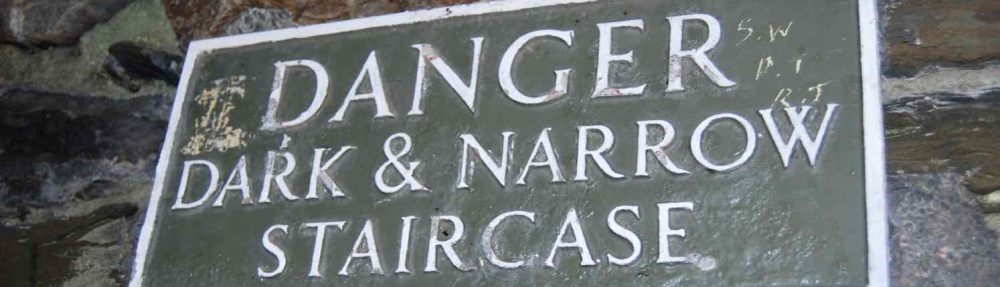
Still stitching but with a detour to slander…

I’m still stitching my swirly dragon but have had to divert to knit several reindeer, a sleigh and Santa for the telephone box to be completed by the beginning of December – (don’t ask, it’s just best if I eventually post a picture.)

Medieval English work is principally associated with ecclesiastical embroidery but we have also looked at book covers, gloves, bags and pouches, and of course, boxes. These small personal items may have been made by professionals or in a domestic setting. I must admit to have a developing thing for 16th century sweet bags which were a development from my medieval meanderings!

I am particularly enthralled by William Huggins, Huggans or even Hogan, the Keeper of the Gardens at Hampton Court, presenting Elizabeth I with an annual New Year’s gift of sweet bags – these may have been quite small, as they could have been to contain potpurri to keep some of the less pleasant smells of court life at nose length. He began making his gifts in 1561 and continued until his death in 1588, whereupon Mrs Huggans is found listed as the annual gift giver. William also made sweet waters for Elizabeth.

Museum of London

The family originated in Norfolk. He can be found as a scholar with his brothers at Cambridge. He left without taking a degree and entered Lincoln’s Inn to train as a lawyer – rather than undertaking a horticultural course somewhere! In 1555 he was elected to parliament. It seems that his family’s patron was the 4th Duke of Norfolk (who was, coincidentally, married Thomas Audley’s only surviving daughter, Margaret).

Hogan had only the one job that has made its way into the history books – Keeper of Hampton Court Gardens, a place incidentally which Elizabeth I was very fond of. In 1564 he wrote to William Cecil. In May 1565 he received a grant of lands specifically to help pay his debts. He transferred them to Francis Barker, a Merchant Taylor. And then in 1588 he died…

There’s much more to be found out about William’s ‘brother’, John Appleyard, who was married to William’s sister, Elizabeth. It was on his behalf that William had written to Cecil in 1564 on the matter of a privateering venture. In 1567 the connection got William into a spot of bother when Appleyard agitated against the Earl of Leicester while he was staying with William at Hampton Court. At which point a light went on in my head! John Appleyard was one of Amy Robsart’s half brothers. And in 1567 he claimed that the jury, which found her death to have been accidental, had been bribed.

So, in one short step we’ve moved from embroidered bags and sweet water to bribery and murder, not to mention shadowy conspirators. Appleyard was interviewed, as indeed was William Huggans – who knew nothing. Appleyard admitted that he had slandered the Earl of Leicester (which was probably a very sensible decision under the circumstances). William was required to answer the following questions according to Cecil’s own notes:

How often did John Appleyard inform you of any offers made to him to provoke him to prosecute matter against my lord of Leicester? Where were you when Appleyard went over the Thames to speak with one that came to move him in such a purpose? Who came to fetch Appleyard? How many persons did you see on the other side of the Thames with Appleyard? Did Appleyard stand or walk whilst he communed with the party? &c., &c.

(‘Cecil Papers: 1567’, in Calendar of the Cecil Papers in Hatfield House: Volume 1, 1306-1571( London, 1883), British History Online https://www.british-history.ac.uk/cal-cecil-papers/vol1/pp342-352 [accessed 13 November 2024].)

I’m not sure how to discuss embroidered household textiles after that massive diversion. Bed hangings, cushions and table carpets aren’t going to have quite the same impact and I’m not sure that even I can wedge heraldic embroidery, including banners, ceremonial clothing, regalia, funeral palls, surcoats and horse accessories, into the tribulations of Amy Robsart’s extended family.

For further reading on medieval embroidery, rather than the matter of Amy Robsart ( Chris Skidmore, Death and the Virgin is an excellent read on the subject) other than Tanya Benham and Jan Messent, and the V and A catalogue of their Opus Anglicanum exhibition:

– A.G. Christie’s English Medieval Embroidery, was until recently, the book on the medieval methods of embroidery. It can be accessed on line, which is very handy indeed:

https://www.gutenberg.org/files/20386/20386-h/20386-h.htm

And if you’re feeling particularly inspired Mary Symons Anrobus and Louisa Preece’s book dating from 1928 is also worth a look:

https://archive.org/details/needleworkthroug00antr

And last but not least, a real book rather than an online facsimile , Barbara Snook’s English Embroidery, published during the 1970s by Mills and Boon.

On the trail of Amy Robsart

amy-robsart-by-t-f-dicksee.jpg!Large.jpegThis is episode two of my three part look at Amy Robsart’s life and death – as with any other historical death involving persons of political significance where there isn’t a clear cause there are always conspiracy theories – not that Amy was of political significance but her husband was.  So, this episode looks at what history does know without making any attempt to identify the probable cause of Lady Dudley’s demise – aside of course from her being found at the bottom of a staircase…and even the size and shape stairs are a matter of conjecture as we shall discover next time.

In the Summer of 1558 Amy and Robert settled into Norfolk. Amy had inherited money from her father and the pair began searching for a suitable home of their own. Remember at this stage of the story Robert was part of the Norfolk gentry thanks to his father-in-law’s links in the area. Elizabeth was still effectively a prisoner of her increasingly unwell sister Queen Mary.  Amy was not able to move into her childhood home because her half-brother inherited Stanfield Hall.

Everything changed for Robert, and thus for Amy, on the 17th November 1558 when Princess Elizabeth became Queen Elizabeth at Hatfield.  Dudley was by Elizabeth’s side the following day when the Great Seal was handed over to her.  One of her first acts was to make him her Master of Horse, in addition to a salary and four horses the post also gave him rooms at court and the right to touch the queen, helping her on and off her horse – no other man in England had that honour.  Cecil tried to dissuade Elizabeth by suggesting that Dudley could perhaps be a special ambassador to Spain but the queen overruled Cecil.   Dudley was now in constant attendance on the queen, helping with the preparations for the coronation and going hunting with her.  The following year he would accompany the queen on what would become an annual progress around part of her realm.

For Amy a time of homelessness followed.  She seems to have lived in the homes of men who owed their allegiance to her husband.  At first she stayed at Throcking in Hertfordshire.  This was the home of William Hyde.

By spring of the following year it was being reported by the Spanish ambassador as well as the Holy Roman ambassador that Amy Robsart was unwell and that Robert was waiting for her to die so that he could marry Elizabeth.  The queen did not disguise the fact that she disliked the idea of Amy’s existence or Robert being close to her in any way but in April 1590 Robert went to Throcking in Hertfordshire whilst parliament was in recess to spend Easter with his wife. His accounts reveal that he played cards with his host William Hyde and lost.

It may have been an uncomfortable visit.  Amy was unwell. She believed that she was being poisoned. William Hyde described Leicester as “My singular good Lord.” He even had one of his daughters baptised “Dudley.”  None the less, no one wants to be accused of poisoning their lord’s wife. It probably didn’t help that at a later date Amy was described as “sore troubled” at this time – and given the rumours about her spouse carrying on with the queen it is perhaps not surprising.  For some historians this is evidence of illness, an unsound mind or that Amy was being poisoned either with or without the knowledge of her husband.  So far as I am concerned from the point of view of this post it explains why Amy moved on from Throcking.


Robert Dudley’s account books reveal that he visited Amy in 1558 and 1559 when she stayed in Denchworth near Wantage.  It is also clear form his accounts and her correspondence that income from the land that she’d inherited was being paid directly to her and that she was writing to the steward of Syderstone – Mr John Flowerdew- about the sale of wool.


It seems that in May 1559 Amy made a brief visit to London by then Elizabeth had made Dudley a Knight of the Garter and the Venetian ambassador was noting the fact that Dudley was in “great favour.”  Amy saw a doctor, was described as eating well and feeling better.  It was the last time that she and Robert would meet one another before her death. From London she travelled to Suffolk whilst in London the gossips started to report that the queen was pregnant and that the father was Sir Robert Dudley.

During the early part of the Autumn Amy spent a few weeks at Compton Verney in Warwickshire.  Compton Verney was the home of another of Dudley’s followers.  Sir Richard Verney would be painted by Sir Walter Scott as Amy Robsart’s murderer in his novel entitled Kennilworth. He doesn’t come out of the story very well, for that matter, in Philippa Gregory’s novel entitled The Virgin’s Lover.

In November the Spanish Ambassador, Bishop de la Quadra wrote that there was a rumour that Robert Dudley was trying to kill his wife so that he could marry the queen.  The Holy Roman ambassador was sending similar information to his master Ferdinand I. Yet the French, with whom Dudley was closely associated at this time make no mention of it at all.

In December 1559 Amy was at Cumnor Place, some three miles from Oxford. It was the home of another member of Dudley’s affinity – Sir Anthony Forster and his wife.  He’d leased Cumnor Place from Dr George Owen, one of the physicians responsible for the care of Henry VIII.  The household included some of his relations – Mrs Owen is a key witness to Amy’s death (or rather key non-witness).  Amy’s room was the best chamber accessed from a staircase to the south of the great hall.  In addition to Amy, Cumnor Place was also home to her retinue of ten servants.  One of them a man named Bowes would carry news of her death and another, her maid, Mrs Picto would testify that Amy was in low spirits on the day of her death.  In August a gift arrived at Cumnor from Robert Dudley – his account books reveal he sent her gifts that ranged from horses to spices- and Amy ordered a new dress.

On Sunday September 8 1560 Amy ordered that all her household should go to the Fair of Our Lady at Abingdon which was about five miles from Cumnor.  Mrs Oddingsells, who may have been Sir Anthony Forster’s sister-in-law or possibly an impoverished member of the Hyde family cared for by Dudley, was shocked by the suggestion and later said that Sunday was a day reserved for servants and common folk to go to the fair and that she would have rather gone on a different day.  She also said that she didn’t want to leave Amy on her own.  Amy responded that Mrs Owen would join her for dinner – which she did.

Mrs Oddingsells did not go to the fair.  She and Mrs Owens played cards that afternoon.  Both women recalled hearing a crash but continued to play their game.

Later that day Amy was found at the foot of a pair of  steps or a shallow stair depending upon the source you read.  Her neck was broken and her head dress – according to the later anti-Leicester text entitled Leicester’s Commonwealth stated that her headdress was barely out of place. She was only 28 years old.

Amy’s man Bowes set off to give the news to Dudley but en route he encountered Dudley’s man Sir Richard Verney who happened to be in the area (let’s leave the co-incidence to one side for the time being).

News of Amy’s death reached Dudley on the 9th September at Windsor where he was staying with the queen. Dudley charged another of his men, his steward, – Thomas Blount- referred to as “Cousin Blount” in Dudley’s letters to investigate and to keep Amy’s half brother John Appleyard (from Amy’s mother’s first marriage) informed of his findings. Blount needed to find to whether death was by “chance or villainy.”

Robert arranged for Amy’s body to be buried at St Mary’s in Oxford – the bill for the funeral came to an astonishing £2,000 but he did not attend – custom said that he should not.  Instead he retired to his home at Kew and wore black for six months. Elizabeth ordered her court into mourning for a month or more.  Gristwood makes the point that Elizabeth probably ordered his withdrawal from the court in the hope that the scandal of  Amy’s tragic death would die down, except of course it didn’t and Dudley lost his chance to marry a queen …assuming that Elizabeth really would have married him.

Amy-Robsart-Unknown_lady_by_Levina_Teerlinc_c1550_Yale_University.jpg

There is no certain contemporary portrait of Amy Robsart although there is a miniature of an anonymous lady- shown above- which might be Amy in happier times.  The picture at the start of this post is by the Victorian artist Thomas Francis Dicksee.  Yeames depicted her in 1877 at the bottom of the staircase at Cumnor – he has left room as to whether the shadowy figures on the stairs are hurrying to her aid or are quietly departing having assassinated Mrs Dudley, which is of course what part three of this little series is going to be about.

amy robsart.jpg


Adams, Simon.ed. (1996) Household Accounts and Disbursement Books of Robert Dudley, Earl of Leicester:

Gristwood. Sarah (2007) Elizabeth and Leicester. London:Bantom Books

Skidmore. Christopher. (2010) Death and the Virgin: Elizabeth, Dudley and the Mysterious Fate of Amy Robsart. London: Weidenfeld and Nicolson