 Now, I know this isn’t necessarily going to be popular but Sir Francis Drake is one of my heroes. He has been since I was a child and I’m not about to change tack now. The problem with the global circumnavigator (the Golden Hind is smaller than some modern bath tubs) is that he was also a privateer – or put another way a pirate licensed by the queen for a spot of pirating which is apparently quite different from being a lawless thug who deserves to be strung up.
Our story begins in September 1568 when Francis was approximately twenty-eight. Francis, he had elven younger brothers not that it has anything to do with the story, was on a moneymaking expedition with his cousin Sir John Hawkins. They’d been doing a spot of trading with Spanish settlers which was illegal because the Spanish wanted their settlers to buy all their goods from approved sources. Inevitably there had also been a spot of light piracy on the side. Their little fleet of vessels put in to San Juan to carry out some repairs. A Spanish fleet also arrived. Drake and Hawkins thought they’d arrived at a “live and let live gentleman’s agreement” but the Spanish had other ideas. Drake was lucky to escape. It was the start of a lifelong animosity.
He was very good at being a pirate. Hutchinson identifies the fact that for every £1.00 invested with Drake there was a £47.00 profit. No wonder Elizabeth I gave him a knighthood.

As the relationship between England and Spain deteriorated Drake occupied ports, burned towns and pinched lots of loot. Philip in Spain was not amused. One of the reasons, apart from adding to her treasury, that Elizabeth was pleased to encourage Drake was because Spain had its own financial difficulties and for every carrack and galleon that Drake captured there was another ratchet of financial pressure to be twisted on Spain. The bigger Philip’s financial problems the more likely that any projected invasion would have to be deferred.
Unfortunately Pope Sixtus V was quite keen on re-establishing Catholicism in England and, even though he was as almost famously tightfisted as Elizabeth I, he stumped up the cash – well he promised 1,000,000 ducats for the venture provided the invasion was successful. Until that time the money was held by a middle man. In any event the Enterprise of England was underway.
Walsingham received news of Philip’s planning and preparations in February 1587. In assorted coastal locations across the south various officials suffered from palpations at the thought of the Spanish landing on their doorstep- let’s just say there were one or two false sightings. John Hawkins and Francis Drake argued that it was time to take the war to Spain rather than sitting around waiting for them to turn up – their arguments were entirely militarily sound but undoubtedly the lure of profit held its own siren call.
Walsingham and the earl of Leicester supported the idea. On 25 March 1587 Elizabeth I agreed that Drake could go and do nasty things to Spanish vessels on the pretext of supporting Dom Antonio, a claimant for the Portuguese Crown which Philip II had collected for himself. She sent off the Elizabeth Bonaventure, the Golden Lion, the Dreadnaught and the Rainbow. The rest of the vessels under Drake’s command were financed by private investors hoping to turn a profit (think of London Merchants as being a bit like modern hedge fund investors.) The Merchant Adventurers even had an appropriate contract for the occasion which is somewhat eyebrow raising to a modern reader.
It was all very hush hush because, after all, England was not at war with Spain.
Vessels sailed from London to Plymouth. The entire fleet sailed on the 12 April, Drake having penned a cheery note to Walsingham, prior to his departure. Once his vessels were out of sight over the horizon Elizabeth changed her mind and ordered him home because piracy is as we all know a very wrong thing, as is setting fire to other people’s boats. She sent a fast pinnace with the new orders to Drake…it never reached him, perhaps because its crew was too busy engaged in piracy on their own behalf.
Drake, meanwhile, was bound for Cadiz. The original plan was that he should aim for Lisbon but Cadiz was the Armada’s supply base. There was also only one entrance channel to the harbour and it passed directly beneath the gun strewn city walls. It would take a daring commander to assault the ships at anchor there.
On 29th April Drake arrived, held a council of war, lowered his flags and sauntered in battle formation toward the harbour entrance. The citizens of Cadiz only realised that they had sighted a hostile force when Drake opened fire and then raised his flags once more. Panic erupted. Cadiz’s mayor tried to send the town’s women and children to safety in the castle but it’s captain had the gates shut causing further pandemonium.
Meanwhile Spanish galleys tried to lure the English warships onto the sandbanks that surrounded Cadiz with no success. During the next two days Drake and his men sank or fired a variety of Spanish vessels as well as Geonese merchantmen.
The Spanish militia was sent for in a bid to prevent the English gaining access to the inner harbour and they also attempted to send fireships out amongst the English fleet. These were promptly towed off whilst the English burned something like 13,000 tons of shipping and as usual looted where possible. The Spanish claimed they had lost twenty four vessels but one of Drake’s men put the total closer to sixty.
One of the key successes to the venture was the loss to the Spanish of the wooden staves that had been destined for the manufacture of barrels which would have held the Armada’s fresh water and salted meat. Poor provisioning was one of the key reasons for the number of Spanish deaths associated with the Armada.
During the action there was even time for an exchange of prisoners with the English offering their recently captured Spanish prisoners in return for English galley slaves. Drake took the opportunity to ask about the size of the Armada and when told that it was more than two hundred warships in size is alleged to have shrugged his shoulders and said that it wasn’t such a lot. You might not like the man or his methods but you have to admire the swash in his buckle.
Drake and his fleet eventually sailed off and spent the rest of the month looking for Spanish vessels to capture. On the 14 May he was off Lagos but the town was too strongly defended to be attacked so he went on to Cape Sagres where he ransacked various churches and a fortified monastery. He continued to be a nuisance in the shipping lanes. On 27 May he celebrated his success in his usual understated style;
“We have taken forts, barques, caravels and divers other vessels.”
Drake was clearly a man with one eye on his own press cuttings.
On the 18th June the San Felipe was sighted. It had cargo worth £108,049 13s and 11d in precious jewels, silks and spices. Elizabeth’s share in the profit from the capture was £40,000. Drake was not arrested for piracy as soon as he arrived back on English shores (I can’t imagine why!) Elizabeth was heard, somewhat gleefully, telling the French Ambassador that Cadiz had been destroyed. The inference being that if it had happened once it could very well happen again.
Drake would go on to be hailed as an English hero for his part in the Armada Campaign – his alleged game of bowls on Plymouth Hoe is part of national folklore. Inevitably after the first part of the battle in which the English fleet chased after the Spanish Drake couldn’t help but revert to form. Drake shadowed the Spanish fleet with a light burning at his stern as a guide to the following English fleet. Unfortunately the light went out. Once a pirate always a pirate. The Spanish ship Rosario was in dire straits and Drake couldn’t resist taking it as a prize which was unfortunate as without the light to give some indication of what was happening the rest of the English vessels ran the risk of running straight into the back of the Spanish fleet which is what Lord Howard of Effingham aboard the Ark Royal almost did. Drake would later claim that he had gone off to investigate a strange vessel which turned out to be a German merchant but Lord Howard wasn’t totally convinced. Hutchinson makes the point that court marshalling the queen’s favourite pirate probably wasn’t on the cards either. Martin Frobisher was less circumspect in his account noting that Drake wanted the spoils of war for himself but that he, Frobisher, was going to get his share.
And just for the record, despite what most folk might think, it was not Sir Francis Drake who commanded the English fleet during the Armada it was Lord Howard of Effingham. So why you might ask is Sir Francis on my list of heroes? I’ve even posted about him before now (click here to open new page) Well, I would have to say that the actual historical man isn’t. Quite frankly he sounds like a bit of a chancer albeit a lucky and a courageous one with a strong sense of self. The Sir Francis who I admire is the romantic and literary creation, or perhaps propoganda, of post-Armada England. He is brave and chivalrous and probably rescues kittens stuck up trees before helping braces of little old ladies across the road. The popular perception of Sir Francis Drake is that of the plucky Englander with a heart of oak and virtues to match – his heirs can be seen on any repeat of Dad’s Army – overcoming adversity through bravery and guile. He is representative of a long line of almost mythical defenders of an Island Nation.
With Elizabeth the concept of a Medieval European empire of the kind ruled over by Henry II, dreamed about by Edward III and written about by Shakespeare in his history plays was finally consigned to the History books. Mary Tudor may have died with Calais written on her heart but her sister and her closest advisers set about creating something new during Elizabeth’s forty year reign. Elizabeth and her government painted a picture of a Protestant sea-faring nation standing David-like against the Catholic Goliath in its Spanish guise. England’s new band of brothers would be sea farers. This, undoubtedly, was playing fast and loose with the truth but I do like a good story, and besides, my Dad told it to me – which is, of course, how History turns into folklore.
Hutchinson, Robert. (2013) The Spanish Armada. New York: Thomas Dunne Books
 David Cecil, William’s grandfather had turned up at Bosworth on the victorious side. he went on to become one of Henry VII’s newly formed yeomen of the guard. His son meanwhile settled down to the business of being a Lincolnshire gentleman with court connections.
 By 1559 factions had formed in Elizabeth’s court. Robert Dudley, not unexpectedly, found himself at the head of one of them. Today though my interest is with Sir James Croft pictured above who is identified by William Cecil in the 1560s as being an adherent of Robert Dudley. The picture which is housed at Croft Castle shows him with his white staff of office.
 1565 was a trying year for Elizabeth I. She was all to aware of the dangers of having an heir to the throne waiting in the background – after all she had been in that position seven years previously. Now as queen she was determined not to name her successor despite the fact that there had already been a succession crisis during the seven days when her privy councillors had feared for her life in 1561 when she had small pox. At that time Cecil had favoured Henry VIII’s will which would have seen the crown handed to Lady Katherine Grey the sister of Lady Jane Grey. There had been a couple of voices in favour of Margaret, Lady Lennox who was the grand-daughter of Henry VII by Margaret Tudor’s second marriage to Archibald Douglas, the earl of Angus. Other men mentioned Henry Hastings the Earl of Huntingdon. He was descended from the Duke of Clarence – so Plantagenet but most important of all he was male! Elizabeth herself had unexpectedly regained consciousness and given the regency into the hands of Robert Dudley.
 This is episode two of my three part look at Amy Robsart’s life and death – as with any other historical death involving persons of political significance where there isn’t a clear cause there are always conspiracy theories – not that Amy was of political significance but her husband was. So, this episode looks at what history does know without making any attempt to identify the probable cause of Lady Dudley’s demise – aside of course from her being found at the bottom of a staircase…and even the size and shape stairs are a matter of conjecture as we shall discover next time.
 Margaret Douglas is an important link in the Tudor family tree and its later prospective claimants to the English throne. Unsurprisingly given that the Tudors are involved there are some dodgy family trees involved and not a little tragedy.
 James V was king but an infant. There followed the usual power struggle. The key families were the Stewarts, Douglases and Hamiltons. on 6 August 1514 without consulting her council or her brother Margaret married the pro-English Archibald Douglas, Earl of Angus. This effectively caused the Douglas faction to advance up a large ladder in the courtly game of snakes and ladders. A civil war resulted and Margaret was replaced as regent by John Stewart Earl of Albany – who was anti-English. Margaret having been queen and regent now slid down several rungs of importance and life became very difficult not least when Margaret lost custody of the young king and of his brother called Alexander who had been born after the Battle of Flodden. Margaret, fearing for her safety and the safety of her unborn child by the earl of Angus made plans to escape Scotland.
 Margaret finally married in 1544. He was a Scottish exile and his name was Matthew Stewart, Earl of Lennox. The pair lived at Temple Newsam near Leeds, a gift from Henry VIII to his niece upon her wedding. They had two sons – Henry Stuart Lord Darnley who would marry Mary Queen of Scots and end up murdered in an orchard in Kirk o Fields in 1567 and Charles Stuart who would fall in love with and marry Elizabeth Cavendish – Margaret Douglas’s grand-daughter was Lady Arbella Stuart. Neither Henry Stewart nor Charles nor even Arbella would have been considered a legitimate claimant to the throne by Henry VIII who excluded Margaret Lennox from the succession through his will because she made no secret of her Catholicism.

 Having lost her own claims to the English crown Margaret then worked on her eldest son’s claims. Henry Stuart, Lord Darnley, was she claimed a contender for both the English and the Scottish crowns. Margaret was careful to send Henry to visit Mary Queen of Scots in France on several occasions. Her scheming would ultimately result in Darnley becoming Mary Queen of Scots’ second husband and effectively doubling their claim to the English throne.


 The correct title for this post should be the succession crisis and it all occurs in 1553. Edward VI’s health was an important affair. These are the some of the key facts that we know: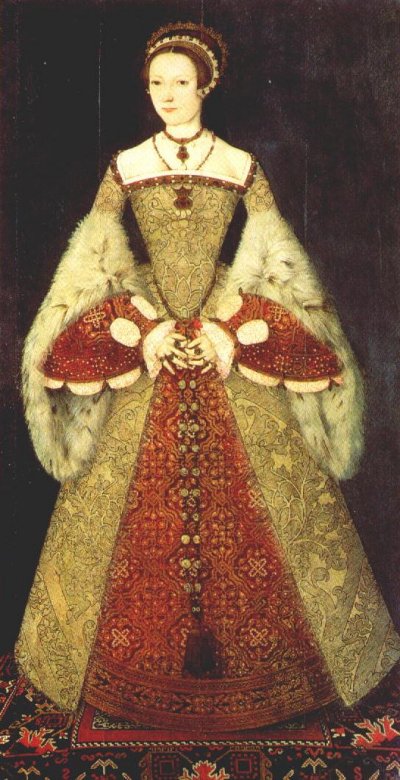
 Mary had been on her way from her Suffolk estates to visit her sick brother but forewarned she turned back and avoided capture by Robert Dudley and a force of armed men. Once she’d regained the safety of Framlingham Castle she declared herself queen and sent Thomas Hungate to London with a letter to present to the Privy Council to that effect. She fled deeper into East Anglia – to Kenninghall in Norfolk.
 Inevitably whilst looking at Raleigh my attention has drifted to Bess Throckmorton; Raleigh’s wife and the love of his life. From there my mind has wondered to Sir Nicholas Throckmorton, Bess’s father. A man who seems to have been as outspoken as Raleigh himself and regarded by the Spanish as ‘dangerously clever’ – though that doesn’t seem to have stopped him from getting into some unpleasant scrapes which ultimately ended with his disgrace.