


Notable Diarists and Journal Keepers
The diarist, John Evelyn visited Audley End in 1654 describing it as something between ‘ancient and modern’. He added that it was one of the ‘stateliest palaces in the kingdom’. He and Celia Fiennes who visited at the end of the seventeenth century commented on the river that ran through the park. Samuel Pepys was more interested in the quality of the wine and the prettiness of the landlord’s daughter at the inn where he was staying.
Pepys visited the home of the Earl of Suffolk at Saffron Walden on 27 February 1659. He was shown around by the housekeeper there – who was a man… ” the stateliness of the ceilings, chimney-pieces, and form of the whole was exceedingly worth seeing. He took us into the cellar, where we drank most admirable drink, a health to the king.” He visited again in 1667 and ‘mighty merry’ he was – which comes as no surprise to his readership.
Celia Fiennes, who completed her journeys riding side saddle, often with only two servant to accompany her, visited in 1697. Her journal described the building in more detail – “built round three courts. There are thirty great and little towers on the top, and a great cupola in the middle. The rooms are large and lofty, with good rich old furniture, tapestry, et cetera, but no beds in that part we saw. There are 750 rooms in the house. The canal in the midst of the park looked very fine. It’s altogether a stately palace, and was built for one of the kings.”
Thomas Audley, Henry VIII’s Lord Chancellor from 1533 until 1544 shortly before the 1st Baron Audley’s own death built the house on the proceeds of his service to the Crown. I’ve enjoyed researching Colchester’s former recorder for my A-Z of the city. He was created Baron Audley in 1538 and acquired the land at Saffron Walden with the dissolution of the monasteries.
Audley’s only surviving child, Margaret Audley, was married to Thomas Howard, 4th Duke of Norfolk. Their son, Thomas Howard, became the first of the Howard earls of Suffolk – hence the ownership of the property from that time onwards. Thomas Howard was born at Audley End in 1561. He inherited the house in 1564 after Margaret’s death. Just as an aside, Margaret was a cousin of Lady Jane Grey.
Royal Connections to Audley End
King James, who was fond of Margaret’s grandson, visited twice in 1614 by which time the earls of Suffolk had modified Thomas Audley’s original house. The improved grand design was based on the premise that royalty would make the most of the hospitality that the earl could provide. Which brings me to the Stuarts and the royal connection mentioned by Celia Fiennes. Charles II liked the house so much that he purchased it in 1668. James Howard 3rd Earl of Suffolk was not so enamoured of the Stewart kings that he wanted to ruin himself during the English Civil Wars – instead he lived quietly at Audley. After the Restoration he sold the house and the park to Charles II who renamed it New Palace and stayed there when he wanted to watch the races at Newmarket.
In 1701 the earls of Suffolk were restored to their former home in return for not demanding more of the £20,000 that Charles II promise but apparently never paid for the property.
And that as they say is that.
The History of Audley End, Richard Lord Braybrooke, (London: Samuel Bentley, 1836)
 Halley’s Comet made an appearance in 1066. Chinese scholars had been noting its appearance since 240BC so Western Europe was a bit late to the party. The Babylonians were in on the act as well.
 Essentially the Normans and the Londoners who saw the comets in 1066, 1664 and 1665 (there were two rather than one prior to the plague and Great Fire of London) believed that they were fiery messengers of the heavens – a direct line from God. They were an indication of his irritation with humanity and a heavy hint that something extremely unpleasant was bound to follow. If it wasn’t fire, war and plague then someone important was bound to die.
 The plague began in Yarmouth in the winter of 1664. By Christmas the disease had spread to London. The weekly Bills of Mortality were about to become extremely depressing. Not that it was a surprise. In 1065 the plague was endemic in England. On average it put in an appearance every couple of decades. There had been an outbreak in 1603 which rather quelled James I’s coronation celebrations. In 1625 – the year James had died approximately twenty percent of London’s population had succumbed to the disease. The first official mortality of the 1665 outbreak was in St Giles in the Fields – plague and typhus started to take their toll the numbers recorded on the Bills of Mortality began to rise. The Great Comet prophecy had been fulfilled – plague had arrived.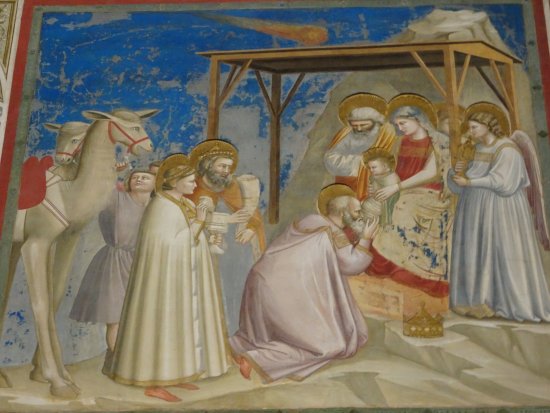
 On the 2nd September 1666, the Great Fire of London officially got to grips with the city. Thomas Farriner had retired to bed thinking that his bakehouse fire had been damped down. At 1.00am his servant discovered that the bakehouse was on fire. The inhabitants of Pudding Lane were the first to have to flee as the flames consumed their homes. Farriner’s family were forced to escape over the roofs but a maid was too scared to go with them so became the first known victim of the fire. At 3.00am Samuel Pepys was awoken by his maid with news that a fire could be seen but he was unalarmed and went back to sleep again. Famously he would bury his valuables including a large cheese in order to save them from the fire.