
The 5th Earl of Northumberland:
 The 5th earl carried the Coronation sword at Richard III’s coronation but grew up in Henry VII’s court as part of the group of young men who were schooled alongside Princes Arthur and Henry. In the first instance it helped remind the 4th earl where his loyalties lay and in the second place it kept the Percy power base under control. He was at Arthur’s marriage to Katherine of Aragon and was part of the train that took Princess Margaret to Scotland to be married to James IV. He had a reputation for being magnificently dressed and travelling in the manner befitting an earl. As such it would be easy to assume that he had royal favour but it is clear that becoming warden of the border marches was something of an issue once he attained his majority. Nor for that matter did he acquire any important national roles. The stumbling block would appear to be the “ravishment” of Elizabeth Hastings – which sounds unpleasant. In reality Elizabeth was the daughter of Sir John Hastings of Yorkshire. She was a ward of the Crown and Percy had arranged her marriage. The language of ravishment and abduction is the language of property being removed from Henry VII’s grasping fingers rather than an account depicting the earl’s predatory nature. Initially he was fined £10,000 but this was later reduced by half. Part of the problem for Percy was that the Tudors had learned important lessons about over mighty subjects. Consequentially Henry VII took a dim view of anyone standing on his prerogatives and he didn’t trust the Percy clan in any event because of their landholding and wealth – not to mention prior form. It was Henry VIII who cancelled the debt once he became king. The question is was Percy unsuited for power or did Henry VII use the case of Elizabeth Hastings to financially kneecap a man known for his lavish lifestyle?
Meanwhile Percy and his wife, Katherine Spencer – a three times great grand-daughter of Edward III had four children born in the first decade of the sixteenth century; Henry (1502), Thomas (1504), Ingram (1506) and Margaret (1508). The year after Margaret was born it was rumoured that the earl had come to an agreement with the Duke of Buckingham to overthrow the Tudors. It was supposed that he would rule north of the Trent. It says something that when Buckingham found himself in the Tower in 1521 on charges of treason that the earl was spared though he had been in the Fleet a few years previously on another ward related charge. It is also evident that Henry VIII ordered Cardinal Wolsey to keep an eye on the earl despite the fact that nothing can really, at this point in history, be levelled against him.
He did all the usual things that Tudor nobles did. He went to war in France in 1512 so was not on hand when James IV of Scotland took the opportunity to invade England. By 1522 he was back on the borders and indulging in some light feuding with the Dacre family. The problem was that Percy saw the warden role in the east and middle marches as one that he was entitled to whilst Dacre had other ideas. The only reason that the Dacre family had become used to serving in the capacity of Warden was that the fifth earl had been a minor when his father was killed by a mob near Thirsk in 1489. Whilst the earl was a ward of the Crown, the Percy estates were administered by the Earl of Surrey and many of the offices associated with the Percy family were offered out to other families. The truth is that Percy had never played the role his forefather’s played either through his youth or because of Tudor distrust. Despite that he attempted to regain the position in northern society he felt was his. By the time he was offered a wardenship he knew that he did not have the necessary military skills to fulfil the role and resigned his commission. The magnificent earl might perhaps have been better described at that stage as the very grumpy earl.
Dacre complained from the borders to the king he wasn’t getting the help from Percy that he thought should have been forthcoming. In 1517 when Margaret Tudor returned to England as a heavily pregnant fugitive, the earl was not overjoyed to see her. He wrote to the king suggesting that Dacre or the Earl of Cumberland might like to look after her. He was probably aware the cost of providing for her would come out of his purse. He attempted to suggest that the countess was indisposed but that didn’t wash with Henry who ordered Northumberland to bring Margaret south. One of the reasons was that the earl was not as wealthy as he had once been. He gambled heavily, spent excessively and seems to have been fined rather a lot by Cardinal Wolsey who seems to have been determined to break the northern powerbase that was the earldom of Northumberland.
Henry’s brother William was much more the border baron than his brother. He fought at the Battle of Flodden in 1513 and was created a knight on the battlefield. Even Lord Dacre wrote highly of William as did Bishop Ogle of Carlisle. It was William who trained the earl’s younger sons in the art of border warfare whilst their eldest brother was sent to London to the household of Cardinal Wolsey for his education and, let’s be honest, as a surety for the fifth earl’s good behaviour.
The Fifth earl turns up in national history in 1526 when he was summoned from the north to sort out the affairs of his eldest son. Henry junior was betrothed to Mary Talbot, daughter of the Earl of Shrewsbury, but had fallen in love with Anne Boleyn. The earl was supposed to back up the cardinal who had been ordered to prevent the match.
He died on May 19 1527.
The 6th Earl of Northumberland:
The new earl was of age but Wolsey made the earl of Cumberland, Margaret Percy’s husband, executor of the 5th earl’s estate. The 6th earl was forbidden from attending the funeral of his father and then there was the issue of Mary Talbot – the powerless daughter of the Earl of Shrewsbury. The engagement had been a means of breaking off the relationship between Percy and Anne Boleyn but the match was not finalised. It had in fact been halted because the young people did not like one another. Now Percy was required to marry her and to live in the north. The fifth earl had not been impressed with his heir and it would have to be said that either of his younger brothers was more suited to riding around the countryside killing reivers – poor old Henry simply hadn’t been trained for it and was rather on the sickly side. It can’t have helped that his father was so far in debt- more than £17,000- that the plate had to be pawned to pay for his funeral.
Cardinal Wolsey drew up a budget. It was not generous. Wolsey also arranged for the estate rents to be collected and began to have a close look at various Percy deeds and entitlements. Matters came to a head when it was discovered that one of the earl’s retainers, appropriately named Wormme, was sending Wolsey details of the earl’s accounts. The earl was not amused and the gentleman in question is supposed to have spent considerable time in a less comfortable dungeon in Alnwick Castle upon payment of a £300 bribe by the earl specifically to get his hands on the man.
The earl now set about demonstrating that he was more than capable of maintaining order in the north though unfortunately he was less able to maintain order in his own marriage. Mary liked Henry almost as much as he liked her. The pair separated but were required by Wolsey to resume their married life. It was not a happy marriage in any sense of the word. Mary became convinced that Henry was trying to kill her – there is no evidence that he was.
But time was running out for the Cardinal who had been unable to untie Henry VIII from his marriage to Katherine of Aragon. The king had rather an unpleasant sense of humour. He sent the man whose life had been made a misery to arrest the Cardinal and convey him to London. Northumberland arrived at Cawood near York on the 4thNovember 1529 where he behaved, it is said with great dignity and compassion for Henry VIII’s former minister.
In 1531 the earl was made a knight of the garter. He was not involved in the Pilgrimage of Grace. He died in 1537 leaving his money to Henry VIII. He is best remembered as the first love of Anne Boleyn. He collapsed at her trial and never really recovered.
Having no children his title passed to his younger brother unfortunately Thomas had become caught up in Bigod’s Rebellion (the follow on to the Pilgrimage of grace). He was hanged drawn and quartered in London in June 1537 before he could become earl.
The 7th Earl of Northumberland:
 The 7th earl was Thomas’s oldest son, also called Tomas – a pleasant change from all those Henrys. To all intents and purposes his father’s death as a traitor should have debarred him from the earldom but when he came of age in 1549 he was restored to some of his lands and his loyalty to Mary Tudor in 1557 saw him restored to the earldom. The Percys had never stopped being Catholic. Unfortunately it all went to his head – quite literally- as he took part in the Northern Rising of 1569. I have posted about the 7th earl before. If you would like to read more click here to open a new page. He was executed in 1572 in York on Elizabeth’s orders. His execution warrant can still be seen in Alnwick Castle.
The seventh earl’s son died before him and he left a family of daughters so the family had to look back up the family tree for the next earl. Not only that but Elizabeth I didn’t trust the family so far as she could throw them so refused to allow them to travel to their residences in the north of the country. During this time Petworth in Sussex became the main Percy residence.
The 8th Earl of Northumberland:

Oil painting on canvas, Henry Percy, 8th Earl of Northumberland (c.1532-1585) by Sir Anthony Van Dyck (Antwerp 1599 – London 1641). A posthumous three-quarter-length portrait, standing, turned slightly to the right, gazing at the spectator, short cropped hair, beard and moustache, wearing full armour, his right hand wearing his gauntlet and holding a baton his left elbow leaning on a ledge and his left bare hand hanging over it. On the ledge is his helmet.
The eighth earl was another Henry Percy and he was the seventh earl’s younger brother. He had the common sense to remain loyal to Elizabeth I during the Rising of the North. Unfortunately he was implicated in assorted plots to release Mary Queen of Scots. He was sent to the Tower as a result of being implicated in the Throckmorton Plot and again in 1584 when he was accused of plotting to allow the Duc de Guise to land troops for the purpose of releasing Mary Queen of Scots and returning England to Catholicism. Off he went to the Tower – for a third time as it happens – he died unexpectedly on 21stJune 1585.
Someone had shot him through the heart. It was decided that he had committed suicide. Let’s just say that warders and officers in charge of the earl’s well being were changed just beforehand to men who were careless about guns. It rather looks as though Sir Christopher Hatton, the queen’s favourite, may have assisted the “suicide.”
 Today’s post is about the family of one of the most notorious women in English History. Frances Howard, Countess of Somerset pleaded guilty in 1616 to murdering Sir Thomas Overbury in 1613 whilst he was a prisoner in The Tower.
 So who was Frances Howard? She was born on the 31 May 1590. She was the grand daughter of the 4th Duke of Norfolk by his second wife, Margaret Audley – it was how that grand mansion Audley End came into the hands of the Howard family. The fourth duke, Thomas Howard, was the man who aspired to marry Mary Queen of Scots in 1569 then managed to get himself caught up in the Ridolfi Plot of 1571. He was executed in 1572. As a traitor his lands and title were forfeit to the State but by that time the Tudors had become rather adept at removing wealth with one hand and returning it with the other in order to ensure that there weren’t too many grievances to be aired by rebellious subjects. The fact that the Howards were Elizabeth’s cousins should also be added to the scales.
 As it happens Audley End was not part of Elizabeth’s haul of booty when the 4th duke got the chop. The estates there and around Saffron Waldon were part of Margaret Audley’s dowry so when she died they had passed straight into the hands of her eldest son Thomas Howard (born 1561), who was Frances Howard’s father.
 Sir Henry Lee (1533–1611) was Queen Elizabeth I’s self-appointed champion. The family originated from Buckinghamshire although his mother was a Wyatt from Kent. As is usual with the Tudors, Lee was related somehow or other to some very important people including the queen herself as well as to William Cecil and to Robert Dudley. He was also man who served all the Tudors from the age of fourteen beginning with Henry VIII without being slung in the Tower for his pains.
 Perhaps Elizabeth wouldn’t have been so keen on lending money if she had realised that her new lady-in-waiting, Anne Vavasour, would one day lead her royal champion astray – she being at least thirty years his junior. In 1584 , three years after Anne disgraced herself by becoming pregnant by the earl of Oxford, Lee jousted against Anne’s brother Thomas. Anne would be described as Lee’s “dearest dear.” Lee clearly wasn’t too bothered by the feud that the Vavasour and Knyvet families were running agains the Earl of Oxford on account of Anne’s meteoric fall from grace. And, in all fairness, we don’t know when Anne and Lee began their relationship. It is only in 1590 that Anne Vavasour turns up in the Ditchley records but as Simpson explains the purchase of Ditchley in 1583 could be explained not only as a home located in reasonable proximity to an important official role (Steward of Woodstock) but also as a home for his lady-love. By 1585 Lee was living separately from his wife as identified through the will of Anne Paget’s mother. The 1592 Ditchley Portrait is usually regarded as Sir Henry Lee’s apology to Elizabeth for living with a married woman – not that she seems to have held it against him.
 Anne was born in about 1560 to 1653 – she was a girl remember- to a Yorkshire family. When she was somewhere between eighteen and twenty, she became one of Elizabeth I’s ladies-in-waiting. Her links with the Kynvet family through her mother were probably what landed her a plum job at court. Her sister would also serve the queen and cause almost as much scandal as Anne.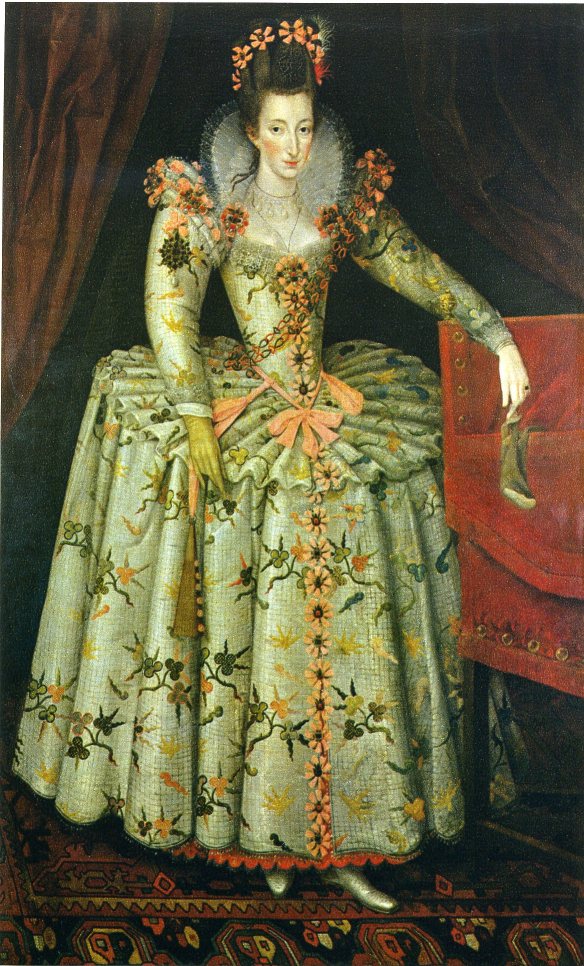

 Now, I know this isn’t necessarily going to be popular but Sir Francis Drake is one of my heroes. He has been since I was a child and I’m not about to change tack now. The problem with the global circumnavigator (the Golden Hind is smaller than some modern bath tubs) is that he was also a privateer – or put another way a pirate licensed by the queen for a spot of pirating which is apparently quite different from being a lawless thug who deserves to be strung up.
 David Cecil, William’s grandfather had turned up at Bosworth on the victorious side. he went on to become one of Henry VII’s newly formed yeomen of the guard. His son meanwhile settled down to the business of being a Lincolnshire gentleman with court connections.
 During the first ten years of Elizabeth I’s reign she took very little notice of the English Catholics who led their home shores to find sanctuary in Europe. Very sensibly she had no desire to create martyrs. There was also the lesson of her half-sister to consider. She had begun her reign on a wave of popularity which swiftly dissipated when she started burning people.
 Margaret’s son Ferdinando Stanley the 5th earl of Derby was much less lucky. Ferdinando became earl in 1593 after his father’s death. The following year the fifth earl died rather unexpectedly following a sudden and violent illness. At the time witchcraft was mentioned but poisoning was the more generally accepted reason – as this extract from Camden’s history reflects:
 History tends to decree that the Tudors had problems with heirs. In reality it must have felt to the heirs, on occasion, that they had problems with being Tudor. Henry VIII decreed the order of inheritance beginning with his own children. Not only did he specify the order of inheritance in his will but he ensured that it was enshrined in law with the third Act of Succession of 1544.
 William (pictured right) was specifically forbidden from joining the Earl of Essex on his campaign in Ireland as it was felt that he might take advantage of the opportunity to do a spot of networking. William, it would’ve to be said, appears to have done nothing to deserve royal suspicion – he was very much a member of the gentry concerning himself with his northern estates and keeping his head down – presumably he didn’t want to end up like his mother or brother. He appears to have been a scholarly type and if you like your conspiracy theories he is one of the contenders for the real Shakespeare based on the fact that George Fenner, a Jesuit, reported that William rather than being interested in politics and matters of religion spent his time “penning common plays” in his house near Chester.
 When we think of children disappearing into the Tower and never being seen again we tend to think of Edward V and his brother Richard, Duke of York – a.k.a. The Princes in the Tower. Henry Pole the Younger, the teenage son of Lord Montagu and grandson of Margaret of Salisbury was sent to the Tower in November 1538 – he was not charged, he was not executed…he simply failed to re-appear in public – and he doesn’t have the same cachet as the Princes in the Tower so tends to remain largely forgotten
 Margaret of Salisbury was the daughter of George Duke of Clarence and Isabel Neville. She had been orphaned at five years old when George had an unfortunate accident in the Tower with a large barrel of Malmsey wine. She and her younger brother Edward grew up under the rule of their uncles Edward IV and Richard III. In 1485 when the Plantagenets lost the Crown on the field of battle at Bosworth Margaret found herself being handed into the wardship of Lady Margaret Beaufort, who in all fairness seems to have had a protective instinct for young women (perhaps not surprising given her own history). So, Margaret of Salisbury was about fourteen when she was married off to a loyal Tudor supporter – Sir Richard Pole and sent off to the Welsh marches where she could be safely ignored.
 Margaret’s loyalty was to Katherine of Aragon and to her daughter Princess Mary to whom she was governess and godmother. (Along with Margaret her sister-in-law