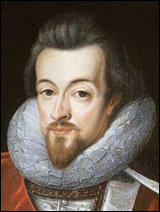
Robert Cecil

00cecilR3Robert was born in 1563, the second son of William Cecil.  His mother was Mildred Cooke.  Robert had an elder half-brother called Thomas who would become the 1st Earl of Exeter but it was this younger, much more clever son, upon who William lavished his affection as well as training him to take over the reins of government.

When he arrived at court he initially seemed at a disadvantage when compared with the young and handsome Earl of Essex.  Robert was small and had a twisted back.  He had only is mind to recommend him and for a while the contest between the new young favourites cannot have been comfortable but in 1596 Elizabeth made Robert, who she called her “pygmy”, her Secretary of State.

In 1601 the Earl of Essex rebelled against the queen and suffered the ultimate penalty.   Robert had blamed his uprising upon the queen’s poor advisor’s of whom Cecil featured.  In the aftermath of the short-lived uprising Cecil counselled clemency but it did him no good in popular imagination.  People had rather liked the flamboyant Essex whereas Cecil was regarded with suspicion in part because of his physical disability – body reflecting godliness etc- there were ballads placing the blame for Essex’s death squarely on Robert’s head.

Interestingly when the conspirators of the Main  and Bye Plot were brought to trial – and bear in mind one of them was his brother-in-law Lord Cobham- it was Cecil who expressed some doubt over Raleigh’s guilt.  Modern historians tend to look at the transcript of the trial and wonder how anyone could have thought Raleigh guilty and are more inclined to consider the possibility that Cecil was helping a political opponent out of the picture.

Robert, like his father before him was a loyal servant to the queen but he opened a secret correspondence with James VI of Scotland.  The stability of the country was largely due to Cecil’s careful management of the transition between monarchs.   The reward for the ease with which James became king was an elevation to the peerage in 1605.  Cecil also became Lord Treasurer.

The Earl of Salisbury was at the root of James’ good governance in the years between 1603 and 1612.  It was he who negotiated the peace with Spain in 1604 – which although unpopular helped to stabilise the economy which was leaking money into the ongoing war. It was he who introduced a Book of rates in 1608 and it was he who attempted to negotiate the Great Contract between King and Parliament in 1610.  This particular venture didn’t come to fruition as neither side particularly trusted the other – and yes it will be a post very shortly.  Robert’s financial policy wasn’t helped by the king’s expenditure, his generous gifts to his favourites or the cost of maintaining a royal household that contained a king, his wife and their children.

Like his predecessor, James  had a predilection for nicknames – Cecil moved from “pygmy” or “elf” to “little beagle.”  The little beagle became increasingly over worked.  In addition to finances there was the matter of religion and the Gunpowder Plot. James also had a new favourite – the handsome but somewhat brainless Robert Carr. Cecil found his advice increasingly spurned in favour of that provided by Robert Carr – or more truthfully- Sir Thomas Overbury who advised Carr.  Francis Bacon’s political aspirations also made life difficult for Cecil who was increasingly adrift in the Stuart world.

And then there is the matter of the Gunpowder Plot – Cecil presents himself as the saviour of king and parliament but there are some doubts about exactly how much provoking Cecil might have done beforehand – he’d learned from that master of espionage Sir Francis Walsingham how to implicate suspects in a web of guilt.

He died in 1612 having swapped his father’s home at Theobalds in 1607 for the Royal Palace at Hatfield on account of the fact the king had taken a shine to Cecil’s house and garden. Cecil demolished the medieval palace and used the bricks to rebuild a new house.


The Millenary Petition and Hampton Court Conference.

king-james1I’ve posted a James I timeline before.  It can be opened here in a new window.  Many of James’ problems at home stemmed from the religious changes that were underway during this period.

He hadn’t even been crowned when he found himself being asked to change the way religion was viewed.  In the Spring of 1603 as he travelled south he was presented with the so-called Millenary Petition.  The Petition, signed by Puritan ministers, commented on the state of the Anglican Church (thy weren’t wildly enthusiastic) however, they had a fine line to walk as criticism of the Church implied criticism of the monarch.  For that reason the preamble made it very clear that the Puritans had no desire to move a way from the Anglican Church.  They did not wish to be regarded as separatists.

The fact was though that they didn’t think the Church had gone far enough with its reformation. Their objections were to do with the rites and rituals of the Church such as the wearing of the surplus and even the wearing of wedding rings. Currently there is no original copy of the Millenary Petition available which is odd because no one could cause Robert Cecil of being sloppy with his filing – but on the other hand during the opening months of James’ reign he was being petitioned about all manner of issue.

They went on to say that they would appreciate it if the king would discuss matters.  James got their hopes up by indicating that he was prepared to debate these things.  The only problem was that at this point no one was aware that James liked to show off his knowledge.  Thus when The Hampton Court Conference was convened in January 1604 Puritans, and rather surprisingly Catholics alike, were hopeful that there would be steps towards religious toleration.  The Puritans had been forced into secrecy at the end of Elizabeth’s reign whilst Catholics faced heavy recusancy fines depending which part of the country they lived in.


The conference opened its doors on the 14th of January 1604. Archbishop Whitgift of Canterbury was also there as were eight other leading clerics all dolled up in the ecclesiastical finery which irritated the Puritans so much.  The Puritans chose their representatives carefully.  They opted for moderate men.  The king was very pleased with himself – he felt that he was leading a discussion of learned men.  During the next three days he listened to what they had to say – or rather he told them what he thought of what they said.  He had no wish to live under presbyterianism, felt that standards of preaching needed to improve and agreed that clerics should be able to debate theological matters – Elizabeth had banned such discussions.

The Puritans must have had cause for hopefulness after all of that so it came as a bitter disappointment when the official outcome, announced by proclamation in July, was one of conformity and business as usual.  The only real outcome was the commissioning of the King James Bible.

Part of the problem was that despite his education as a protestant, James believed in the Devine Right of Kings.  The Puritans want the Church to govern itself and this in James’ mind detracted from the monarch’s special relationship with the Almighty.

On the other hand someone somewhere must have told James not to go poking sticks into ants’ nests because by the end of his reign only two puritan ministers had been turfed out of their livings for non-conformity and George Abbot, Archbishop of Canterbury from 1611 to 1633 was known to protect Puritan ministers on account of his sympathy with many of their beliefs.

As for the Catholics – their hopes of toleration dashed- a number of men sought to blow up the Houses of Parliament and paid the ultimate penalty but in all only twenty Catholic Priests were executed during the period of James’ reign.  It doesn’t sound particularly kindly but in relation to Elizabeth’s tally of executed priests it looks positively tolerant!


Cavendish, Richard. (2004) “The Hampton Court Conference.” History Today. Vol 54, i


Great Fire of London

pepysOn the 2nd September 1666, the Great Fire of London officially got to grips with the city.  Thomas Farriner had retired to bed thinking that his bakehouse fire had been damped down.  At 1.00am his servant discovered that the bakehouse was on fire.  The inhabitants of Pudding Lane were the first to have to flee as the flames consumed their homes.  Farriner’s family were forced to escape over the roofs but a maid was too scared to go with them so became the first known victim of the fire.  At 3.00am Samuel Pepys was awoken by his maid with news that a fire could be seen but he was unalarmed and went back to sleep again.  Famously he would bury his valuables including a large cheese in order to save them from the fire.

Unfortunately in a wooden framed town with thatched roofs and much else made from wood, fire was commonplace so initially the fire was just treated as any other old fire.  Unfortunately the summer had been hot and long and the wind was in the right direction.  By the afternoon the fire had spread as well as the rumour that the Dutch or French had set fire to the city and large numbers of people were fleeing for their lives.  Incredibly only ten or so people were recorded as being killed in the fire which destroyed four hundred (ish) streets.  John Evelyn said that he saw 10,000 houses on fire.

Extract from Pepys’ diary:

Some of our maids sitting up late last night to get things ready against our feast today, Jane called up about three in the morning, to tell us of a great fire they saw in the City. So I rose, and slipped on my night-gown and went to her window, and thought it to be on the back side of Mark Lane at the farthest; but, being unused to such fires as followed, I thought it far enough off, and so went to bed again, and to sleep. . . . By and by Jane comes and tells me that she hears that above 300 houses have been burned down tonight by the fire we saw, and that it is now burning down all Fish Street, by London Bridge. So I made myself ready presently, and walked to the Tower; and there got up upon one of the high places, . . .and there I did see the houses at the end of the bridge all on fire, and an infinite great fire on this and the other side . . . of the bridge. . . .


Initially it was up to the Londoners themselves to put themselves out.  By the third day houses were being demolished in a bid to create a fire wall.  It was only when the wind dropped however that the fire was contained. Ultimately the fire was contained on the third day but some 13,000 houses were destroyed along with 87 churches and key landmarks.  The Stationers Company were particularly devastated by the loss of Old St Paul’s as they had moved their books there for safety thinking it was too substantial to be destroyed by fire.


https://www.pepysdiary.com 

Bonnie Prince Charlie from Carlisle to Derby and back again…what the papers thought.


bonnie prince charlieI keep coming back to the Bonnie Prince probably because there is so much printed material available one way and another not to mention rather beautiful tableware and tall tales.  In the past it was assumed that regional newspapers of the period reflected a Londoncentric viewpoint.  This was what people wanted to read – with a side interest in the local crime rates, corresponding descriptions of executions and the occasional hideous accident.

In 1745 the press presented a very anti-Jacobite stance.  There were headlines like “No Popery” and “No Pretender.” The London Gazette helpfully announced Bonnie Prince Charlie’s landing in Scotland with a £30,00 reward for his capture whilst the Newcastle Courant, one of the oldest regional papers (I think) provided a sketch map of the Battle of Colloden.  The papers were so wholeheartedly Hanoverian that anything Scottish came almost to be regarded as a political and social threat to order and safety.  This was a viewpoint that would last for some time afterwards.  Harris’s article on Jacobitism identifies the Jacobite rebellion of 1745 as a news event of the kind with which we are all too familiar today – the papers ceased to report events they actively sort out scoops and battled one another to be first with a new angle or event.

1745 etchingSatirists made the point that the Jacobites were in league with the pope and being manipulated by the French.  This particular example is in the hands of the British Museum.  Another cartoon entitled The Highland Visitors depicts the Scots indulging in a spot of light plundering.  To be fair the satirists were more than happy to point a finger at General Cope when he arrived in Berwick with the news of his defeat following Prestonpans and in the aftermath  “Butcher Cumberland” was not presented in a warm or friendly light as this cartoon shows with Britannia weighing mercy and butchery:britannia weighing mercy and butchery

The figures involved were presented in tabloid dimensions.  This stereotyping was something that had grown out of the broadsheets and ballads of earlier centuries.  There is even an article on anti-Scottishness in political prints of the period and the use of prints to depict stereotypical Scots including the blue bonnet which the Young Pretender can be seen wearing at the start of this post.  Even more interestingly it was only in 1745 that tartan became synonymous with Scottishness as, I am sad to say, did being unwashed and eating oats.  Having said that the counter balance was the concept of Highland savagery – making the gentrified Hanoverians look somewhat sissy in contrast.  Bonnie Prince Charlie might have been the representative of popery, tyranny and chaos but he was also the brave “highland laddie” that grew from his extended tour of the Scottish Highlands.

But back to the papers of the day – The Northampton Mercury, as averse to the Derby Mercury, took the unprecedented steps of hiring couriers so that they could beat the London papers in reporting Bonnie Prince Charlie’s retreat from Derby.  It also arranged for the London Papers to be couriered to its offices by using four staging posts for speed. The modern age of newspapers had arrived.

As some of you are aware I teach some courses for the WEA – the Workers Educational Association. I shall be delivering a very short course at the beginning of September (Tuesday morning 4th and 11th) on the topic of the Jacobite Prince in Derby. The course reference is C2340279.

https://enrolonline.wea.org.uk/Online/CourseSearchResults.aspx


If you would like to attend please book via the WEA website or phone their office.


Barker, Hannah. (1999) Newspapers and English Society 1695-1855

Clarke, Bob. (2004) From Grub Street to Fleet Street: An Illustrated History of English Newspapers to 1899.

Harris, Bob. (1995) England’s Provincial Newspapers and the Jacobite Rebellion of 1745-46. History 80.  5-21

Pentland, G 2011, ‘“We Speak for the Ready”: Images of Scots in Political Prints, 1707-1832’ Scottish Historical Review, vol 90, no. 1, pp. 64-95. DOI: 10.3366/shr.2011.0004

Sir Philip Musgrave – A royalist commander in the North West

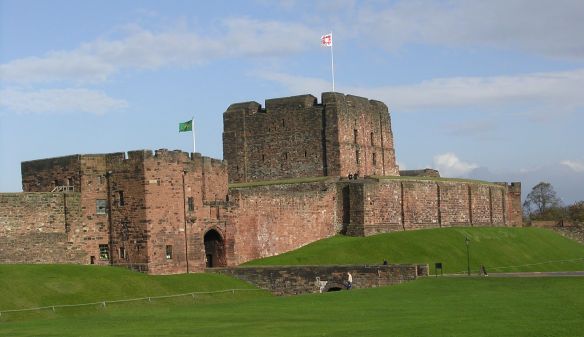
castleAt the onset of the English Civil War the inhabitants of Cumberland and Westmorland can’t be described as being very enthusiastic for war – although they were largely nominally Royalist.  In the North East, the Earl of Newcastle levied a force and roused some stronger feeling although his tenants did, on occasion, simply ignore his warrant.

The Earl, no doubt feeling that the west of the country should be more proactive, appointed Sir Philip as commander-in-chief of the two counties. Sir Philip Musgrave of Edenhall was already a militia colonel and based on the content of a letter in his correspondence had taken steps to act against known parliamentarians in the area – Sir Patrick Curwen of Workington found it expedient for his friends to intercede with Musgrave on his behalf for instance.   He was not very active but the musters he did insist upon were sufficient to irritate Sir John Lowther – who didn’t want Sir Philip to do anything at all. Essentially he felt undertaking the minimum would increase the likelihood of drawing Parliament’s attention on the northwest while Sir Philip hoped that doing very little would ensure that Newcastle  would stay on the opposite side of the Pennines.  Somewhat bizarrely Musgrave and Lowther engaged on a long drawn out feud over who had the right of the matter which involved several of Cumberland’s leading families including the Dacres who resisted Musgrave’s command.

julia musgraveSir Philip was the son of Sir Richard Musgrave, the 1st baronet of Hartley Castle. Sir Richard died in 1615 when his son was just eight.  His career trajectory followed that of many of other gentleman of the period.  He was educated at Trinity College Oxford and then was found a suitable wife- Julia Hutton- from within his own county.  He became the Deputy Lieutenant for both Westmorland and Cumberland.  In 1642 he was made a commissioner for array – that is to say he was responsible for raising Cumberland’s levy of soldiers for the king. There were problems over the exact nature of his commission from Newcastle and assorted feuds to contend with.  However, by 1644 he was able to supply a force to join with Prince Rupert’s army.

Things changed in 1644 because of the intervention of the Scots. On one hand York was captured by Parliament thus causing royalists to come north and secondly Carlisle now stood in danger of capture.  When the city finally fell to Parliament Edenhall had been damaged and Sir Philip had to ride south with a royalist troop to join with the king. At the battle of Rowton heath in September 1645 Sir Philip was injured and subsequently captured.  Records indicate he was sent to York and from there to Pontefract.  Meanwhile his lands were sequestrated.

Sequestration was a means by which that Parliament was able to fine Royalists and confiscate their goods.  Sir Philip’s belonging were valued at £308 in the spring of 1643.  Not only were his cattle and sheep assessed but a figure was also attached to the bees in the hives on his land.

Musgrave was released at the end of 1645 and he went to Newcastle. From there he finally made his way home the following year.  Suffice it to say, Musgrave was loyal to the Stewarts and became involved in the 1648 rising in Scotland which resulted in  Musgrave capturing Carlisle on the 29th April. Musgrave before seeking to capture Appleby. Unfortunately for Musgrave Parliament gained the upper hand  before the Duke of Hamilton and his army could take advantage of the way into England.

Rather than face General Lambert Musgrave sued for parliamentary protection which he gained, not that this prevented him from fleeing to France in 1649. As a direct result of this involvement with the so-called Scottish engagers Musgrave’s lands were confiscated in 1651. His wife was required to sue for maintenance, Sir Philip having been excluded from any act of amnesty by the Treason Act which confiscated his land.

Sir Philip did not remain quietly in France.  He negotiated with the Scots, travelled to England and was even offered Governorship of the Isle of Man by the Countess of Derby. In part his apparent freedom to travel around the realm which had declared him traitor resulted from his friendship with Lord Wharton who even lent his son the money to buy the sequestrated estates back. It was however, one step too far when Sir Philip turned up at his newly repurchased estates.  He was arrested  and sent to London where he was charged with various conspiracies against parliament. If he himself was not involved it is probable that one or more of his sons was.  Ultimately Sir Philip was released but not until £2000 bail had been paid and even then Parliament was keen for him to remain outside his home county.

Musgrave returned to Cumberland in 1660 with the Restoration.  He returned to doing what gentry do – being a JP and member of parliament.  He was also the mayor of Carlisle in 1666 having also been its governor and the captain of the castle.

He died in 1678 having fought at the Battle of Marston Moor and the Battle of Worcester. In between times he had fathered seven children, been granted a peerage by Charles II which he never took up and acquired the right to take tolls on cattle passing through Cumberland (of which he did avail himself).

It would have to be said Sir Philip is one of those figures in history that the more you dig around the more that you find – although sadly not a portrait.

Robinson, Gavin. Horses, People and Parliament in the English Civil War: Extracting Resources

https://archive.org/stream/lifeofsirphilipm00burt/lifeofsirphilipm00burt_djvu.txt

http://www.historyofparliamentonline.org/volume/1660-1690/member/musgrave-sir-philip-1607-78

Thomas and Katherine Howard – avarice personified.

Frances-HowardToday’s post is about the family of one of the most notorious women in English History.  Frances Howard, Countess of Somerset pleaded guilty in 1616 to murdering Sir Thomas Overbury in 1613 whilst he was a prisoner in The Tower.

Overbury was there because he had turned down the post of Ambassador to Russia.  He thought that he would be protected by Robert Carr, the Earl of Somerset.  Carr was the king’s favourite but he had more looks than brains so Overbury had been dealing with the administration that came Carr’s way.  Apparently Overbury even wrote the love letters that Carr sent to Frances Howard before they were married.  In any event the pair were no longer as close as they once had been because Overbury didn’t much like Frances Howard.  He described her, amongst other things,  as a base woman. I am teaching a day school in Halifax on Thursday 21st June about the ins and outs of the murder so shan’t be delivering a spoiler here apart from to say that poisoned jam tarts were involved and a deadly enema. Also to note that Robert Carr, Frances Howard’s second husband did not perform terribly well at his trial for murder because he insisted on representing himself and most observers were of the opinion he would have done better to keep his mouth shut.

ThomasHoward4HerzogvonNorfolk.jpgSo who was Frances Howard?   She was born on the 31 May 1590.  She was the grand daughter of the 4th Duke of Norfolk by his second wife, Margaret Audley – it was how that grand mansion Audley End came into the hands of the Howard family.  The fourth duke, Thomas Howard, was the man who aspired to marry Mary Queen of Scots in 1569 then managed to get himself caught up in the Ridolfi Plot of 1571.  He was executed in 1572.  As a traitor his lands and title were forfeit to the State but by that time the Tudors had become rather adept at removing wealth with one hand and returning it with the other in order to ensure that there weren’t too many grievances to be aired by rebellious subjects.  The fact that the Howards were Elizabeth’s cousins should also be added to the scales.


200px-Thomas_howard_suffolkAs it happens Audley End was not part of Elizabeth’s haul of booty when the 4th duke got the chop.  The estates there and around Saffron Waldon were part of Margaret Audley’s dowry so when she died they had passed straight into the hands of her eldest son Thomas Howard (born 1561), who was Frances Howard’s father.

Thomas Howard married his step-sister  Mary Dacre, the daughter of the duke’s third wife at his father’s behest whilst the duke was int he Tower  awaiting execution. Thomas was eleven or twelve when his father made his final arrangements but Mary Dacre died without having children.

Thomas then married Katherine rich neé  Knyvet  in 1583 – a distant cousin of Anne Vavasour’s  –  who was the widow of Richard Rich.  The couple went on to have ten children who survived to adulthood of whom Frances was one. Sources identify that Thomas Howard was a kind father but that he continued the old idea of marrying his children off early – there were plenty of them after all.  By the seventeenth century child marriages were becoming a thing of the past. Frances would marry her first husband, the third earl of Essex when she was just thirteen.

Thomas Howard being a second son, in between be-getting children and arranging advantageous marriages for them, had to earn his keep.  He was a Tudor sea farer with the likes of Sir Richard Grenville commanding assorted vessels in a variety of campaigns including ventures against the Spanish to Cadiz. As a result of this he was created Lord Howard of Walden in 1597.  From there he seems to have relaxed somewhat – Anne Somerset describes him as “fat and genial.”

When James I became king our Howard become the earl of Suffolk – now this a the bit where history can be a bit confusing.  Followers of this blog know very well that there had been plenty of earls of Suffolk already, the two that spring to mind being Charles Brandon and then Henry Grey but Thomas Howard’s correct designation is Thomas Howard 1st Earl of Suffolk – just think of it as the clock being reset because an entirely new family has taken the title.

The new countess was one of Anne of Denmark’s ladies-in-waiting.  She had served Elizabeth I in a similar capacity.

The earl of Suffolk became an influential member of the royal household between 1603-1614.  He then spent the next four years as Lord High Treasurer before being sent to the Tower for misappropriating funds – which simply means that someone found a way of toppling him from power and that the king allowed those people to do so.  It’s amazing that he managed to hang on to his job in the two years from 1616 to 1618 given that his daughter and son-in-law had both been found guilty of murder.

To make matters worse it wasn’t  just  the earl of Suffolk who’d been taking back handers.  Katherine had also been in receipt of a Spanish Pension during the peace negotiations between England and Spain.  It should be added that taking bribes, which is what “pensions” from Spain were wasn’t going to win friends and influence people even if James I did want peace with the Spanish. She also had strong Catholic sympathies. Popular opinion tended to exonerate the earl and place the blame for the bribery firmly on the shoulders of Katherine. The pair were fined £30,000 and imprisoned – which successfully toppled the Howard faction from power and, put simply, allowed the likes of the earl of Pembroke and the king’s new favourite George Villiers to take charge.

katherine kynvet

Katherine Knyvet or Knyvett depending upon the source (pictured above) had a reputation for avariciousness.  Edward Coke described her during her trial as running the treasury like a shop which is definitely taking the traditional backhander a bit far.  There were also some fairly colourful stories in circulation about her including that she was the one time mistress of Robert Cecil – I should add that I can’t find any primary source evidence of this. There were others and it would appear that she was also prone to using prior relationships with extortion in mind.  Katherine was purported to be a great beauty until small pox ruined her looks in 1619 when she was 55 years old.

The countess was ambitious for her daughters in terms of wealth and political power for the Howards. She encouraged Frances to seek an annulment from her first husband, the 3rd earl of Essex having encouraged the match in the first instance and having been absolutely furious when Frances refused to consummate the match when the young couple were deemed old enough to live as man and wife.  Katherine believed that a match with Robert Carr, the king’s favourite would build the Howard power base better than a familial link with the earls of Essex. She was one of the “respectable” women who attested that Frances was still a virgin so that her first marriage could be annulled.  The ballads of the time were firmly of the opinion that the countess had perjured herself with the statement.  It did not matter that the earl of Suffolk did not much like Robert Carr or that Carr had previously been at loggerheads with the Howard faction.  I can’t help wondering what James I’s queen Anne of Denmark felt about the matter. She did not much like Robert Carr and neither had James’ eldest son Prince Henry who had died suddenly in 1612 just before the whole Frances Howard scandal sprang to life.  I don’t suppose it mattered much to the countess either that Frances was besotted by Robert Carr for her it was a question power and its accompanying cash.

Katherine was similarly cavalier about her other two daughters, Frances’ sisters.  Elizabeth ended up married to William Knollys , a man old enough to be her father.  He was born in 1544 whilst she was born in 1583.  Her third surviving daughter, Catherine, was married to Robert Cecil’s son.

Frances Howard’s parents saw Fortune’s Wheel turn as their new son-in-law  Robert Carr fell from favour prior to his arrest for his part in the murder of Sir Thomas Overbury, ironically enough, partially as a result of the death of Overbury.  There was no longer anyone to look after the administration or deal with the paperwork for him.  Carr did not have the ability to deal with it himself.  It turned out that James required more than a pretty face.  He needed someone to help run the country.

Edward Coke another Jacobean administrator and canny political operator did not much like the Howards or the power that they wielded.  The fact that Frances had played an active part in Sir Thomas Overbury’s murder was a means to bring down both Robert Carr.  The Spanish pension business toppled the earl of Suffolk once and for all.  Coke even sent Sir John Digby to Madrid in an attempt to incriminate the earl still further prior to the earl and countess’s trial.

Even better from Coke’s point of view was the fact that recognising the growing power of George Villiers over the king the Suffolks had encouraged a young man called Monson to supplant Villiers in the king’s affections.  It was Villiers who first told the king that the Countess was taking bribes through exchequer debts.  There was no sign of George falling from favour not least because Monson had been so irritatingly obvious that he had been told to get out of the king’s sight. Their involvement in the plan to put Monson in Villiers place was enough to ensure that the Howards had made a very powerful  enemy.

Suffolk’s fall from power and subsequent trial should have meant that he stayed in prison until a £30,000 fine was paid but a mere ten days after sentence was passed he found himself at home.  The fine was later reduced to £7,000.  What he had lost was his political power. Interestingly when he had been bought low Villiers was prepared to let bygones be bygones as it was he who arranged the interview between James I and the earl of Suffolk reducing the fine.  Historians believe that the slate would have been wiped clean had Howard not sought to avoid the king’s wrath by putting his property into trust in an attempt to save them for his family in the event of the worst happening.  In 1623 the earl’s youngest son, Edward, married George Villiers’ niece – meaning that the Howards were now part of the Villiers’ affinity.  Times had well and truly changed.

The earl died in 1626.  His widow lived until 1638.

And finally, France’s maternal great grandfather was Sir Henry Knyvet of Charlton in Wiltshire. Sir Henry had six children. Frances Howard’s great uncle Thomas played a part in the foiling of the Gun Powder Plot and became a baron.  Margaret Knyvet married into the Vavasour family.  Her daughter Anne would cause a scandal when she became pregnant by the earl of Oxford and then moved in with Sir Henry Lee despite being married to someone else as seen in previous posts.  Alice Knyvet married into the Dacre family.  Catherine married firstly into the Paget family and then into the Carey family – demonstrating where Frances’ mother got her hard-headed attitude to marrying her children from. Henry Knyvet who was Sir Henry’s eldest son married  three times and was an MP.

Somerset, Anne. (1997) Unnatural Murder: Poison at the Court of James I. London:Weidenfeld and Nicholson.
Jacobite symbols – decoding treachery or loyalty…

bonnie prince charlieI’m having a wander in my own direction this afternoon  back into the realms of the Jacobites. In this instance symbolism. These days if we think of anything associated with the Stuarts other than the emblematic Scottish thistle we tend to identify the white Jacobite rose and the white cockade that Jacobites wore on their blue bonnets. However, as you might expect it is not that straightforward. The rose for example should possibly have six petals and either one or two buds. If one bud it references Bonnie Prince Charlie, if two buds then it’s a reference to Charlie and his younger brother Henry. The whole white rose thing is relatively straight forward. The Old Pretender or James III depending on your frame of mind was born on June 10th which is white rose day.  It also helps that the rosa alba is the white rose associated with Scotland which, if you are of a romantic disposition is the kind of rose that the Young Pretender plucked from a bush as he passed it shortly after arriving in Scotland in 1745.


It is not quite so simple as ABC – which naturally stands for A Blessed Change or how about QRS which stands for Quickly Return Stuart.  Here in no particular order as some of the symbols associated with the Jacobite cause:

Butterflies and moths: a symbol of rebirth and renewal or in the phrase of the time, “the return of the soul.”

Sunflowers: it’s an image associated with loyalty because the sunflower turns its head to track the progress of the sun.

Bees: another symbol for loyalty as well as being representative of new life out of decay. If that isn’t enough insects for you then there are also dragonflies and beetles.

Acorn and oak leaves: a Stuart symbol dating from the Restoration. It references Charles II’s escape after the Battle of Worcester when he hid up the oak tree at Boscobel House. It became a symbol of rebirth once Charles wore oak leaves in his hat in 1660 when he returned to England. And it turns out trees are rather more complex than you could even begin to imagine. In 1689 a medal was struck to celebrate the coronation of William and Mary – it bore an oak tree with an orange growing out of it just to remind people that Mary was a Stuart. Green trees and shoots are also about fertility. This clearly has the obvious connotation of plentiful heirs but it was also used in the context of a withered tree when an unjust king was on the throne making the nation wither. We can also move into the realms ofireligious symbolism.  Oak trees are wood. The cross upon which Christ was crucified was made of wood. The oak and the cross are made of the same thing there fore the oak tree is like the Cross. The Stuarts across the sea represent the Arisen Christ – so the rightful monarchs by Divine Right and we might also want to consider martyrdom which takes us back to Charles I. Clearly this was a group of extremely well educated people with nothing better to do than drink wine from exquisitely engraved treasonous  glassware and come up with increasingly complex images to demonstrate their allegiance.

A six pointed star which simply represents royalty. A compass in the form of a starburst as with the star.  Even better for the compass to have a flour de lis pointer. Remember that the french kings offered their support to the Jacobites.

Birds – especially the Jay – yes that’s right, King James III’s initial letter is a J. Ravens could also be used to symbolise Jacobite allegiance given their heraldic links to Scottish kings in the past and there’s also a poem that uses the metaphor of a blackbird to represent James.

If as a Jacobite you wanted your coded loyalty to have a more classical bent then Medusa’s head – Bonnie Prince Charlie being the Perseus sent to rescue the British people from the nasty Hanoverians and Medusa translates as guardian which brings us neatly to the true guardianship of the nation…the Stuarts.

Daffodils symbolise spring and are therefore about hope – so they must naturally be a reference to returning Stuart monarchs. Even a carnation can be seen as symbolic of the Stuart cause because it represents a “coronation.” Forget-me-nots reference the obvious fact that the Stuarts should not be forgotten.

Many of these symbols can be found on beautiful examples of eighteenth century glassware. There are about five hundred examples of Jacobite glassware in existence today. The guidebook from Fairfax House in York observes that this indicates that originally there must have been thousands, so that whilst in theory many people were prepared to raise their glasses in a toast to the “king over the water” fewer were prepared to put their money or themselves where their mouths were.

Aside from the various images there were also opportunities to demonstrate loyalty to the Stuarts through mottoes such as Fiat which translates as “Let it be” as in Let it be a Stuart restoration. Redeat meaning it returns.  Even saying Amen could have a Jacobite context especially if your toasting glass was decorated with the Jacobite National Anthem, a crown and a portrait of James III or his initials:


God save the King, I pray,

God bless the King, I pray,

God save the King.

Send him victorious,

Happy and glorious,

Soon to reign over us,


God save the King.

God bless the Prince of Wales,

The true-born Prince of Wales,

Sent us by Thee.

Grant us one favour more,

The King for to restore,

As Thou hast done before

The familie.


God save the Church, I pray,

God bless the Church, I pray,

Pure to remain Against all heresie,

And Whig’S Hipocrasie,

Who strive maliciouslie

Her to defame.


God bless the subjects all,

And save both great and small

In every station.
That will bring home the King;

Who hath best right to reign,

It is the only thing

Can save the Nation.-Amen.


Other toasts included “to the little gentleman in the black velvet waistcoat,” which was a reference to William of Orange falling from his horse to his death when the horse allegedly tripped over a mole hill causing him to break his collar bone from which pneumonia was a secondary illness. There is even a Gaelic toast which plays on words to reference Bonnie Prince Charlie escaping to Skye dressed as a woman. And let’s not forget the importance of passing the glass over a bowl of water even if you couldn’t toast “The King across the water” out loud.

There is such as thing as having too many symbols and the Jacobites seem to have gone for coded loyalty big time from traditional royal symbols via mythical and allegorical signs to the downright obscure.  And I haven’t even ventured into the realms of Jacobite commemorative paraphernalia which make modern royal coronation and wedding chinaware seem positively low key. For example you could get a piece of china depicting a handsome knight or shepherd and you were actually demonstrating your loyalty to the Pretender. There were Jacobite medals, fans, trinket boxes and miniatures.

I think I can also safely say that I have enough material to make a Jacobite cross stitch sampler.


Guthrie, Neil (2013) The Material Culture of the Jacobites. Cambridge: Cambridge University Press

http://www.scotlandsglass.co.uk/cms/index.php?option=com_content&view=article&catid=31:scottish-glass-general&id=61:jacobite-glasses-fascinating-and-controversial

https://www.nms.ac.uk/explore-our-collections/stories/scottish-history-and-archaeology/the-jacobite-challenge/


The Cavendish Connection Part three – The first five Dukes of Devonshire.

The arbitrary number of Dukes reflects the course of the Eighteenth Century rather than an erroneous number of “lords a leaping.”

(c) National Trust, Hardwick Hall; Supplied by The Public Catalogue Foundation

(c) National Trust, Hardwick Hall; Supplied by The Public Catalogue Foundation

I actually dealt with the First Duke of Devonshire in my previous post as he was also the fourth earl.  Having invited William and Mary to take the Crown in the Glorious Revolution of 1688 he conveniently died in 1707 having helped to negotiated the union of the kingdoms of England and Scotland.  Despite his reputation for brawling and womanising he clearly did evolve into a serious political figure.  This happened following his return from his Grand Tour when he entered the houses of Parliament principally because he was anti-Charles II and anti-Catholic. There was also the small matter of Colonel Culpepper as described in yesterday’s post. In addition to becoming a duke he was also made Lord High Steward by King William in grateful recognition of his services.

The First Duke was unusual in his family in that he was a Whig, i.e. he wanted parliamentary government rather than a government dominated by the monarchy.  Presumably his uncle the Duke of Newcastle and his father the Third Earl must have been spinning in their graves.  Roy Hattersley explains that the Whig attitude  was that men of birth were endowed with a duty to protect the interest of the nation (of course, it helped if they prospered at the same time.)  The basic caveat was that the men of birth should have land because the soil was the physical embodiment of their duties and responsibilities.  Johnson described the first Whig as being the Devil! This description came about because these powerful men not only believed that they had a duty to protect the nation but that they could do what they wanted when they wanted irrespective of the law – which may be a bit of a swinging statement  but you get the gist. Suffice it to say Horace Walpole described the first duke as “a patriot amongst the men and a gallant among the ladies – ” a stamens which had nothing to do with Cavendish’s manners.

2nd duke of devonshire.jpgOn which note let us proceed to the Second Duke – unsurprisingly called William.  William had gained the title Marquis of Hartington on his father’s elevation to a dukedom in 1594. This is the title by which the heir of the current duke is still known.  This William was not a chip off the old block.  He did not become involved in drunken brawls or debauchery.  His marriage, arranged by his father to show his political loyalties, was to Lady Rachael Russell the daughter of William Russell who was executed in 1683 after attempting to have the Catholic Duke of York excluded from the succession.  Charles responded by dissolving parliament thus removing the Whig voice.  Russell was ultimately implicated in the Rye House Plot to assassinate Charles II – He hadn’t actually been involved in the actual plot, it was enough that he was a leading Whig – at worst his crime was misprision of treason which wasn’t a capital offence, which basically means that he knew something treasonous was about to happen but he didn’t tell the authorities. The political union between William and Rachael evolved into a love match rather to the first duke’s irritation.

William’s education followed the pattern of his father and grandfather.  He was sent on a Grand Tour and then he entered into local politics and administration. He sat for Derbyshire but then lost his seat -again to his father’s irritation.  However, this proved to be to his advantage as he then gained  a seat in South Yorkshire.  His corresponding member was Robert Walpole. The pair became firm friends and, let’s face it, it’s always handy to know a prime minister. In 1707 William became the Second Duke of Devonshire.

His arch enemy in political terms in Derbyshire was the Tory, Henry Sacheverell. The rise of Henry reflected the rise of the Tories in national government and William found himself out of his job as a privy councillor. Instead of sulking he had an amendment added to the Act of Settlement identifying the Elector of Hanover’s eldest son as an additional heir to the Crown.  It reflected William’s protestantism as averse to the Tory High Church view of the world that came perilously close to Catholicism in William’s mind.  It should be noted that not only did William support the established church but spoke out for dissenters as well.  When Queen Anne died on August 1 1714 William rose once more with the role of Lord Steward of George I’s household.

There was an interlude whilst James III’s son, the so-called Old Pretender, made a bid for the throne getting so far as Preston before being beaten. Bills were passed against Catholics. Later he opposed the South Sea Bubble scheme which he argued would have horrible effects on the economy. He even managed to be friends with both George I and the Prince of Wales – a fairly unusual state of affairs.

3rd duke of devonshire.jpgThe third duke is, completely unsurprisingly, also a William.  He became duke in 1729 following his Oxford education and stint in parliament representing various counties.    Dr Johnson who we have already seen was not keen on Whigs made an exception for the Third Duke of Devonshire.  He described him as “a man faithful to his word” – though not necessarily of “superior abilities.”  He was also described as a man of untidy dress, plain habits and noted on on account of the astonishing amount that he could drink.

catherine hoskyns.jpgIn 1718  William, then Marquis of Hartington, married Katherine Hoskins.  It was not a match arranged by the second duke.  The marquis had fallen in love with a merchant’s daughter – fortunately the merchant was wealthy.  Hugh Walpole described Katherine as “delightfully vulgar.”  The pair had seven children upon whom their father doted (I’m warming to this Cavendish).

In 1737 he became the Viceroy, General Governor and Lord Lieutenant of Ireland, his mother after all was the daughter of the First Duke of Ormonde.  The Duke remained in post for the next seven years returning to England just in time for the next round of Jacobite plotting.

Arriving home in January 1745 the third duke became Lord Steward of the Royal Household – not that it stopped the Duke from spending his time in Derbyshire.  By September England was in uproar over the arrival of Bonnie Prince Charlie in Scotland.  On September 28th 1745 there was a meeting at the George Inn in Derby for the purpose of raising a militia.  I’ve posted recently about the inglorious activities of the Derbyshire Blues who headed in the direction of Nottingham as soon as they realised that Derby was the next stopping point for the Jacobite army.  The duke not known for his martial tendencies had expressed concern about his valuables. It was this duke and his wife who are the direct ancestors of both Prince Charles and Princess Diana. The third duke died in December 1755. His wife survived him by twenty-two years.

4th duke of devonshire.jpgWhich brings us to the Fourth Duke – yes his name is William.  He was born in 1720.  and like his forefathers became an MP and served in Government – briefly becoming Prime Minister. He married aristocratically to Elizabeth Boyle, the 6th Baroness Clifford which is why the Cavendishs own Bolton Abbey.  In addition to which she brought huge quantities of London property and other assets into the Cavendish fold.  All I really want to add about duke number four is that he arranged for Capability Brown to landscape Chatsworth and he was the chap who had the rather grand stable built.

william-cavendish-5th-duke-of-devonshire-1768-chatsworth-house-derbyshire-by-pompeo-batoni-1434193609_b.jpgFinally we arrive at the Fifth Duke of Devonshire and the nineteenth century.  Yes, his name was William Cavendish – there does seem to be a bit of a pattern emerging. Like his father the fifth duke was Lord Lieutenant of Derbyshire handheld administrative posts in Ireland but unlike his father who must have held the office of Prime Ministers for one of the shortest periods of time ever he declined cabinet positions. The Fifth Duke is more famous for his marriages, firstly to Lady Diana Spencer and secondly to his long term mistress Lady Elizabeth Hervey but that’s a post for another time as is the development of Buxton as a fashionable eighteenth century spa town.

And that is as far as I propose to go down the line of Cavendish dukes. The Sixth duke (another William ) is known to history as “the Bachelor Duke” and when he died the title passed to the descendants of the third son of the fourth duke.

Hattersley, Roy. (2014) The Devonshires: The Story of a Family and a Nation. London:Vintage Books

Pearson, John. (1984) The Serpent and the Stag. New York: Holt Reinhart

Thomas_Gainsborough_Lady_Georgiana_Cavendish

The Cavendish Connection part two – the earls of Devonshire.

bessofhardwickBess of Hardwick disowned her eldest son Henry but he had still inherited Chatsworth despite the fact that Bess entailed what she could to William and his heirs.  Due to his debts Henry sold Chatsworth to his brother William.

William was not what might be called dynamic.  He was still living at home  in Hardwick with his mum when he was a middle aged man with a family.  Nor was he interested in a London based career as a courtier.  Instead he concentrated on the role of administration traditionally allotted to the gentry.  He was for example the Lord Lieutenant of Derbyshire.

William_Cavendish,_1st_Earl_of_DevonshireIn 1605 thanks to the auspices of his niece Arbella Stuart he became a baronet.  In 1618 with the aid of £10,000 paid to James I he became an earl.  In addition to his land holdings in Derbyshire he was also investing in foreign trade – the East India Company, the Muscovy Company, the Bermuda Company and also in the settlements in Virginia.

The first earl was Anne Keithley of Yorkshire with whom he had three children.  Two of them died young.  His daughter Frances married the first baron Maynard.  His second wife was also from Yorkshire and this marriage produced one son, John, who was knighted in 1618 when Prince Charles became Prince of Wales.  He died soon afterwards.

William’s eldest son was another William, called Wylkyn within the family.  It was intended that he should marry Christian Bruce of Kinross when he was eighteen.  She was only twelve but the matter had been arranged to King James’ approval.  The dowry was a very lucrative £10,000.  The problem was that young William didn’t want a wealthy bride of the kind that his father and grandmother Bess might have approved nor was he unduly concerned about the first earl’s political aspirations.  No, what William wanted was his mistress Margaret Chatterton who had been one of Bess’s ladies.  It didn’t help that Christian was still a child to William’s eighteen years. Despite Wylkyn’s dislike of the marriage he was wed to Christian Bruce.  The Devonshires would not be known for their love matches.

Lord-Cavendish-Later-Second-Earl-of-Devonshire-and-His-Son-G_58_4_1-827x1024By the time he was in his twenties young William was a polished courtier (pictured left).  He also had a reputation of brawling, drinking and womanising.  He also spent money as though it was water.  This Cavendish was behaving as though he was a member of the aristocracy.

Perhaps in a bid to curtail his son’s rather un-Cavendish habits William senior appointed him a new tutor in the form of Thomas Hobbes.  The reason for this was that married men could not attend university and William senior saw that his son required a layer of culture to add to his fashionable persona.  The pair were sent on a tour of Europe.  These days we tend to think of the Grand Tour as an eighteenth century phenomenon but despite the on-going religious wars the English were keen to visit foreign climes – especially when Prince Charles (to be Charles I) made it a fashionable thing to do.

In addition to all the gallivanting he found time to become the MP for Derbyshire and on account of the Cavendish investments was also Governor of the Bermuda Company.  However he had managed to get himself into a huge amount of debt and ultimately an act of parliament would have to be sought to break Bess’s entail on part of the estate so that land could be sold to save the rest of the estate.

The second earl died in 1628 in London of “excessive indulgence.”  His heir, another William, was a minor so for a while at least the Cavendish lands were in the hands of Christian Bruce who was by now thirty-two-years old and a canny woman managing to secure full wardship for her son.  An economy drive was instituted and Thomas Hobbes was given the boot, only returning when finances recovered and there was further need for a tutor.  William was knighted at Charles I’s coronation in 1625.  His royalist credentials are evidenced by the fact that he spoke against the attainder on the Earl of Strafford in 1641. The network of family ties was strengthened with a marriage to Elizabeth Cecil, daughter of the Earl of Salisbury in 1639.

William_Cavendish,_3rd_Earl_of_Devonshire.jpgWhich brings us to the English Civil War.  Christian Bruce was a friend of Henrietta Maria.  The Cavendishs were Royalists.  In 1642 the 3rd Earl presented himself in York with his younger brother Charles who joined with Prince Rupert and his cavalry, took part in the Battle of Edgehill and ultimately became the Royalist commander for Derbyshire and Lincolnshire prior to his death at the Battle of Gainsborough.  Meanwhile the earl, no doubt on his mother’s advice, took himself off to Europe until 1645 when he compounded for his Royalist sympathies – paid a fine of £5000 and returned to live in England at Leicester Abbey where his mother had her residence (it had been purchased by the first earl in 1613) and from there he went to Latimer Place in Buckinghamshire until the Restoration when he returned to Chatsworth.

The third earl laid the foundations for Chatsworth’s library, was a fellow of the Royal Society and a friend of the diarist John Evelyn.  He does not seem much like his father, or indeed his son.


(c) National Trust, Hardwick Hall; Supplied by The Public Catalogue FoundationBorn in 1641, yet another William became the fourth earl upon his father’s death in 1684.  There had been an older brother but he died in his infancy. The third earl had preserved the Cavendish estates largely by keeping his head down and letting his cousin (William Earl, Marquis and the Duke of Newcastle) of and younger brother get on with Royalist soldiering.  The fourth earl was described by Bishop Burnet as being of “nice honour in everything except the paying of his tradesmen.”  Like his father he had been sent on the Grand Tour and like his Uncle William (Newcastle) he fancied himself as  a bit of a poet. It is easy to see how this particular Cavendish fitted into the court of King Charles II who was also known for his late payments.  Like his monarch Cavendish also had a reputation for womanising. He had several children by a mistress called Mrs Heneage. Apparently Charles II had told Nell Gwynn not to have anything to do with him – re-arrange the words pot, kettle and black into a sentence of your choice.  It could be that Charles took against William Cavendish because he publicly snubbed the Duke of York (James) at Newmarket on account of his catholicism.  Aside from seduction the fourth earl also seems to have spent a lot of time picking fights and duelling.

In 1661 the fourth earl entered Parliament and the following year married Lady Mary Butler the daughter of the Duke of Ormonde.  Ormonde had been at the forefront of the Irish campaign against Oliver Cromwell and had been with Charles II in exile. Upon the Restoration he became a key political figure.  In this instance the Cavendish alliance was for political advancement.

Somehow or other the brawling, womanising, verse-writing earl became a serious politician.  By the 1670s he was using his position to wage war on behalf of Parliament against James III.  This particular Cavendish was not a die-hard royalist like his father or uncles).  The Fourth earl was a Whig – he was anti-court and anti-Catholic and, of course alongside that, he was first and foremost a Cavendish.


Part of the reason for his being involved in the Glorious Revolution, to depose James III in favour of his daughter Mary and her husband William of Orange, was because of a dispute over land.  Colonel Culpepper, a supporter of James III, had made a claim to some Devonshire lands stating that they should have come to him as part of his wife’s dowry.  The pair had a brawl when Culpepper called Cavendish’s loyalty to the Crown into question and Cavendish called Culpepper a liar.Culpepper ended up in the Marshalsea Prison was released and the pair met again.  Culpepper having been imprisoned  for fighting refused a further confrontation so the earl grabbed him by the nose and dragged him from the room before beating him about the head with his cane. It was the earl’s turn to be imprisoned unless he paid a £30,000 fine.  The earl had no intention of paying so he simply walked out of the prison gates and headed for Derbyshire. A warrant for his arrest was issued but in the short term everything was smoothed out with a letter of apology and an I.O.U. – which the earl clearly had no intention of paying.

It was a short step from that event to conspiracy in Whittington and a letter inviting William of Orange to come to England – William Cavendish was able to stand up for Protestantism and get one over on Colonel Culpepper. It also made him one of the so-called “Immortal Seven” having signed the letter inviting William to come and take the crown. The new king was very grateful to the fourth earl who would shortly become the First Duke of Devonshire.  The two times great grandson of Bess of Hardwick had moved the family further up the social hierarchy.


Hattersley, Roy. (2014) The Devonshires: The Story of a Family and a Nation. London:Vintage Books

Pearson, John. (1984) The Serpent and the Stag. New York: Holt Reinhart


Charles Cavendish – cavalier (1620-1643)

Colonel_Lord_Charles_Cavendish_(1620-1643)_by_Sir_Anthony_Van_Dyck,_1637_-_Oak_Room,_Chatsworth_House_-_Derbyshire,_England_-_DSC03062Let us return today to the Royalist summer of victories in 1643. It was really only in the east of the country that events did not go all Charles I’s way. On 20 July 1643, Lord Willoughby captured Gainsborough in Lincolnshire for Parliament. This meant that the Earl of Newcastle could not now communicate so easily with the royalists at Newark and he could not simply march south expanding royalist territory.  The Committee of Safety scratched their various heads and then sent Oliver Cromwell and Sir John Meldrum from the Eastern Association Army to back up Lord Willoughby as he was being threatened by the Royalist military commander – Colonel Charles Cavendish – who was the nephew of the Earl of Newcastle.

Charles, born in 1620, was the younger brother of William Cavendish the third Earl of Chatsworth and the epitome of a Hollywood cavalier unlike his brother who appears to have been much more retiring. Apparently Charles had travelled as far as Greece and Cairo in happier times as well as the more usual Italy and France. As you might expect of a nephew of the Earl of Newcastle he was ferociously Royalist. He had gone to York in 1642 to offer his services to the king; been part of Prince Rupert’s cavalry charge at the Battle of Edgehill on the 23 October 1642 and had then been offered command of the Duke of York’s troop (a sudden vacancy had arisen).   From there he persuaded his family to raise sufficient funds for him to form his own body of men making him a colonel and the royalist military commander for Lincolnshire and Nottinghamshire. It was Charles Cavendish who took Grantham for the king on 23 March 1643 and sent the Parliamentarians packing at Ancaster the following month.  In the space of a year he had changed from being a volunteer guards officer to a Colonel in charge of an entire region. Possibly, the gift of £1000 into the king’s war chest may have expedited matters.


Anyway, the Parliamentarians came across Cavendish’s dragoons south of Gainsborough on the morning of 28th July 1643. The Royalists had the advantage of high ground which they lost during a Parliamentarian cavalry charge. The Royalists ultimately fled on account of the fact that the Parliamentarians were learning a thing or three about tactics but Charles had kept his own men in reserve and was very sensibly planning to nip around the back of the Parliamentarians to attack their rear. Unfortunately a certain Colonel Cromwell spotted the manoevre and attacked the Royalist rear instead. Cavendish fell from his horse during the fighting and was killed by Captain Berry with a sword in the small ribs. Ultimately the Parliamentarians, who definitely won the battle, were unable to hold out against Newcastle.

Years later when Charles’ mother, Christian Bruce, was buried in All Saints Church, Derby on 16 February 1675 the bones of her long dead son were interred with her as she had asked. The funeral sermon by William Nailor described Charles as a “princely person,” “the soldiers’ favourite and his majesty’s darling.” It also described Charles as being like Abner and related to the Stuarts through the Bruce connection. The full text can be found in the snappily entitled  A commemoration sermon preached at Darby, Feb. 18, 1674, for the Honourable Colonel Charles Cavendish, slain in the service of King Charles the First, before Gainsborough in the year 1643.

Colonel, Lord Charles Cavendish (1620-1643)by British (English) School

The picture at the start of the post is by Van Dyck and is at Chatsworth whilst the picture above is at Hardwick Hall (I think).

Bickley, F. (1911) The Cavendish family  https://books.google.co.uk/books/about/The_Cavendish_Family.html?id=1G8Al5RutVAC&redir_esc=y

Dick, Oliver Lawson (ed) (1987)  Aubrey’s Brief Lives.  London:Penguin