
 Yesterday I found myself in the garderobe, sliding into a small space, ducking my head to avoid a low beam and then straightening to find myself in a priest hole. Fortunately for me no one was going to slam the lid back into place and leave me in total darkness until it was safe for me to emerge or I was discovered and dragged off to the Tower. I was enjoying a sunny afternoon at Oxborough Hall.

During the reign of Elizabeth I Jesuits priests were feared as enemies of the state and hunted down by pursuivants. Catholic priests moved from Catholic household to catholic household, often purporting to be cousins or other distant relations. Wealthy families built hiding places in their homes so that when the priest hunters came calling there was somewhere to hide their illicit guest.

The most successful priest holes were built by Nicholas Owen – not that he built the hole at Oxborough. Owen, an Oxfordshire man, was born in 1562. He had three siblings one was a Catholic priest and another printed illegal Catholic books. The brothers’ father was a carpenter and Nicholas in his turn was apprenticed to a joiner. By the time he was in his mid twenties he was working for Father Henry Garnet and had become a lay brother in the Jesuit order. He suffered from ill health including a limp from a poorly set bone and a hernia. Despite his physical frailty he travelled from house to house constructing priest holes. Most of the people he worked for didn’t know his real name – to them he was Little John. He worked by night in total secrecy to create his hiding places. Many of the priest holes were so well concealed that they were only discovered in later centuries when houses underwent renovation. Unfortunately the occasional hole is still found with its occupant still in situ.
Owen’s favoured locations seem to have been behind fireplaces and under stairs. The pursuivants were men who could judge if an interior wall looked shorter than an exterior wall so Owen had to be very careful as to where he located his priest holes.
Nicholas was a man strong in faith. He was eventually captured in 1606 at Hindlip Hall in Worcestershire in the aftermath of the Gunpowder Plot. It is thought he allowed himself to be captured in order to distract attention from Father Henry Garnet who was hiding nearby.
There were rules about torturing people with disabilities but this didn’t stop Robert Cecil from demanding that Owen be taken to the Tower and taxed about his knowledge by Topcliffe. He was racked. This caused his intestines to bulge out through his hernia. Topcliffe ordered that they be secure by a metal plate. This cut into the hernia and he bled to death in his cell. He died rather than give away his secrets and the lives of the men who depended upon him keeping them. The State announced that he had committed suicide.
St Nicholas Owen was canonised in 1970 and is the patron saint of illusionists and escape artists.

Hogge Alice. God’s Secret Agents
Reynolds, Tony. (2014) St Nicholas Owen: Priest Hole Maker
 Arabella Churchill was the mistress of the Duke of York for about ten years as well as being one of Anne Hyde’s ladies-in-waiting. Arabella had four children by James.
 In 1415 there were about 78 peel or pele towers in Northumberland. These towers were essentially private fortifications for protection in the event of Scottish raids – or neighbours you didn’t necessarily agree with. The idea was that you could secure your family and portable valuables until it was safe to emerge or help arrived – beacons were kept on the top of the towers which could be lit to summon help and to worn the surrounding countryside of danger.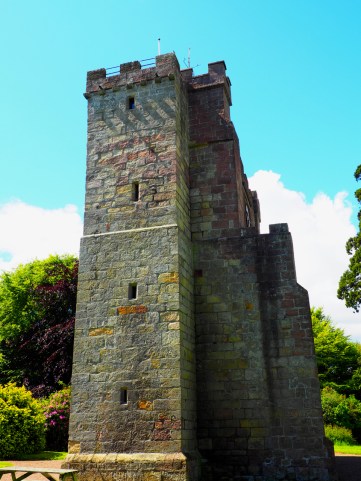

 The story of the Holland family begins with Robert de Holland from Upholland in Lancashire. He was born about 1283. He was a trusted part of Thomas of Lancaster’s household. He benefitted from being within the Lancaster affinity by acquiring land as well as a wife in the form of Maud de Zouche – a co-heiress.
 Thomas died in December 1360. The following year his widow married her cousin Edward, the Black Prince. The Holland children now had access to patronage with a very heavy clout. Thomas (Joan’s son) gained a wealthy and aristocratic bride from the FitzAlan family. More importantly it was the Hollands’ half-brother, Richard, who ascended the throne after Edward III died in 1377.
 Thomas’s uncle John (Joan’s second son) was executed at the same time. John Holland had married another wealthy royal cousin, Elizabeth of Lancaster (John of Gaunt’s daughter). This may have been because of the Black Prince’s patronage and it may have been because his mother Joan of Kent got on well with her cousin John of Gaunt. John became Earl of Huntingdon in 1388 and in 1397 became the Duke of Exeter. He was also involved in removing Richard II’s enemies. In John’s case not only had he arrested his uncle Richard FitzAlan (the 11th Earl of Arundel) he has gone to Calais to arrest Thomas of Woodstock, Richard’s youngest Royal uncle. Thomas had died whilst in Calais as pictured in Froissart – the story involves a mattress…
 At the beginning of the English Civil War, in 1642, William Cavendish of Bolsover and Welbeck Abbey who was the Earl of Newcastle at that time gave Charles I £10,00 and raised a troop of 200 horsemen. In June of that year William was sent to secure Newcastle. He was on his way to becoming the king’s general in the north and about to start a military dance with Lord Ferndinado Fairfax and his son Sir Thomas Fairfax that would only end in 1644. Not that it was all plain sailing. The slide to war met with opposition and not every local lord was keen on Cavendish’s recruitment campaign.
 At the Battle of Marston Moor Newcastle’s Regiment of Foot were killed almost to a man. They remained in formation in the centre of the Royalist line and it is thought defended White Syke Close. The Parliamentarians recognising their bravery asked for their surrender but the regiment refused. By the time the Whitecoats died the battle was already lost – their deaths were futile. They were buried in mass graves where they fell. If you walk the route of the Battle of Marston Moor White Syke Close is marked on the ordinance survey map. Alternatively take advantage of a Country File walk which outlines the battle and leads you on a circular walk,
  This post is for all of you lovely folk who come to my classes in Halifax – so if you’re reading this on the other side of the world, my apologies. As you will probably be aware, having been made homeless due to a change in ownership of our usual venue, I was fortunate to be able to book the Learning Studio in the Piece Hall for the March and April day schools but struggled to find a venue for May.
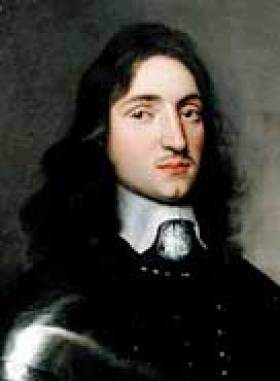 We will explore Fairfax’s role in the Bishops’ War and the Fairfax position in the escalating dispute between King and Parliament before following his progress from Seacroft Moor to Adwalton.
 And a very happy new year to you all. Of course in Scotland before 1600 that would have been 25th March – legally speaking. In England the law wasn’t changed until 1750 when the New Style Calendar Act changed the legal new year and accepted the Gregorian Calendar. The act passed into law in 1751 meaning that 1751 had only 282 days running from 25th March to 31st December. This didn’t mean people didn’t celebrate January 1st it simply meant that the law deemed the new year to begin in March. Its the reason some official documents don’t seem to be able to make their mind up between January and March what the year actually was and provide both option Old Style and New Style.
 Percussion has been used on the battle field for a very long time not only to control the marching pace of soldiers but also to pass commands and create fear in the opposing army. Apparently the Europeans learned about drums as a military technique during the Crusades when Saladin used military bands. The crusaders found them somewhat off-putting and recorded as much in their chronicles. The Ottomans are known to have continued the tradition. Kettle drums found their way to Spain which was part of the Ottoman empire until the fifteenth century.