Jane Shore

The Penance of Jane Shore in St Paul's Church c.1793 by William Blake 1757-1827Jane, or rather Elizabeth, Lambert was  a Londoner.  Her father John Lambert was a successful merchant who ensured his daughter received a good education and  spent time at court.  It is probable that John loaned money to King Edward IV to pursue his campaign against Margaret of Anjou and the Lancastrians.  By 1466  Jane was married to a goldsmith by the name of William Shore on account, it is thought that young Jane attracted rather a lot of attention at court from wealthy men – sadly all of whom appeared to have been married.  One of her admirers was Lord Hastings another one was the king himself – Edward IV.

In 1467 Jane’s marriage to William Shore was annulled.  The cause given is Shore’s impotence which is a bit puzzling because he wasn’t an old man, even though Sir Thomas More described the goldsmith as ‘frigid.’  Even more peculiar, some ten years later, King Edward  gave his protection to Shore and his servants.  It is difficult to know whether William stood back to make way for his king – he certainly never remarried- or whether he just wasn’t interested in women.  In any event, Jane swiftly became King Edward’s favourite mistress.  He described her as the ‘merriest harlot in the realm.’  Her concern for others didn’t just extend to her ex-husband.  Even Sir Thomas More admitted that rather than profiting from her relationship with Edward IV herself she used her influence to help other people – a bit of a contrast with Edward’s lady wife who managed to irritate rather a lot of people by lining her own pockets and those of her family.

When King Edward died she became the mistress of Thomas Grey, stepson of the King and then took up with Lord Hastings- who’d admired her for more than two decades at this point. She was then implicated in a plot purported to have been formulated by Lord Hastings to bring about the overthrow of Richard, Duke of Gloucester.

According to Margaret Beaufort who had it from her husband Lord Stanley, Richard  had concluded the best thing to do was to become king himself.  Hastings had summoned Richard from Middleham when Elizabeth Woodville set a plan in motion to keep all the power within Woodville hands.  As a result of Hastings sending a messenger north, Richard was able to intercept the young king on his way from Ludlow to London and scupper the Woodvilles chances of controlling the kingdom.  Elizabeth Woodville had immediately sought sanctuary in Westminster along with her daughters and the Duke of York.  Hastings apparently had a change of heart once he realised that Richard was contemplating changing the role of protector for that of monarch and immediately began plotting against Richard.

Jane was apparently a key figure in this murky world of royal conspiracy – bizarrely Margaret Beaufort (yes, the mother of Henry Tudor – Lancastrian claimant to the throne), sent a letter explaining all of this to Elizabeth Woodville.  It’s not so far fetched because Margaret had made her submission to the Yorkist king following the Battle of Barnet in 1471.  At that stage no one thought of her teenage son as a possible king.  In the intervening years Margaret had become sufficiently friendly with Elizabeth Woodville to be a godparent to the Princess Bridget. And, in order to support her story she mentions Jane because, equally oddly, Elizabeth was on friendly terms with Jane… and who better to carry messages than Jane. (Who needs soap operas when the Plantagenets are available?)

Whatever the truth of the plot, whether there even was one, Richard swiftly accused Lord Hastings, Jane Shore and Elizabeth Woodville of conspiring against him.  Hastings was sent to the Tower and executed without a proper trial.  The whole affair was so hasty that there wasn’t even a block in place. Jane, deprived of her latest protector and incarcerated was accused of witchcraft (as incidentally was Elizabeth Woodville)  but the case was eventually dropped.  Instead Jane was charged with being a harlot – and having been Edward IV’s mistress, Thomas Grey’s mistress and also Lord Hastings floozie it was a charge that was going to stick. Jane, like Eleanor Cobham before her and countless other women, was  forced to walk through London barefoot in her shift with a taper in her hand in  penance for her sins – apparently the Londoners who had come out to mock her were moved by her dignity.

Jane was clearly a woman of some importance in this murky dangerous world. Richard was  troubled by her and sought to remove her from the picture altogether.  Edward usually discarded his mistresses pretty swiftly but Jane had remained friendly with him until his death – suggesting friendship and respect.  Certainly the king’s wife liked her and Margaret Beaufort felt able to trust her to carry messages -a reminder perhaps that England was ruled by a family rather than a bureaucracy (albeit a family who appeared to have joyously murdered, executed and plotted against one another). And yet her role in history is the one given to her by medieval society which sought to diminish her- a harlot.

Jane must have been a looker and had a sparkling personality because you’d think that this was going to be a story with a very unhappy ending but even after being unceremoniously dumped in Ludgate Prison she found a new man – not a turn key or a felon but the King’s solicitor.  Thomas Lynom must have fallen in love because he married her  even though the newly minted King Richard III told him that it was an inappropriate marriage.

Jane died in 1527 at the age of 82 having spent the rest of her life with Thomas Lynom and even become friends with Thomas More who admired her wit.

William Blake was interested in her story as this water colour demonstrates.

George Neville, Archbishop of York

georgenevillearms2George Neville was the younger brother of Richard Neville, Earl of Warwick (a.k.a the Kingmaker) and also John Neville who was briefly the Earl of Northumberland.


He was only fourteen years old when the Pope made him a canon not only of York Minster but also of Salisbury. It can be no surprise that his meteoric rise in the church was followed by the Bishopric of Exeter – though he wasn’t legally old enough to run things (he received a dispensation to take the profits though) and in 1465 he was translated to the Archbishopric of York. This later move was by way of a reward given by King Edward IV to the Neville family.

George did study at Balliol College, Oxford in the 1440s so although his role within the spiritual estate reflects the politics of the time he did at least take the job seriously. Prior to become one of the ‘great men’ of the country he had time for a youthful fling with Elizabeth de Beauchamp and had a daughter called Alice.  He was chancellor of the college for a period and also fulfilled the role of chancellor in Edward IV’s government.  He went on diplomatic missions to Scotland. He even  found time to open two of Edward IV’s parliaments.


However, things were not going smoothly between the Nevilles and their royal cousin in the 1460s. All Europe – well the Scots and the French- agreed that Edward would not have become king without the support of his cousin the Earl of Warwick. But by 1465 Edward was expressing his own opinions. He wanted a treaty with Philip of Burgundy rather than with Louis XI of France. Warwick favoured France. There was also the unfortunate issue of Edward’s marriage to Elizabeth Woodville to take into account. Warwick had been negotiating for the hand of a French princess at the time. It made him look a tad foolish and contributed to the cousins’ relationship deteriorating into open rebellion.


George appeared to broker a peace between Edward and Warwick but in reality he was providing his brother with a smokescreen while he planned the marriage of his eldest daughter, Isobel, to George, Duke of Clarence and then when he felt that his power had been eroded too far into rebellion. It should be added that George played a key role in the marriage; not only did he perform the nuptial service for the happy couple in Calais, he was also instrumental in applying for the papal dispensation that permitted George to marry Isobel – they were both descended from John of Gaunt after all. George’s mother (Cecily Neville) was the Earl of Warwick and the archbishop’s aunt.


Edward appeared tolerant of his archbishop though – he had a reputation for letting bygones be bygones. After the Battles of Tewkesbury George found himself in prison for a few months and then returned to his offices – business as usual so as to speak.

Then things went badly wrong for the archbishop.  Edward  said he would visit George at his palace in Hertfordshire to go hunting but the day before his intended arrival the king had the bishop arrested and his property confiscated.

Why?  Perhaps Edward remembered that it was the bishop who captured him at Olney near Coventry when the Earl of Warwick made his bid for power in 1469.  Perhaps he remembered all those occasions when George’s words were cast like oil upon troubled waters to disguise Warwick’s machinations.  Perhaps it was because the king remembered that it was also the archbishop who’d been responsible for defending London against Edward when Edward returned to claim his crown in 1471. The bishop summoned Lancastrian sympathisers to St. Pauls -600-700 armed men turned up. In fact when George paraded Lancastrian King Henry VI through the streets of London in a bid to raise support he’d had to hold Henry’s hand. It could have reasonably been either of those reasons that led to the archbishop’s re arrest –  Except of course, George Neville Archbishop of York wasn’t an innocent victim of a king’s mental accounting for past events. The last remaining son of the Earl of Salisbury should have learned not to rebel against Edward. It hadn’t got Warwick very far in the end but for all his learning George got himself entangled in a new plot against the king. Once again Northerners were involved just as they had been in 1469- then Edward had dawdled, had trusted his Neville cousins…now, he was older and wiser and George found himself languishing in a prison in Calais.

George Neville, last of the four Neville boys born to the Earl of Salisbury and his duchess died soon after his release from Calais four long years later – presumably chastened by the whole sorry experience.  He was on his way back to York but died in Staffordshire.

Sir John Neville

ralphneville2earlSir John Neville, 1st Lord Neville was born in the first decade of the fifteenth century. His father, conveniently for memory, was John Neville and his grandfather was the first Earl of Westmorland.   John Neville senior had been the keeper of Roxburghe Castle and had been a warden of the West March – based in Carlisle. Lord Neville’s mother was Elizabeth Holland the daughter of the Earl of Kent – so ultimately descended from King Edward I. The reason for the Neville’s links with the royal family came from the fact that Ralph Neville, First Earl of Westmorland had been married twice. His second wife was Joan Beaufort – the only daughter of Katherine Swynford and John of Gaunt.


Aside from an introduction to the royal household for the relatively new member of the aristocracy the marriage to Joan Beaufort sewed discord in the Neville family. Ralph favoured his second crop of children rather than those by his first wife (Lady Margaret Stafford). John Neville and his son were descended from Margaret Stafford. John’s older brother Ralph became the Second Earl of Westmorland – but a rather impoverished one. It was Joan Beaufort’s family who got their hands on the money – which did not make for a very happy family at all -a fact that the Duke of York should have remembered as should his half uncle, the Earl of Salisbury (a son of Joan Beaufort, otherwise known as the side of the family that got the cash.)

Just as an aside, brother Ralph pictured at the start of this post, didn’t become actively involved in the Cousins war although his only son died at the First Battle of St Albans in 1455 which meant that it was John’s son Ralph (not the most imaginative family when it came to naming their off-spring) who eventually became the third Earl of Westmorland.


Anyway, back to the story – Richard, Duke of York and the Earl of Salisbury spent Christmas 1460 in Sandal Castle near Wakefield. It was slightly foolish as the castle was surrounded by Lancastrian loyalists but had Richard sat tight he might have been safe enough. In one version of events he and his men were running low on their supplies, in another version he accepted the terms offered by the Duke of Somerset, which offered peace throughout the festive season but Somerset reneged on his word. For whatever reason York found himself engaged in battle thinking that Sir John Neville would arrive to reinforce him.


Instead of coming to his half uncle and the duke’s aid Neville promptly changed sides and became a Lancastrian. His reward was to become Constable of Middleham Castle and Sheriff Hutton. Unfortunately Neville didn’t have long to enjoy his newfound favour. He was one of the Lancastrian commanders at the Battle of Ferrybridge but was killed the following day at Towton. King Edward IV had Sir John declared a traitor and his estate confiscated by act of attainder…another happy fifteenth century family story.


Sir John Bataille – a good friend.

This is a snippet of domestic history that hints at the wider social and  political turmoil of the Fifteenth Century.

The Victoria County History for Essex reveals that In 1454 Sir John Bataille temporarily forfeited two-thirds of his manor in Ongar.  He had pledged the property as surety for the good behaviour of Robert Poynings, who had been ‘carver and swordbearer’ to Jack Cade (and who had married Elizabeth Paston the same year as becoming involved in the Kent rebellion). He was pardoned and bound over to keep the peace, but failed to do so. It wasn’t until 1455 that Poynings was cleared of treason having been outlawed in the meantime. John Bataille, who’d clearly been a good friend to Poynings in his time of need, was left out of pocket. His land was removed from him by the king for 15 years – which is an awful lot of rent to miss out on especially as he died a short time after it was returned to his care.


There is evidence of  Sir John Bataille’s straitened circumstances because in 1468, he mortgaged the manor of Magdalen Laver to Sir Thomas Cooke for £200. Soon afterwards Thomas became owner of the estate. (S) Magdalen Laver: Manor, A History of the County of Essex: V4: 1956.


And don’t be mistaken into believing that Robert Poynings was a disgruntled soldier returning from the disasterous war with France neither was he a yeoman nor a peasant who was fed up with taxation and an unfair social system. No, not at all…Robert Poynings’ grandfather was a baron who had settled the manors of Newington, Eastwell and Westwood in Kent on his granddaughter, Eleanor Poynings – the wife of the Earl of Northumberland. Our Robert had a countess for a niece and he wasn’t happy that she’d bagged the land which he had his eye upon. Even worse, someone else had carted off his grandfather’s belongings. (Was everyone related to everyone else at the beginning of the Wars of the Roses?  It must have been ever so difficult to keep track of which members of your family you weren’t speaking with.)  Anyway, back to Poynings -it was this disgruntlement with his grandfather’s will  and the response to his lawsuit that apparently led him to join with Cade. It didn’t do him any harm in the long run as he ended up as MP for Sussex.


So why did Sir John pledge his property? Well his wife Elizabeth who was the daughter of John Orell and Alice Poynings.  Didn’t I say everyone was related to everyone else?

Now while this isn’t a complete biography by any stretch of the imagination it does provide a snapshot that goes to show that family alliances and friendships could have far reaching consequences during the reign of Henry VI in the run up to the Wars of the Roses.

Lady Margaret Courtenay nee Beaufort

MargaretCourtenay_ColytonChurch_DevonThe prelude to the Wars of the Roses and the wars themselves are notable by the role of a number of ambitious and dynastically important women who even managed to get their portraits painted in an age when it wasn’t done to waste paint on the female of the species. There are other women though, wives, mothers and sisters who were part of the Plantagenet tangle but who remain largely in the shadows – leaving modern observers to wonder what they felt about the feuds and wars that saw their families at one another’s throats – and of course to wonder what they looked like. Lady Margaret Beaufort is one such  woman… not the mother of Henry Tudor – the aunt of the much more famous Lady Margaret Beaufort.


Our Lady Margaret Beaufort was born at the turn of the fifteenth century, the daughter of the First Earl of Somerset, John Beaufort. This means, that her paternal grandparents were John of Gaunt and Katherine Swynford. Her mother was Margaret Holland, a daughter of the Earl of Kent – so descended from King Edward I through his second wife and the niece of King Richard II.


She married Thomas Courtenay the Fifth Earl of Devon in 1421.   Their son was Thomas Courtenay, the sixth Earl of Devon. He was executed in the aftermath of the Battle of Towton in April 1461 an attainted traitor. He was succeeded by his brother John who died in 1471.


Margaret’s husband contributing to the growing antoganism between the Houses of York and Lancaster during Richard, Duke of Lancaster’s first protectorate in 1453. He’d been conducting a feud with Lord Bonville which spread disorder through the southwest since he came of age.  As you might expect, the feud was to do with territory and position – both of which required patronage.   Despite his marriage to Margaret Beaufort he felt sidelined from his rightful position by Lord Bonville. Matters didn’t improve when Bonville married the Earl of Devon’s aunt nor indeed when Cardinal Beaufort died and the power at court transferred into the hands of the Duke of Suffolk (de la Pole) who Bonville looked to for support.


One thing led to another. The Earl of Devon, despite his marriage into the Beaufort, and therefore Lancaster clan – sidelined from the court party, found himself drawn ever closer to Richard, Duke of York who represented the opposition.   Ultimately the Earl of Devon spent some time considering the error of his ways in Wallingford Castle – no doubt his wife uttered the immortal words ‘I told you so’…


The  next problem for the Earl of Devon and his friendship with Richard of York was that Richard was drawn into an ever closer alliance with the Nevilles who in their own turn had their own alliances; one of which was with…you’ve guessed it – that pesky Lord Bonville. In fact Bonville’s son married one of Richard Neville’s (Earl of Salisbury) daughters.  I wonder if the Earl of Devon gnashed his teeth and wailed when he thought about the way that events in distant London conspired to set him at a disadvantage against his enemy who seemed to have a knack of making important friends.


On the eve of the First Battle of St Albans it was the Earl of Devon who, despite his increasing alienation from York, who carried the Duke’s letters for him and handed them to the king.


As the kingdom unraveled into civil war things in Devon weren’t going any better between the Earl of Devon and Lord Bonville. A man was murdered, the Earl’s son Thomas was implicated. It was a national scandal reported in the Paston Letters. The Earl found himself in the Tower, not because of the murder, but after a nasty  incident involving the citizens of Exeter. And that might have been that had it not been for Margaret of Anjou – one of those significant women of the Wars of the Roses- who became the Earl’s patroness; married his son and heir off to one of her own kinswomen, provided him with status and put Bonville in his place – ensuring that the earl was loyal to the Lancaster cause thereafter– something that Margaret Beaufort hadn’t been able to achieve during her marriage to the earl.


Margaret Beaufort’s husband died almost ten years after his wife at Abingdon Abbey in 1458 and was succeeded by his son who’d been cleared of the murder of Nicholas Radford.


It is thought that Margaret Courtenay nee Beaufort, Countess of Devon is buried in St Andrew’s Church Colyton. The effigy at the start of this blog was identified as belonging to Margaret by the Courtenay and Beaufort arms.  So although we don’t know what the lady thought about the feuding which lasted throughout her life time we can hazard a guess as to what she looked like.  Having said that, as you might expect, things aren’t quite as cut and dried as could be desired.  The Courtenay Monument, as it is known, was named for Margaret Courtenay, the daughter of Princess  Catherine,  daughter of Edward IV and Elizabeth Woodville, who married Sir William Courtenay, the tenth Earl of Devon  in 1495.  The earl may have regretted his liaison with a Plantagenet sprig when his brother-in-law a.k.a. Henry VII hustled him and his son off to the Tower of London.


Edmund Mortimer, 5th Earl of March – from the House of Mortimer to the House of York.

white rose

Edmund Mortimer, 5th Earl of March (born in 1391), was descended from the second surviving son of King Edward III – Lionel of Antwerp. Lionel had only one legitimate child (well at least that’s straight forward). Her name was Philippa. Her mother was Elizabeth de Burgh, Daughter of the Earl of Ulster.  Edmund is not a York claimant to the throne.  He is a Mortimer claimant – but he is the link that takes us from the Mortimers to the House of York.

Philippa, Lionel’s daughter,  married Edmund Mortimer, third Earl of March – his grandfather had run off with her great-grandmother (Isabella of France) and plotted to overthrow and possibly murder her great-grandfather (Edward II). Philippa had four children. The one we are interested in for the purposes of this post is her eldest son Roger although the others will get a mention before the end. He became the 4th Earl of March as well as Earl of Ulster. So far so good – the Mortimer claim to the succession is good – though female in origin.

There are no Salic Laws in England to prevent a female claim to the throne.  Henry IV tried to argue that his claim was better than Philippa’s and her descendents because he was a male.  However, this was the same man who fought in France basing the English claim to the French throne on the fact the Edward III was Isabella of France’s son.  When Charles IV of France died, Isabella and her descendants were the next closest claimants to the French throne – a fact which the French refused to accept based on their Salic Law.  Henry IV was essentially trying to have his cake and eat it.


But back to the Mortimers – Roger, Philippa’s son, married Eleanor Holland- who adds to the blue blood running through the veins of the Mortimers with the blood of the Earls of Arundel and Henry III.


Roger, managed to get himself killed by the Irish when young Edmund, who this blog is about, was just six. This was unfortunate because Roger Mortimer’s claim to the throne was better than that of Henry Bolingbroke who went on to become King Henry IV. Roger was descended from the second son of Edward III while Henry was descended from the third son- John of Gaunt.

Richard II had recognized Roger as heir to the throne in 1385 according to one source. Other accounts suggest that Roger was walking a difficult tightrope in his cousin Richard II’s affections from which he could have easily fallen. Certainly after Roger’s death Mortimer’s lands were swiftly set upon by an avaricious king (Richard II as averse to Henry IV who was just as bad so far as Mortimer land was concerned).

Things went from bad to worse after Henry Bolingbroke usurped the throne. Edmund (now the 5th Earl of March) and his younger brother Roger became royal wards – they were in line for the succession after all and family as well…  In reality, they were largely brought up in Windsor as prisoners.  Edmund was not permitted anywhere near his estates.

Henry IV did have reason to feel nervous of the Mortimers. The boys had an uncle- helpfully also called Edmund- who felt that young Edmund had a better claim to the throne than Henry. Uncle Edmund felt so strongly about it that he joined up with Owain Glyndwr to rebel against Henry IV. Elizabeth Mortimer- the 5th earl’s aunt, wasn’t to be trusted either. She had been married to Henry “Hotspur” Percy who had died at the Battle of Shrewsbury (1403). In short Henry IV must have looked at his Mortimer cousins and regarded them as treacherous nuisances.

Just to complicate things that little bit further another cousin, Constance Plantagenet who was the daughter of Edmund of Langley, the 4th surviving son on Edward III, attempted to free Edmund and Roger Mortimer from Windsor in 1405. She thought if she could get them to Wales and Glyndwr that Edmund could be declared king. She wasn’t terribly keen on Henry IV although she’d kept her feelings hidden long enough to be trusted to care for Edmund and Roger. She was the widow of Thomas le Despenser, Earl of Gloucester who was executed for treason in 1400. Cousin Constance managed to get the two boys as far as Cheltenham before Henry IV caught up with them. What a happy family reunion it must have been for all concerned!

Things changed somewhat when Henry V ascended the throne in 1413. Edmund was knighted and finally allowed to inherit his estates. He married Anne Stafford, the daughter of the Duke of Buckingham and appears to have done so without asking Henry V’s permission because he was fined a huge amount of money for doing so. Interestingly there is no evidence that it was paid. In any event the 5th Earl of March, perhaps because of his somewhat dysfunctional childhood and adolescence, was a loyal and quiet subject to the Lancastrian Henry V before he died of plague in Ireland – and I’m sure by this stage you’re just as pleased as the regency council of baby Henry VI must have been- without any heirs.

Edmund’s younger brother Roger also died without an heir.  So that was that, so far as a direct Mortimer claim to the throne was concerned.

However, a claim remained within the family – (I’ve nearly arrived at the York claim to the throne – hurrah!)  Roger, the 4th Earl of March, and Eleanor Holland had four or five children – Edmund, the 5th Earl who died without an heir in 1425; Roger who died sometime around 1410 without an heir; Eleanor who did get married but when widowed became a nun – died without an heir; Alice, who according to Alison Weir might not even have existed and finally the eldest child of the family – Anne Mortimer.


Perhaps Henry IV would have been better locking her up because she married another cousin – Richard, Duke of Cambridge the son of Edmund of Langley.  Edmund of Langley (the fourth surviving son of Edward III) was also the Duke of York. Richard’s sister was the rather daring Constance who managed to extract two small boys from their imprisonment in Windsor and get to Cheltenham with them before she was caught.


If Plantagenet family gatherings look as though they might have been somewhat difficult by the time of Henry VI’s birth in 1421 it is also worth remembering that Richard, Duke of Cambridge was part of the Southampton Plot of 1415. The plan was that the plotters would get rid of Henry V and replace him with Richard’s brother-in-law – i.e. Edmund Mortimer, 5th Earl of March.


Edmund may have been involved in the plot up to his neck or there again he might not. The information is lost somewhere down the back of the sofa of history. Clearly Edmund got to thinking about the chances of the plot succeeding. He didn’t have to worry about hurting his sister’s feelings. She’d died four years previously. Edmund went to see Henry V to tell him all about the plot. Richard of Cambridge was executed.

However – Anne Mortimer left a son called Richard.  He became Duke of York and never forgot that his claim to the throne was much better than that of King Henry VI.


John of Lancaster, First Duke of Bedford

john of lancasterJohn of Lancaster,the man with the pudding basin haircut and rather sumptuous gown on his knees in prayer, was the third surviving son of King Henry IV and his first wife Mary Bohun. He was born in 1389.  His mother died when he was just five.

He is better known in history as the First Duke of Bedford. And he is famous, or perhaps infamous, for having Joan of Arc burnt at the stake for witchcraft.  As a mere girl she shouldn’t have been wearing trousers and she certainly shouldn’t have been leading French armies that thrashed English armies.

John’s eldest brother was Henry of Monmouth who went on to become King Henry V after a dissolute youth causing his father Henry IV despair (refer to Shakespeare Henry IV Part One and Part Two for a full litany of drinking, gambling and womanising along with princely reformation).  In any event Henry of Monmouth shook boorish habits from him as soon as he became king and went off to do what medieval English nobility expected of their monarchs – he went to war with someone, gained victory and land.

Henry IV’s second son was called Thomas but he was killed in 1421 at the Battle of Bauge in France. John was the third son and he was followed by Humphrey.  Much of the period of Henry VI’s minority is filled with the political machinations of John and Humphrey who was created Duke of Gloucester and Earl of Pembroke. Each of the brothers wanted more power than the other. Henry V had relied upon John when he was away fighting to rule in his absence.  He took the reigns of power for his brother three times in total.  However it fell to John to continue the English campaign in France despite the fact that he had been named Regent.  This left Humphrey at home.  He became the Lord Protector during John’s long absences in France.

Not that this stopped Humphrey from dabbling in politics in an attempt to destabilize John’s alliances with other European magnates. There was also the small matter of Humphrey antagonizing the next most important man in the kingdom during Henry VI’s minority – Henry Beaufort who was the Bishop of Lincoln, a key figure on the regency council and the half-uncle of Henry IV’s children. (Henry IV’s parents were John of Gaunt and Blanche of Lancaster while Henry Beaufort’s parents were John of Gaunt and Katherine Swynford).


John’s time in France had been successful – the French might not have been his greatest admirers given his severe administration techniques- until about 1427 at which point a quiet country girl with a dodgy hair cut, a large sword and angels telling her what to do rather rained on his parade. Her name was Joan of Arc.  He was forced to raise the siege of Orleans in 1429 on account of the peasant girl. Joan’s army took the Loire Valley and defeated the English after which she had King Charles VII of France crowned at Rheims which was against the treaty that the French had agreed to after Agincourt which saw King Henry V marry Katherine of Valois.  The French felt there was a world of difference between a mature victorious king and a baby boy – they perhaps had a point given the chaos that often resulted in England when a child was on the throne.

In any event it didn’t do Joan much good.  She was burned for witchcraft in 1431 – the French king who owed her his crown didn’t lift a finger to help her.  John had his young nephew crowned King of France in Paris so that for a little while at least there were technically two kings of France at the same time, though it rather depended where you were as to which one you recognised in public.

John’s second wife was the seventeen year old Jacquetta of Luxembourg, daughter of Peter I, Count of Saint-Pol. She caused a scandal after John’s death by marrying a mere knight called Richard Woodville.  She went on to have sixteen children and the knight became the first Earl Rivers  for his services to Henry VI and his queen Margaret of Anjou.  So when the Yorkists looked down their nose at Elizabeth Woodville, Jacquetta’s daughter and King Edward IV’s wife, they were forgetting that she was the grand-daughter of a Count and that her mother had once been at the heart of the royal court – albeit a Lancastrian one.

John, as well as being a soldier and a politician, was also a scholar. He founded the University of Caen and had a collection of important religious manuscripts, many of which survive today including The Bedford Hours which is held by the British Library. John’s first wife Anne of Burgundy gave the book to young Henry VI for Christmas in 1430 (I wonder how the grandchildren would react to a beautifully hand painted devotional text rather than the usual jigsaws, board games and selected Disney dvds).

John’s died at Rouen in 1435 during negations with the Burgundians who were breaking their alliance with the English to make a separate peace with the French.  His demise further weakened the stability of the English court where opposing and increasingly vociferous factions now had no one sufficiently intimidating to hold them in check.  The Plantagenet family were moving ever closer to implosion.


Henry Bolingbroke

Henry IVYoung Henry Bolingbroke was just eleven years old when he carried the ceremonial sword at his cousin Richard II’s coronation. The king was a year younger than Henry.

Henry, named after one of his father’s (John of Gaunt) Lincolnshire castles was also known as Henry of Lancaster. His mother was Blanche of Lancaster and as his father’s heir the title is one that makes sense. However, just to confused things he was also created the Earl of Derby and upon his marriage to Mary Bohun he was created Earl of Hereford – oh yes, then he deposed his cousin and became known as King Henry IV.


Henry’s variety of names is confusing enough but his familial relations look like spaghetti rather than a tree. Henry’s grandfather was King Edward III, his father John of Gaunt and his mother Blanche of Lancaster. So, far so good. However, when Henry married Mary Bohun, who was just eleven at the time and remained at home with her widowed mother after the wedding, Henry’s aunt became his sister-in-law! Edward III’s youngest son Thomas of Woodstock was already married to Mary’s older sister Eleanor. They were the co-heiresses of the Earl of Hereford. Henry’s mother-in-law was the widow of the earl and the daughter of Richard FitzAlan third Earl of Arundel.


As Richard II grew to manhood he became convinced about the authority of kings. It was this king who introduced the terms ‘Majesty’ and ‘Highness’. It was this king who demanded that anyone entering his presence should bow three times before they approached him. This high handed attitude, not to mention failure to go to war with France, didn’t win him friends within his family. Nor did his preference for ‘new men’ such as his chancellor Michael de La Pole help matters very much.


Inevitably there were plots. Eventually in 1387 the Lords Appellant, as they became known, forced Richard to tow the line. He spent some time in the Tower – possibly on the naughty step. Amongst the Lords Appellant were Thomas of Woodstock (Henry’s uncle and brother-in-law) and Richard Fitzalan, the fourth Earl of Arundel (Henry’s uncle-in-law), Thomas Beauchamp (Earl of Warwick), Thomas Mowbray (Earl of Nottingham) and Henry himself.


Of course, Richard didn’t take kindly to being told what to do by the nobility even if he was related to most of them. Eventually he regained his power and had Thomas of Woodstock sent to Calais where he ordered his royal uncle to be murdered. The man who organized this was another of Thomas’s nephews ….it’s always nice to see a happy extended family, isn’t it?

Henry’s uncle-in-law, Arundel, was given a show trial and executed. The Earl of Warwick must have heaved a huge sigh of relief when he found himself on a slow boat to the Isle of Man with instructions not to come back. The king seized the estates of all three of these Lords Appellent. Henry and Mowbray seemed, at least for the time being, to have escaped Richard’s wrath.


However, Mowbray suggested that the king would do to him and Henry what he’d done to the other three lords. The conversation was not a particularly private one and inevitably word got back to the king that Mowbray was plotting again. Henry denounced Mowbray before he could be accused of being involved.  He went on to challenge Mowbray to trial by combat. The two men were to have met at Coventry on the 16th September 1398. They were just about to attack one another when Richard banned the combat and exiled its combatants: Mowbray for life, Henry for ten years – demonstrating that Mowbray had been right all along.


Then John of Gaunt died. Richard changed Henry’s exile to life and claimed Lancaster’s estates as his own.


Henry landed at Ravenspur in July 1399. Men flocked to his banner. Richard, who was in Ireland at the time, hurried to meet his cousin but by the time he reached Conway Castle it was evident that Richard had lost his kingdom to his cousin.


Henry Bolingbroke became Henry IV by popular acclaim. If Richard’s abdication was real rather than forced – and the deposed king was to die very soon afterwards in Pontefract Castle.  The next rightful heir was eight-year-old Edmund Mortimer, Earl of March- and no one wanted another child on the throne.   Henry however, did not claim his right to rule exclusively from his grandfather. He claimed his right to rule through his mother Blanche of Lancaster. Blanche was descended from Edmund Crouchback, the second surviving son of Henry III. Henry IV allowed it to be known that rather than being the second born, Edmund Crouchback was actually the first born child but had been set aside in favour of his brother Edward (King Edward I) on account of his ‘crouchback’.   Given that crouchback meant cross-back it was probably a reference to his crusading zeal rather than any physical deformity.


Henry did not have a peaceful reign. Owen Glendower rose with the Welsh in rebellion and the Earl of Northumberland joined in with his son ‘Hotspur’. Hotspur was the husband of Ann Mortimer and therefore uncle to Edmund Mortimer (the child with a better claim to the throne than Henry). It would be nice to think that he was outraged that his nephews Edmund and Roger Mortimer were being imprisoned simply because of their ancestry but it is much more likely that he, together with his father Northumberland, was furious that they hadn’t received what they perceived to be their dues for supporting Henry when he arrived at Ravenspur. They were also expected to guard the border with Scotland more efficiently now that Henry was on the throne.


In any event, Henry had to quell rebellions, assassination attempts, deal with financial difficulties, his own heir’s apparent waywardness and his poor health. It was widely reported that he became a leper- he certainly suffered from an unpleasant skin disease of some description. He had difficulty walking and had a fit whilst praying in Westminster Abbey before dying on the 20 March 1413.


He left a warrior son to become King Henry V. Unfortunately for England, King Henry died when his own son by Katherine of Valois was an infant.

The Mortimers had not forgotten their claim to the throne (though Edmund and Roger died without children- their sister Ann had married and had children).  Their claim to the throne was  better than baby Henry VI’s. The stage was set for The Cousins War or as we know it, thanks to Sir Walter Scott, the Wars of the Roses – which strange though it may seem given that I’ve cantered through the reigns of both Richard II and his cousin Henry IV,  is what I’m warming up for with this post.


The Battle of Tewkesbury

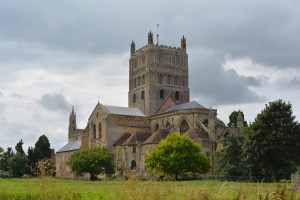
Tewkesbury AbbeyThe Battle of Barnet in April 1471 saw the defeat and death of the Earl of Warwick. A Lancastrian defeat was not the kind of news that Queen Margaret (of Anjou), wife of Henry VI, wished to hear when she came ashore with her son Prince Edward  at Weymouth on the same day.


Her only option was to meet with Jasper Tudor in Wales. The Yorkist king, Edward IV, needed to prevent this from happening. The two armies came face to face with one another on the 3rd of May 1471. Margaret managed to avoid Edward at Sodbury and was heading for Gloucester when the armies finally met. A battle would be fought the following day that would see Margaret and Henry’s only child, Prince Edward, killed.


The Lancastrians held the land to the south of the abbey. Edward used artillery and bowmen to attack the Lancastrians. The Lancastrian right wing came to the aid of its center and caught the Yorkists by surprise. Things could have gone very wrong for Edward had not his brother Richard, then Duke of Gloucester, met the attack. As it was the Lancastrians found themselves caught on marshy ground and 2,000 men died resulting in the name of ‘Bloody Meadow’ being attached to the area of battle where the Lancastrians fell.  The Duke of Somerset held John Wenlock (the  1st baron) responsible for the disaster as he’d commanded the centre of the Lancastrian army.  The Duke who’d commanded the right wing of Margaret’s forces was so incensed that he killed his compatriot on the field of battle. The army fled, many of its soldiers killed in the fields and hedgerows where the A38 runs today.  Other men sought sanctuary in the abbey.


However, Tewkesbury Abbey did not hold legal sanctuary status so the Yorkists forced their way into the abbey two days after the battle. They laid hold of the Lancastrians who sheltered there. The abbey church was so desecrated that it required purification the following month while the Lancastrians who survived the onslaught found themselves dragged into the market square where they were summarily beheaded. Amongst the executed were Edmund Beaufort, Duke of Somerset (Margaret Beaufort, mother of Henry VII was his niece) and his younger brother John. They were returned to the abbey for burial.

Prince Edward was also buried in the abbey.  The other Plantagenets to find a final resting place in the abbey were Isabella (wife of the Duke of Clarence and daughter of the Earl of Warwick) and the Duke of Clarence, Edward IV’s brother who was drowned in a butt of Malmsey.


As for Margaret of Anjou, she was captured on the 7th May. She remained a prisoner until 1475 when a ransom was paid for her release.

Click on the picture to open up a new window for a BBC page showing a Victorian interpretation of the Yorkists and Lancastrians in Tewkesbury Abbey.

Pontefract Castle

DSC_0001Wolsey, on his way back to London in disgrace commented of Pontefract Castle, “Shall I go there, and lie there, and die like a beast?”  Perhaps he was thinking of King Richard II who starved to death in the great fortress.

The Normans built their motte and bailey on the Anglo-Saxon Royal Manor of Tanshelf.  It’s builder was Ilbert de Lacy.  Ilbert and his brother arrived in 1066.  The new Lord of Pontefract had done well out of the conquest and didn’t forget to show his gratitude by making gifts to both Selby Abbey and St Mary’s Abbey in York.  DSC_0004

As the centuries progressed so did the castle until its eight towers dominated the town and the landscape beyond. Edward I described it as ‘the key to the north’.  The de Lacy’s continued to be its custodians until Henry de Lacy  (Earl of Lincoln) lost his male heir when he fell off the battlements in 1310.  His daughter Alice an important heiress was married to Thomas, Earl of Lancaster so it was he who became the next custodian of the castle.  He was Edward II’s cousin and it would be fair to say that they didn’t see eye to eye.  By 1318 Alice and Thomas were separated – possibly because of the fraught political situation of the period or perhaps because they just didn’t like one another.  Alice spent most of her time in Pickering while Thomas lived a bachelor life.  Thomas eventually revolted against his cousin on account of the Despencers, made an alliance with the Scots and then rather unfortunately lost the Battle of Boroughbridge in 1322.  He was taken back home to Pontefract and unceremoniously executed looking towards Scotland which was the direction of his treachery.  DSC_0021

Eventually the castle passed into the hands of John of Gaunt and from there to his son Henry Bolingbroke who became Henry IV when he usurped his cousin’s throne.  Richard II found himself locked in one of Pontefract;s dungeons and that was the end of him.  Pontefract was now a royal castle and its prisoners reflected its importance and its security.  In 1405, Richard Scrope, Archbishop of York was imprisoned here before his execution.  James I of Scotland spent some time here as an unwilling guest as did the Dukes of Bourbon and Orleans after their capture at Agincourt.  Richard Neville, Earl of Salisbury was executed here in 1460 and in 1483 Richard of York had Earl Rivers and Lord Richard Gray imprisoned here and executed – which was one way to reduce the Woodville influence at court but hasn’t reflected well on the man who became Richard III mainly because the two half brothers of the boy king Edward V were executed without trial.

The castle had a grim reputation which is perhaps something that Catherine Howard (Henry VIII’s Fifth wife) ought to have reflected upon before she started her affair with Thomas Culpepper during a Royal Progress.DSC_0011

Pontefract Castle’s days of greatness  and terror drew to a close with the English Civil War.  After the Battle of Marston Moor the castle became a Royalist stronghold.  Parliamentry forces besieged it and when it finally fell in 1648 the mayor of Pontefract petitioned on behalf of the townspeople that the castle should be destroyed.  Work began  in April 1649.

Today a few fragments of the castle remain.  The curtain wall encloses a park which hides a grim secret.  Some thirty-five feet beneath the grass there lurks a network of  cellars and magazines which were once Pontefract Castle’s dungeons.