Kings Edgar, Alexander I and David I of Scotland – interference from the south

David born in 1080 was a younger son of Malcolm Canmore and St Margaret. After Malcolm died his throne was inherited by his brother Edgar – which did not go down particularly well with their uncle Donald who claimed the crown as Donald III – in Scotland crowns usually moved sideways through siblings before being inherited by sons but Margaret wanted her sons to inherit rather than her brother-in-law or step-sons.

Edgar received some support from William Rufus not least because the Earl of Northumbria was revolting and Uncle Donald and Edgar’s older brother Edmund who supported his uncle’s claim) were supporting the rebellion Robert de Mowbray who was the Earl of Northumbria between 1086-1095. This was a slightly unexpected allegiance as the earl had killed Malcolm Canmore and his son Edward at the Battle of Alnwick in 1091 – if nothing else it says that the complexities of northern politics should Never be underestimated.

Mowbray ended up in prison, without a title and without a wife before being allowed to become a monk. His fellow conspirators had an even less pleasant time, William of eu being blinded and castrated. Rufus having dealt with the rebellion of 1095 helped Edgar to depose his uncle in 1097. Once in power Edgar made a treaty with Magnus Barefoot which saw the scandavians take control of the Western Isles and send his sister Edith off to `England in 1100 to marry the new king – Henry I. In 1107 Edgar died leaving his throne to his brothers Alexander and David.

Alexander ruled the northern half of Scotland and was Henry I’s brother-in-law and son-in-law having married Sybilla of Normandy, one of the English king’s flock of illegitimate daughter. When he died in 1124, his kingdom was inherited by brother David who ruled all of Scotland until his death in 1153.

David ruled the southern half of Scotland. He, aged nine-years, accompanied his sister Edith to the English court and acquired Norman culture and a Norman wife in the form of Matilda of Huntingdon – making the scottish king a man with estates in Northampton and the south of England – which meant he was an English vassal (but only for English lands.) And incidentally King Henry had made him the prince of Cumbria and married him to the widow of an earl of Northumberland to give him a bit more of a punch in the north.

David established a feudal system in Scotland and founded 15 religious houses, including the abbeys at Jedburgh, Kelso and Melrose after he returned to Scotland in 1124. An intensely pious man, it didn’t stop David from invading England on behalf of his niece the Empress Matilda.

In 1138 he came second in the Battle of the Standard – one of only two pitched battles to take place during the Anarchy. The second being the Battle of Lincoln in 1141 but if we’re going to be pedantic about it, David wasn’t really promoting Matilda’s cause, he was aiming at making Scotland that bit bigger – which he did because in 1139 the Treaty of Durham saw King Stephen recognise David as king of an independent Scotland which included Cumberland and Northumbria.

He died on 24 May 1153, in his bed, in Carlisle Castle – which was definitely Scottish at the time.

Carlisle Castle and one of the stranger comments I’ve heard…

Roger de Montgomery and his son Arnulf de Montgomery

Nest perch Rhys and King Henry I

Arnulf was a younger son of Roger de Montgomery, Earl of Shrewsbury and Mabel de Bellême. He is associated with the earldom of Pembroke Castle and the founding of Pembroke Priory. His birthdate is usually given as 1066 but there is no exact record. The de Bellêmes were part of the Conqueror’s extended kinship network and although de Montgomery didn’t take part int he Conquest he was in England by 1067 where he was granted extensive land holdings. By 1086 he was a very wealthy man having been rewarded with land in Sussex, including manors which had belonged to King Harold, and Shropshire.

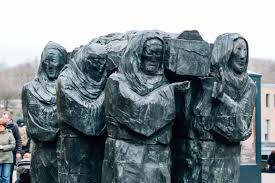
It was in 1086 that Arnulf first made his appearance on the known historical record when he witnessed a grant made by his father to a monastery in Normandy. Arnulf is also in evidence rebelling against William Rufus along with the rest of his family in support of Robert Curthose, the Conqueror’s eldest son. The family did not suffer when the rebellion failed and was soon involved in extending its landholdings and power base by an invasion of Wales- specifically the kingdom of Deheubarth – including modern day Dyfed. He is associated with the capture of Nest of Wales pictured at the start of this post with her lover King Henry I – the crowns are to represent their status rather than to suggest that they retired to bed wearing nothing but headgear.

When Roger died in 1094 he was succeeded by his son Hugh and after his death by Robert de Bellême, who was Arnulf and Hugher’s elder brother. De Bellême and his family supported Robert Curthose’s claim to the English throne against that of Curthose’s younger brother King Henry I in 1102. Arnulf had sent his steward, Gerald of Wales, to Ireland to arrange a marriage contract with Muirchertach Ua Briain of Munster which included military assistance as well as a bride. When the rebellion failed, the Montgomery family were banished from England and Arnulf lost Pembroke and the power that he wielded on the marches between England and Wales. The story of their rebellion and subsequent banishment is recounted by Orderic Vitalis, who quite frankly wasn’t totally impressed by the family then or in earlier times.

Following the banishment of the Montgomeries from English shores Arnulf took himself to Ireland and his father-in-law who had no doubt hoped to benefit from Arnulf’s potential as a trading ally. He spent the next twenty years in either Ireland or Normandy. He died circa 1122 at the latest but maybe as early as 1118.

Arnulf’s daughter, Alice, married Maurice FitzGerald the son of Nest the daughter of King Rhys and Arnulf’s steward Gerald of Windsor.

Bradford Quarter

‘Black Tom’ Fairfax

On the 21st October 1642, Bradford was warned that it was about to be attacked by 800 Royalists who duly arrived at Undercliffe where they made their camp. There was an unseasonable snow storm and one of the royalist cannon exploded. The royalists withdrew giving the clubmen of Bradford and unexpected victory.

Sir Thomas Fairfax came to Bradford soon after to recruit from the armed band that defended the unwalled town. He and his men left for Tadcaster soon after. But the departure of men and weapons left Bradford exposed.

Two months later on the 17th December, Sir William Savile, under the command of the Earl of Newcastle, wrote a letter to the citizens of Bradford demand money and supplies. The consequences of them not providing what he wanted would be the burning of the town. But the people of Bradford refused to submit despite the fact that Leeds fell quickly to the Royalists and that they did not have enough men to defend their home. Nearby sympathisers decided to stay away because they felt that the outcome was a forgone conclusion.

Captain John Hodgson, from Coley, came and organised the defence. He and the people of Bradford defended the church by hanging wool sacks from it. They made bulwarks and earthworks and barricaded the streets. On the morning of 18th December men with muskets and fowling pieces climbed into the steeple and took aim at the approaching royalists led by Sir William.

Savile responded to Bradford’s defence by setting up cannon at Barkerend but it turned out that the royalist gunners hadn’t yet learned how to hit their targets. In time the artillery was moved to a line of fire which included Kirkgate and Ivegate. The marksmen in the steeple tried to hit the officers.

During one of the skirmishes a royalist officer and a party of men rushed towards the church. The defenders seeing the attack took aim and wounded the officer. As he lay on the ground he begged for quarter. The rules of war stated that if a man asked for quarter, or mercy, that he should be spared, but the defenders of Bradford were ordinary men. They didn’t know what tit meant.

Ralph Atkinson yelled that he would give the royalist “Bradford Quarter’ and promptly killed him. He also robbed the body.

The night before Bradford fell to the Royalists at the beginning of July 1643 was a terrifying one for the men and women, including seventeen-year-old Joseph Lister, who remembered what happened to the young royalist officer the previous winter. They feared that they would also be shown Bradford Quarter but the Earl of Newcastle who spent the night at Bolling House did not take the terrible revenge that was feared.

I’m talking about one of my favourite people in history on Thursday morning.

https://www.bradfordfhs.org.uk/event-society-virtual-meeting-thomas-fairfax-and-the-civil-war-in-bradford-2021-10-07

The kingdoms of Rheged and Strathclyde…and the Northumbrians – a start.

We have clearly left my start date of 1066 behind – to the tune of some five hundred years – but nothing happens in a vacuum historically speaking: territories and politics evolve.

Hadrian’s Wall marked the border of the Roman Empire but by the fifth century things were looking grim and there was a proliferation of military based kingdoms. The kingdom of Rheged could be found in modern day Cumbria extending into the Eden Valley and Westmorland. It’s ruler Urien or Urbgen can be found in twelfth century Welsh poetry. One of Taliesin’s poems refers to him as the ruler of Aeron which might be Ayr – meaning that on the flimsiest of circumstantial evidence the Romano-British kingdom of Rheged could have extended from Ayrshire south of the Solway. The inhabitants of the kingdom spoke a Celtic language and its rulers were descended from Coel Hen – that’s ‘Old King Cole’ to you and me and I doubt very much whether he was a ‘merry old soul.’ Needless to say there is a lack of paper evidence and after Urien’s death, probably at the hands of one of his own extended kinship network, the kingdom disintegrated and was subsequently incorporated into the kingdoms of Strathclyde and, more definitely, Northumbria.

In the early medieval period, which was the Dark Ages when I was at school, the British kingdom of Strathclyde covered the area, at various times, between the Clyde and as far south as the River Lune in Lancashire. It’s thought that the kingdom derived from a fourth century state that was a buffer zone designed to hold off the Picts from Scotland and the Scots from Ireland (they settled in Argyle).

Bede – The British Library – 12th Century copy of his life of StCuthbert

Now we throw the Angles into the mix. Æthelfirth was the king of Bernicia (think Bamburgh) and of Deira (think East Riding and North Yorkshire). His period in power was 592-616. He was a successful warlord who gained significant territories at this time. It’s likely that Rheged disappeared into his power and that the Lothians also came under his control. The Venerable Bede paints a picture of ravaged Britons. At the same time as Rheged disappeared Strathclyde also faded for a time.

A succeeding king – Edwin of Northumbria- even had an impact on the Isle of Man. Northumbria became the most dominant of the early medieval kingdoms during the seventh century. The territories around it shrank or were subsumed. It was at this point that the Northumbrians probably sought to establish overlordship over the kingdom of Strathclyde which had undergone some shrinkage since the second paragraph of this post. Bede also records that some Britons who lived in Strathclyde looked to the Picts and the Scots for support. Inevitably after the initial bonhomie, the Britons of Strathclyde faced danger on two fronts. In 711 and 717 the people of Strathclyde were defeated by the Scots. The area Bede was describing included Dumbarton, Renfrewshire and Lanarkshire. The Solway probably marked the edge of the kingdom of Strathclyde at that time. And needless to say there was an awful lot of slaying going on. By 750 the Northumbrians had annexed southern Aryshire.

During the 840s Kenneth Mac Alpin united the Scots and the Picts. The royal families of the region formed alliances, intermarried and carried on bumping one another off. The shape of their territories changed and developed according to who was handiest with their army.

St Curthbert’s journey – Durham

And because I like a date to pin these things to – this all happened before 875 (or thereabouts) when Bishop Eardulf of Lindisfarne fled with the body of St Cuthbert as a result of the arrival of the next set of invaders – the Vikings (but that’s a different story and a new post.) As the saints body was kept at Whithorn in Galloway for a while it has been suggested that the area was still part of Northumbria at the time – certainly there were earlier monastic affiliations which meant that the saint was welcome.

Venerable Bede

https://sourcebooks.fordham.edu/basis/bede-book1.asp. or https://www.gutenberg.org/files/38326/38326-h/38326-h.html

Tim Clarkson, The Men of the North

summer quiz 2 answers

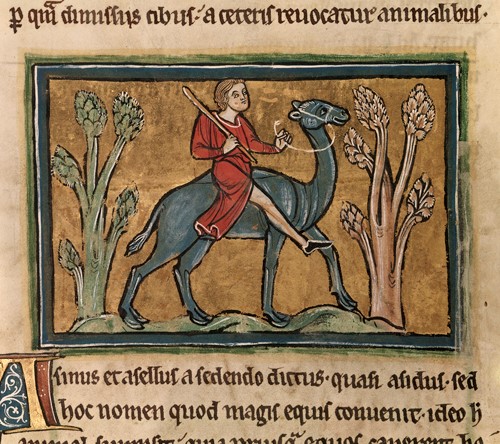
British Library 13th Century Bestiary – Do you know where Edward IV sent a camel? I feel an animal themed Christmas series of posts coming on!
  1. Edward was born in 1284 in Carnarvon, according to legend Edward I presented his new-born on a child to the Welsh as a prince who spoke no English.
  2. Edward’s parents were King Edward I and Eleanor of Castile – remembered by the Eleanor Crosses.
  3. Edward was supposed to have been killed in Berkeley Castle, Gloucestershire on 21 September 1327. By Tudor times he was supposed to have met his demise by the insertion of a red hot poker in an unmentionable and eyewaterinw location – a reference to his alleged homosexuality. Whilst medieval chroniclers placed the blame on Roger Mortimer’s doorstep no one suggested an incident with a poker although by 1326 his enemies did accuse him of sodomy. Ian Mortimer suggested in 2005 that he did not die. He pointed out that only the Brut written at the time gave his death as 1326. The discovery of the Fieschi Letter in the 1870s cast doubt on the events that history generally accepts as having happened and there is contemporary evidence that Edward was still alive at the end of 1327. There are two theories and it is up to you to consider the evidence provided and weigh the evidence to decide which one is more likely.
  4. Edward granted the earldom of Cornwall to his friend Piers Gaveston but not until after his father died.
  5. Pope Boniface VIII arranged the marriage between Edward II and Isabella of France to bring an to the warring over Gascony which Edward claimed as his.
  6. The Lords Ordainers demanded that Edward II reform his household and get rid of his favourite. They passed a series of ordinances – hence the name.
  7. Battle of Bannockburn June 1314 – Edward II didn’t win but he is on record as digging a lot of ditches.
  8. Thomas of Lancaster was executed on 22 March 1322 near Pontefract Castle following the Battle of Boroughbridge which took place on 16 March 1322.
  9. Hugh Despenser the Elder was the only baron who remained loyal to Edward II throughout his life. His son Hugh Despenser the Younger became Edward’s hated favourite. On the Marches his desire for land resulted in the so-called Despenser War.
  10. Isabella of France became Edward II’s wife.
  11. Isabella’s lover was Roger Mortimer of Wigmore.
  12. Isabella and her lover Roger Mortimer invaded England at Orwell in Suffolk.
  13. Hugh Despenser the Elder was executed at Bristol then fed to the dogs.
  14. Edward II is buried in Gloucester Cathedral. Robert Curthose, the deposed Duke of Normandy, brother of William Rufus and Henry I is also buried in Gloucester Cathedral. At the time it was St Peter’s Abbey.
  15. Edward had four legitimate children, Edward who became King Edward III and started the Hundred Years War; John of Eltham who died aged twenty; Eleanor of Woodstock who married Reginald or Renauld II, Count of Guilders and was forced, according to the story, to show that she didn’t have leprosy and Joan of the Tower who was married to King David II of Scotland to bring an end to the Anglo-Scottish Wars. Edward also had an illegitimate son called Adam.
  16. Edmund of Woodstock, the Earl of Kent , Edward’s half brother by Margaret of France, was executed in 1330 for his part in a plot to depose Mortimer and Isabella. The death of his uncle was one of the factors which spurred seventeen-year-old Edward to act against his mother and her lover.
  17. The English and the French fought over Gascony. Edward I spent many years in Gascony. It was part of his personal possessions as was Aquitaine.
  18. Edward II kept a camel at Langley.
  19. He took a lion on campaign to Scotland.
  20. Christopher Marlowe wrote a play about the monarch ensuring he remained within the public eye.
The execution of Thomas of Lancaster

Gaveston’s daughter

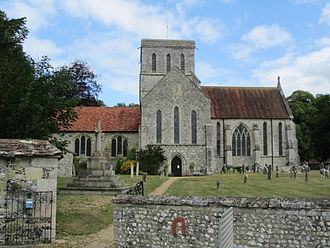
Priory Church Amesbury

Joan Gaveston was born in January 1312 at York. Her father, Piers Gaveston, was supposed to be in exile but he returned to court by Christmas 1311. Edward travelled north, leaving his wife to follow, pausing long enough to collect his heavily pregnant niece Margaret de Clare, Gaveston’s wife, from Wallingford Castle before continuing to York. it’s possible that Piers only intended to see his wife and child before leaving the country but there is no evidence to support the view. Almost immediately after Joan’s birth the king revoked Gaveston’s exile and gave him back his titles and estates. This had the effect of infuriating the barons who had demanded his banishment the previous year.

Five months later Gaveston having fled north to Newcastle before returning south to York found himself under siege in Scarborugh Castle. A short time later he was dead at the hands of the Earl of Warwick and the Earl of Lancaster. Joan, a mere infant, now became a ward of the crown. As her legal guardian, Edward sent the child to Amesbury Priory in Wiltshire. There were a number of royal females in residence at the priory founded by Henry II for the Order of Fontevraud (there were four houses for this order – Amesbury, Westwood, Nuneaton and Grovebury) including Edward’s sister Mary who was a nun. It had a long tradition of providing a home and education for England’s royal women. It had also become the prison for King John’s niece Eleanor of Brittany for a time.

Joan was Gaveston’s sole heir but his lands were problematic given that many of them were crown lands. However, when her uncle, the Earl of Gloucester, was killed at Bannockburn in 1314 she became an heiress. Edward took the opportunity to try and arrange a marriage for her to Thomas Wake of Liddell but he married without Edward’s permission to Blanche of Lancaster the niece of Thomas of Lancaster.

In 1317 Joan, aged five, became betrothed to John Multon the heir to the Lord of Egremont in Cumbria. The king made Lord Wake pay the dowry having married without his permission to Leicester’s daughter. The agreement was that the marriage would go ahead as soon as the two children were old enough.

However, Joan died unexpectedly at the beginning of January 1325 just before her thirteenth birthday.

Kathryn Warner, Edward II: The Unconventional King

Joan of Acre, runaway princess

Joan of Acre was one of Edward I’s daughters. Joan was born in Acre in 1272 whilst her father, Edward, was participating in the 9th crusade. Edward narrowly escaped assassination during the unsuccessful conflict but by September the family was on its way home. Edward and his wife paused in Sicily and it was whilst there were there than news arrived that Henry III was dead. Edward was now the king. Joan’s mother, Eleanor of Castile, left the baby with her mother Joan, Countess of Ponthieu and continued back to England arriving in 1274.

King Edward I used all of his children as diplomatic pawns to further his foreign policy. Edward of Carnarvon was betrothed four times in his childhood. Meanwhile Joan did not arrive in England until 1278 by which time her father was negotiating a match for her. Joan was betrothed to Hartmann von Hapsburg, son of King Rudolf I of Germany but he drowned in 1281. Her father took the opportunity to marry her off to Gilbert de Clare, Earl of Gloucester who was already married to someone else when Edward suggested the match. The wedding took place in Westminster Abbey on 30 April 1290.

Gilbert de Clare

Gilbert was a half-uncle by marriage to Edward I – bear with me. Henry III’s mother, Isabella of Angouleme, married Hugh de Lusignan after the death of King John. Isabella of Angouleme’s daughter Alice de Lusignan was married to Gilbert in 1253. Gilbert was ten at the time and the marriage was annulled in 1285 after King Edward approached the papacy. This had the effect of illegitimising Gilbert’s children with Alice but Gilbert, the 9th Earl of Clare, 7th Earl of Hertford and 8th Earl of Gloucester was a very powerful baron who supported Simon de Montfort against Henry III. He only returned to the Crown faction when de Montfort formed an alliance with the Welsh prince Llewellyn ap Gruffudd. Edward wanted to bind the baron to the Crown through a marriage.

Joan was a princess with attitude – which was probably just as well given that her step-children were older than she was. Soon after her own wedding she was supposed to attend the wedding of her sister Margaret but she left court without her father’s permission. Edward expressed his wrath by giving seven dresses that had been destined for Joan to her sister instead.

Joan had four children before Gilbert died in 1295. Joan’s son Gilbert was killed at the Battle of Bannockburn in 1314 whilst her daughters all ended up married to various of Edward II’s favourites.

Joan chose her own future after the death of her husband. Edward I was arranging for her to marry the count of Savoy but she had other ideas. She had fallen in love with her husband’s squire Ralph de Monthermer. She sent Ralph to see her father with the request that he be knighted and when he returned she quietly got married. Unfortunately she didn’t tell her father what she had done so he continued with his plans and formally announced the betrothal of Joan to the Count of Savoy. Edward was said to be so angry when he found out that he threw his crown into the fire.

More practically he had Ralph locked up in Bristol Castle, refused to see Joan and confiscated all the estates she inherited from her husband. Joan sent her daughters to see their grandfather and the Bishop of Durham. Edward seems to have calmed down when he realised that Joan was pregnant – in August 1297 Ralph was created earl of Gloucester and Hertford by right of his wife. After ten years of happy marriage Joan died at Clare in Suffolk on 23 April 1307. Her titles passed to her son and Ralph became 1st Baron Monthermer.

Summer quiz 2: medieval monarchy mishaps

A straight question and answer quiz about Edward II – yup – I’ve been busy writing about Edward’s favourites, his wife’s scandalous family and the difficulties of royal marriages – Edward’s wife was the first to say ‘there’s three of us in this marriage…’

  1. Where was Edward II born? According to legend his father offered Edward to a country because he spoke no English.
  2. Who were Edward II’s parents?
  3. In which castle is Edward supposed to have been killed in 1327? Ian Mortimer presented a theory that he was not assassinated.
  4. Edward granted the earldom of Cornwall to which of his friends much to his father’s irritation?
  5. Who negotiated Edward’s marriage?
  6. What were the nobles called who sought to reform the royal court and get rid of Edward’s unpopular male favourite?
  7. Which Anglo-Scottish battle did Edward II famously lose?
  8. Edward had his cousin Thomas of Lancaster executed after Thomas lost which battle in Yorkshire?
  9. Which father and son with the same name gained notoriety as the king’s favourites?
  10. Who was Edward’s wife? She is the only medieval queen known to have had an adulterous relationship.
  11. Who did she have an affair with?
  12. Which part of the country did Edward’s wife invade with a very small army in 1326?
  13. When one of Edward’s hated favourites was executed in Bristol, what was his body fed to?
  14. Where is Edward II buried? Can you give the place more than one name? Which other disposed ruler is buried in the same place?
  15. Name Edward II’s children.
  16. Which earl was Edward’s half brother who was executed by Edward’s queen and her lover?
  17. Which area of France did Edward and his wife’s family disagree about?
  18. What unusual beast did Edward keep at Langley?
  19. And what kind of pet did he take on campaign to Scotland?
  20. Which murdered Tudor playwright wrote a play about the murdered monarch ensuring that we remember all the scandal?

Eleanor of Woodstock

Eleanor of Woodstock

Eleanor was born in 1318 was Edward II’s and Isabella of France’s eldest daughter. Edward was so pleased that he gave the queen 500 marks. For the first six years of her life she and her elder brother John and younger sister Joan remained in the custody of their mother Isabella of France at Wallingford Castle. Her eldest brother Edward also lived there until he was given his own household. Edward ensured that the family were provided for with manors in Macclesfield and the castle and the honour of High Peak, Derbyshire providing income.

In 1324 the little family were taken from the queen and taken into the care of Eleanor de Clare the wife of Hugh Despenser the Younger. Despenser had taken the opportunity of an Anglo-French conflict to state that Isabella, as a Frenchwoman, was a dangerous alien. Her lands were confiscated, her servants sent away or arrested and her children taken from her.

Eleanor and her sister Joan of the Tower left Eleanor’s care and were handed over to Ralph de Monthermer and Isabel Hastings at Marlborough Castle. Isabel was Hugh Despenser’s sister which perhaps explains his decision but equally Ralph was his brother-in-law having been married to Joan of Acre. John remained in Despenser’s household.

In 1328, a year before Isabella and Mortimer were toppled from power, Eleanor found herself in the household of her brother Edward III’s wife Philippa of Hainault. By that time negotiations were underway for a marriage to the Crown of Aragon. This match fell through and Eleanor was betrothed then married to Reinoud II of Guilders. He had something of a reputation but the whole family were aware of the difficulties of royal marriages – Eleanor’s mother, Isabella of France, having had enough of her husband’s male favourites, went to France, began an affair with Edward II’s enemy Roger Mortimer, invaded the country and allegedly arranged for her erstwhile spouse to have a nasty accident with a poker before being toppled from power by her eldest son. Eleanor was nine when her father died.

Eleanor sailed from Sandwich with a luggage full of Spanish cloth of gold and crimson velvet. The people of Guilders were pleased with their new countess – she was an English princess after all and might be able to provide a male heir. Reinoud had four daughters already. She gave birth to a son the following year in 1333 and three years later provided a spare heir called Edward.

In 1336 she was sent from her husband’s court and he began proceedings for an annulment of their marriage. He claimed that she had leprosy. There’s no evidence to support the story, nor for that matter her resolution of the problem. She arrived at court wearing a cloak which she removed to reveal…well… all of her…without a stitch on. She was very clearly not leprous so her husband had to take her back. Reinoud was shown to be a liar. It can’t have helped domestic bliss.

Reinould fell off his horse and died in 1343 leaving a nine-year-old son. Eleanor assumed power as regent but in 1350 her son confiscated all her lands. She retired to a convent where she lived in poverty for five years before she died in 1355 – at the start of the 1360s her son Edward usurped his brother and made himself Duke of Guilders but kept his brother in prison rather than murdering him. After Edward died his elder brother, Reinoud, was released from captivity – by that time he had put on a bit of weight and would be known in the history books as Reinoud the Fat.

Alison Weir, Isabella She-wolf of France, Queen of England

All blinged up – summer quiz 1 answers

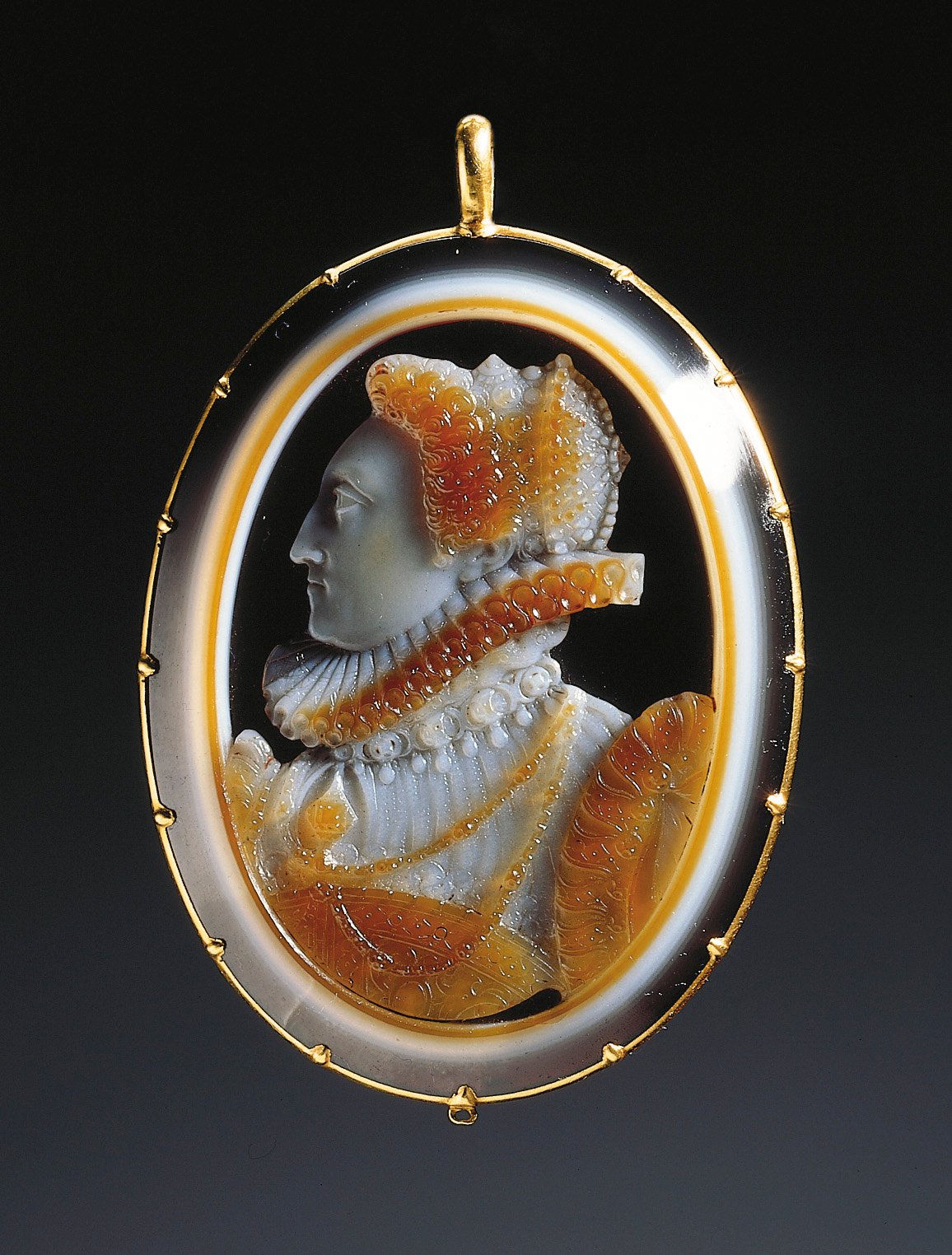
  1. Cameos were originally carved in Ancient Egypt, somewhere around 15,000 BC. However, it is the Greeks and Romans who we are more likely to associate with cameos. They started to become popular in England during the Elizabethan period but really became very popular during the eighteenth century as a consequence of the Grand Tour.
Elizabeth I cameo from the Royal Collection Trust – it was exhibited in the collection of Queen Caroline, wife of George II.

2) The scarab beetle symbolises rebirth. It is symbolic of Khepri, an Egyptian sun god.

3) The oldest known jewellery is thought to be made from snail shells. A string of snails shell beads was found in a cave in South Africa. It’s thought to be 30,000 years old.

4) The Snettisham Hoard is an Iron Age treasure. It was found in 1948 during ploughing. The area was repeatedly dug and more treasure unearthed. It’s famous for its twelve torcs found in one pit.

5) Bakelite.

6) Cloisonné appears in the jewellery of Ancient Egypt – so back to the pharaohs again.

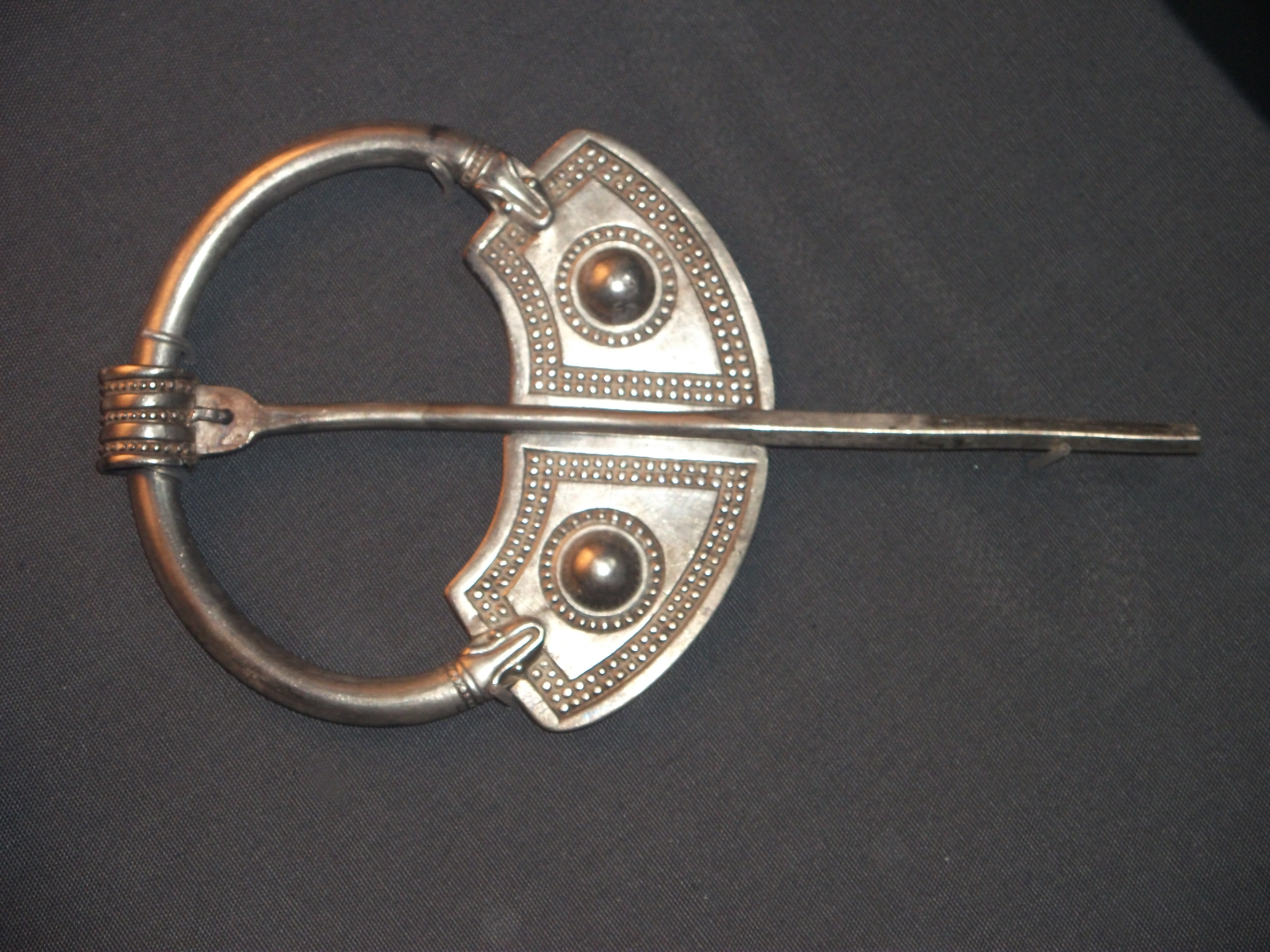
7) The spelling went wrong! I can only apologise. It should have said penannular which essentially means an incomplete ring – think Celtic and Viking.

Penannular brooch from the Penrith Hoard.

8) Viking women wore turtle brooches – named because of their typical shape.

9) Unicorn horn worked as an antidote to poison – so if you dunked your ring containing the unicorn horn in your goblet you would be completely safe. Lady Margaret Beaufort’s possessions included one such ring.

10) Queen Elizabeth I owned thousands of pearls. The earl of Leicester often gave her ropes of pearls as a New Year’s gift.

11) Alfred’s jewel fitted on the end of an aestel, or pointer, to follow words in a book.

12) Black jewellery associated with mourning – Whitby jet. Apparently when it’s worked it smells of rotting tree.

13) The Cheapside Hoard contains the largest collection of Tudor and Stuart jewellery in the world. it was probably during during the English Civil Wars and its location reflects the fact that it was an area known for its jewellers… wonder what happened to its owner?

14) The Crown Jewels have been kept in the Tower of London since the Fourteenth Century – although of course, Oliver Cromwell sold them off and melted them down so that the only medieval piece is the Coronation Spoon.

15) The Triskelion brooch is part of the Sutton Hoo treasure and can be seen in the British Museum.

16) Birmingham is famous for its jewellery quarter.

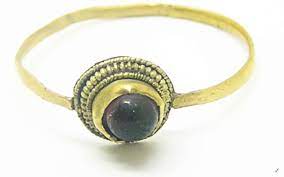
17) It’s a pie crust ring – love the name.

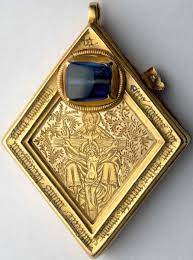
18) This is the Middleham Jewel, found in 1985 near to Middleham Castle, the home of Richard III.

19) Hans Holbein is famous for his portraits of Henry VIII and his court but he also designed jewellery.

20) The rosary beads were owned by Henry VIII.