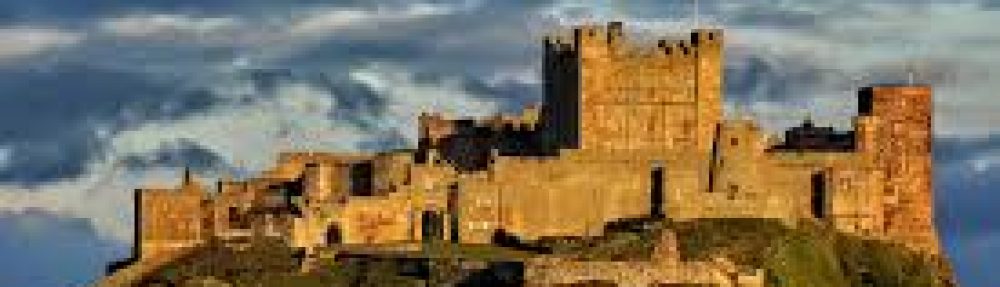
King John

king_john_stag_3231934bThe Victorians did not like King John, medieval chroniclers weren’t that keen on him and Walt Disney portrayed him as a lion who sucked his thumb. Mathew Paris, one of the medieval writers, proclaimed that ‘Hell would be befouled’ by John’s presence.

So what did John do so wrong? First of all he spent much more time in England than previous kings. It wasn’t because he liked the scenery or the people. It was because he’d lost his father’s empire. At the start of his reign in 1199 he arrived at an agreement with King Philip II of France, stopped a war that King Richard had been winning and accepted Philip’s overlordship – and, ultimately, he handed over the Lionheart’s magnificent fortress at Chinon without so much as a quibble. This earned John the nickname Soft Sword. He then managed to loose Normandy – which was careless and put his nobility in a difficult position as most of them owned property in what had suddenly become France as well as in England. It was impossible to do homage to both monarchs so they had to choose – French or English. Most of them found a way round it by handing part of their land over to a son sooner rather than later so that the estate at least stayed in the family. Medieval kings were supposed to win wars not hand over their best fortresses on a platter to their enemies or make life more difficult than necessary for everybody else.

In an age of brutality John excelled. He had people blinded, starved and brutally executed left, right and centre. He is even purported to be the only King of England who has actually murdered someone in person with his own hands. That person, his nephew Arthur-was the son of his eldest brother and who had a better claim to the throne than John- was apparently killed by John in a drunken rage and then thrown into the Seine. This is, of course, all here say. No one in his or her right mind would add that juicy little bit of information to a chronicle.

However, Matilda or Maud (depending upon your frame of mind) de Braose was the wife of William de Braose. He was one of King John’s favourites. In 1208 the two men had a bit of a disagreement. William owed John five thousand marks and John demanded William’s grandsons as hostages. Matilda refused to part with them saying very loudly and clearly that she would not give her boys to the man who’d murdered his own nephew. Matilda and her oldest son ended up in a dungeon in Corfe Castle where they were deliberately starved to death. In later years, when John realised that his time was up he allowed a kinswoman of the murder victims to become a nun in order to pray for the souls of Maud and her son. Draw your own conclusions.

John’s personality wasn’t what you might call winning either. All the Plantagenets seem to have been prone to temper tantrums. Henry II is reported to have rolled around on the floor in his rages. John’s moments of irritation were exacerbated by his drunkenness. He had numerous mistresses, which in itself wasn’t unusual for Norman or Plantagenet kings, but he didn’t necessarily get the lady’s agreement first and he made a habit of making off with his barons’ wives and daughters which was tactless to put it mildly. Eustace de Vesci tried to save his wife from John’s attentions by putting a servant in John’s bed instead of his wife. John was not pleased but then neither was Eustace and it might go some way towards explaining why Eustace would eventually rebel against John. Famously one woman promised the king two hundred chickens if she could just be allowed to spend one night with her husband. In addition, he was spiteful and vindictive.   It is alleged that one woman who turned down his advances was sent a poisoned egg.  He thought nothing of having people dragged to their deaths behind horses and having priests wrapped up in leaden copes if they dared to disagree with him.

The thing that really ensured that history knows all John’s character flaws was his attitude to the Church. He hunted on fast days, ate meat on Fridays and once told a bishop to keep his sermon short, as he wanted to eat his dinner. To cap it all he got England excommunicated in 1208 when he refused to accept Simon Langton as Archbishop of Canterbury. For five years there were no masses, baptisms or funeral rites. In an age where most people were very concerned abut their immortal souls it spelled disaster. John, on the other hand, had a fine old time stealing Church property and wealth. Ultimately the Pope made him give it back but it is easy to see how monastic chroniclers wouldn’t have spared John’s blushes. One of them, known to be a bit wild in his story telling, even suggests that John spent three months in 1215 as a pirate.

What John really excelled at was administration and administering justice. The former ensured that the system of taxation worked very efficiently. He imposed eye-watering death duties; taxes on widows who didn’t wish to remarry; taxes on heiresses and taxes on personal property that were applied quite often by the mercenaries he’d appointed to positions of power. He became very, very, wealthy and his people became very, very, hacked off. The Jewish population were particularly scared. John exhorted additional taxation from them and was known to use torture to get even more money.

Ironically, assuming you hadn’t been taxed out of existence and you didn’t have a pretty daughter or wife the smaller landowners got a better deal out of John than they had from previous kings because John possessed a detailed knowledge of the law, wanted to ensure that everyone understood Royal Justice was the ultimate justice within the country and because he travelled so widely administering it. Poor men could appeal to the king and ask for a trial by jury in a way that the barons couldn’t if they’d received a raw deal from their overlord. John was far too busy using the legal system to squeeze the great and powerful for every penny they had in any case – so if he found against the great magnates he could levy huge fines upon them.

No wonder that in 1215 the Barons rose up and forced John to sign Magna Carta. Little did they realise it was all going to get much worse in very short order.

Seward, Desmond. (2014). The Demon’s Brood. London: Constable & Robinson Ltd

http://magnacarta.cmp.uea.ac.uk/read/itinerary

http://www.telegraph.co.uk/culture/11671441/King-John-the-most-evil-monarch-in-Britains-history.html

Nostell Priory

Picture 651Before Nostell Priory came into being there was a hermitage but when the Augustinian Canons were introduced to Britain a priory was established soon afterwards on its site. The story of Nostell’s foundation is told in a fourteenth century manuscript detailing twelfth century events.

Apparently King Henry I was on his way to do nasty things to the Scots when his chaplain was taken ill at Pontefract. Whilst he was recovering the chaplain, Ralph Adlave or Adulphus, went hunting and came across the hermits in St Oswald’s Wood (we don’t know how many of them and it was quite normal to be on your own in a group if you were a medieval hermit). Adulphus decided on the spot that he wanted found a priory on the exact spot where he’d encountered the hermits and to become a monastic. Obviously you don’t resign from a job with a Plantagenet king, you ask nicely if it would be possible. King Henry I, having finished with the Scots for the time being gave his gracious consent. Adulphus became an Augustinian Canon in charge of eleven canons. Henry I favoured the new establishment, after all Adulphus had been his confessor, and made a grant of 12d. a day to it from his revenues in Yorkshire.

It was a good thing for a king to become a patron of a monastery. Nobles tended to trip over themselves to follow suit in order to win royal favour. Ilbert or Robert de Lacy swiftly handed over the land on which the priory would sit along with several churches including those at Huddersfield and Batley along with other property.

King Henry II, following the bust up between King Stephen and Empress Matilda, reconfirmed the grants including a three-day fair at the end of February each year coinciding with St Oswald’s feast day.

Nostell Priory was undoubtedly well endowed. As a result it ended up with six daughter houses. The two most important were at Bamburgh in Northumberland, and Breedon in Leicestershire.

Of course, things didn’t always go so swimmingly. The reign of King Edward II was not, in general, noted for its successes. The Scots raided deep into England and the revenue from Bamburgh turned into a loss for fifteen years in succession. The arrival of the Black Death didn’t help matters, neither did the politics of the period nor the fact that avaricious archbishops kept trying to snaffle the most profitable churches from the care of the canons. By 1438 the canons of Nostell Priory were in so much financial difficulty that the young and pious King Henry VI granted to the canons the hospital of St. Nicholas, in Pontefract. These financial woes were not unusual. Bottomley notes that about a fifth of all Augustinian foundations failed because of lack of income.

Nostell Priory,however, was able to overcome its difficulties. It developed a reputation for fine manuscripts that ensured a steady flow of income from their commission.  In 1536 it’s gross income was £606 9s. 3½d in part also because it had become a site of pilgrimage to St Oswald which Cromwell’s commissioners recorded as superstition. Dr Legh, one of the most notorious of Cromwell’s henchmen, was granted the site on which Nostell Priory stood.

Nothing medieval remains at Nostell Priory. In its place is the eighteenth century house and gardens created by the Winn family. There are three buildings that date from the monastic period “Wragby church, which, though it stands within the park, served the parish and not the monastery; and buildings called ‘The Brewhouse’ and ‘The Refectory’ which lie within the precincts of the adjacent 18th-century Nostell Home Farm. These are all at some distance from the Winns’ house”(Wrathmell ).

Where the Augustinian Canons had parochial responsibilities their priory churches survive rather better. Carlisle Cathedral was an Augustinian priory church as was Hexham Abbey. It is interesting to note that despite the fact that Carlisle, Lanercost and Hexham were Augustinian establishments that the main stronghold of the Augustinians was in fact the Midlands. Derby for instance was home to a number of Augustinian priories but little or nothing of their buildings have survived.

Bottomley, Frank. (1995).  Abbey Explorer’s Guide. Otley: Smith Settle

‘Houses of Austin canons: Priory of Nostell’, in A History of the County of York: Volume 3, ed. William Page (London, 1974), pp. 231-235 http://www.british-history.ac.uk/vch/yorks/vol3/pp231-235 [accessed 8 August 2015].

Wrathmell, Stuart. Nostell Priory. http://www.archaeology.wyjs.org.uk/documents/archaeology/newsletters/News21pag6.pdf accessed11.08.2015 09:23

Wellingtonia on the doorstep.

Scotland_Forever!I’ve gone a bit off my usual tangent with this post in the spirit of waste not, want not.  I recently contacted a regional newspaper in the hope that they would want a regular history columnist.  It’s surprising the number of papers that do have a history slot including my favourite regional paper The Cumberland News which wins prizes on a regular basis.  What follows is my sample article which didn’t even merit a response from the editor several weeks ago – obviously I’m not doing something right.  So back to the drawing board and try again.

The two hundredth anniversary of the Battle of Waterloo has sailed by. But who would have thought that Derbyshire had so many links with the Napoleonic Wars?

In Chesterfield a plaque bearing the legend 1816 above a scruffy looking red brick building marks the remnants of Griffin Foundry. It produced shot that was fired during the Napoleonic Wars, the way some local Chesterfield books tell it they produced the cannon shells that tore into the French forces on Sunday 18 June 1815.

In Ashbourne, French prisoners-of-war married local girls and provided the town with a recipe for very tasty gingerbread that’s still being made today in the same bakery where it was first produced.  The black and white Tudor building on St John’s Street has been a bakery for more than two hundred and fifty years.  By now the smell of newly baked bread must have seeped into the joists.

Both Chesterfield and Ashbourne parish churches contain the graves of French prisoners-of-war who didn’t make it home as well as a few British officers who did.  Elsewhere in Derbyshire there are tales of men who refused to be conscripted into Wellington’s army.

Along the A517 at Holbrook, William Leeke was once the vicar. There’s a window to him inside the church. His headstone, in the graveyard, reveals not only that he died aged eighty-one but also that in 1815 he carried his company colours into the battle. At the time he was seventeen-years-old. He served with the 52nd Regiment. As luck would have it he recorded his experiences but they are not always in accord with the official version of events. He was firmly of the opinion that it was the 52nd Regiment who beat off Napoleon’s Imperial Guards rather than the 1st British Guards. His account has caused a fair amount of controversy amongst historians over the years.

E.M. Wrench was another ex-soldier. In 1866, Doctor Wrench, raised the ten-foot high cross that stands on Baslow Edge, it’s outline stark against the sky and a magnet for walkers. Other monuments to the battle and its hero are rather leafier. There’s a Wellington Oak at Renishaw Hall.

EXHIBITION USE ONLY npg.896.1337Arthur Wellesley, 1st Duke of Wellington by Sir Thomas Lawrence, 1815-16 NATIONAL PORTRAIT GALLERY MARKS 200th ANNIVERSARY OF WATERLOO WITH THE FIRST EXHIBITION ON THE DUKE OF WELLINGTON The first gallery exhibition devoted to the Duke of Wellington will open at the National Portrait Gallery, to mark the 200th anniversary year of the Battle of Waterloo in 2015. APSLEY HOUSE, London. "Arthur Wellesley, 1st Duke of Wellington" c.1815 by Sir Thomas LAWRENCE (1769-1830). WM 1567-1948.

EXHIBITION USE ONLY
npg.896.1337 Arthur Wellesley, 1st Duke of Wellington by Sir Thomas Lawrence, 1815-16
NATIONAL PORTRAIT GALLERY MARKS 200th ANNIVERSARY OF WATERLOO WITH THE FIRST EXHIBITION ON THE DUKE OF WELLINGTON
The first gallery exhibition devoted to the Duke of Wellington will open at the National Portrait Gallery, to mark the 200th anniversary year of the Battle of Waterloo in 2015. APSLEY HOUSE, London. “Arthur Wellesley, 1st Duke of Wellington” c.1815 by Sir Thomas LAWRENCE (1769-1830). WM 1567-1948.

Wellington died at Walmer Castle in Kent in1852. William Lobb introduced the following year a tree, native of Sierra Nevada, California into Britain. It’s become rather an unusual monument to the man who avoided the unnecessary bloodshed of his troops where possible  and said of his men, “I don’t know what they effect they have on the enemy but by God they terrify me.”  John Lindley of the Horticultural Society was given the job of naming the tree. The Americans wanted to call it after Washington but Lindley called it after the Iron Duke, the hero of Waterloo. The tree became the Wellingtonia. We also call them giant sequoia or giant redwood. Sequoia are the largest trees in the world. Wellingtonia can be found in stately homes from Chatsworth to Kedleston. These towering conifers with their furrowed rusty red trunks are babies. They’ll still be growing on the 2,000th anniversary of Waterloo.

There’s even a Wellingtonia Society  called Redwood World. Why not visit the site to find out if there’s one near you, or you may know of one that’s not on their list http://www.redwoodworld.co.uk/locations.htm.

Galilee Porch

DSCN3945-2Many medieval Cistercian churches were entered through something called a galilee or ‘paradise’. It was a porch (it’s sometimes also called a narthex because why have one word when there’re are so many available to bother and bewilder the casual lover of monastic ruins) situated on the west front of the church. It was an important starting point for religious processions into the church. It was also a popular place for patrons to be buried. In Rievaulx there are the remains of eight graves in the galilee. There was often also a smaller altar. The galilee porch at Tintern Abbey was said to house  a miraculous image of the Virgin Mary.

In Cistercian monasteries there was initially no place for lay visitors in the church during canonical hours and mass but it was recognised that visitors should be admitted on very holy days such as Easter, though historians are unclear where the guests sat once they were inside the church. The other thing to be remembered is that these guests were largely male as Cistercians took a dim view of women entering their precincts although they did provide hospitality to noble guests outside the abbey.

These days it isn’t just monasteries and cathedrals that have galilee porches. A number of parish churches have them as well and in my perusing of the Internet I discovered that the reason the porch is called a galilee- allegedly- is because the Corpus Christi procession finished in the porch at the point where Christ leads the disciples after his resurrection into galilee http://www.suffolkchurches.co.uk/zgalilee.htm (accessed 8th July 2015 at 18.00) The writer of the aforementioned website places the blame for the name squarely on the Victorians.

Chapter Houses

DSCN3977-2The chapter house was the second most important building in the monastery range after the church. It was here that the monks met every day to discuss abbey business and to listen to a chapter from the Rule of St Benedict. The monks sat on stone benches around the walls as shown in the first picture showing the ruins of the chapter house at Rievaulx.  It was here also that punishments were metered out to erring monks, important visitors greeted and Visitations conducted.  It was here also that the abbots and monks of monasteries across the land surrendered their properties into the hands of Cromwell’s agents.

Burton and Kerr (page 80) emphasise how unusual the chapter house is at Rievaulx. Instead of being rectangular it has an apse (semi-circular end).  It was also large enough to accommodate the lay brothers as well as the choir monks. The chapter house was built during the time of Abbot Aelred  (abbot -1147-1167) but the shrine to Sir William of Rievaulx who was Aelred’s predecessor can still be seen behind a window of the chapter house.

Indeed in the earlier chapter houses it is perfectly normal to find the tombs of  abbots as well as pavements bearing reference to patrons, even tombs of patrons in some cases.  On a more prosaic level in Cistercian chapter houses libraries in the form of book cupboards built into the walls can also be found.

IMG_4456As with much else about monasteries the chapter house changed according to the period in which it was built. Early chapter houses are rectangular ground floor affairs beneath the dormitory but they became increasingly ornate as the medieval period advanced. The chapter house became a separate vaulted building, some with apses and others, which took on a polygon shape- sometimes the original rectangular chapter house became an outer room leading to the chapter house which projected out of the east range.  Many chapter houses are separate from the church, with a slype or alleyway between the church and the chapter house but in other places, such as Chester the chapter house adjoins the church.  Some chapter houses such as the ones at Southwell are heavily decorated.  In Southwell it’s possible to spend hours in the chapter house looking for green men.  Foliate heads of all sizes peer at you from the masonry where as at Wells, as the two photographs in this paragraph show, the vaulted ceiling and lantern of glasswork will have you craning your neck. IMG_4455

Burton, Janet and Kerr, Julie (2011) The Cistercians in the Middle Ages (Monastic Orders). Woodbridge: Boydell and Brewer,

The Abbot’s Lodging

IMG_1614Abbots of larger monasteries were on a similar social status to a temporal lord – indeed there was every chance that they were the younger sons of the nobility. Their role within local and national society required that they should have quarters fit for entertaining their peers and if Cromwell’s list of misdeeds recorded by his commissioners during their Visitation of 1536 are anything to go by sufficient privacy to entertain numerous ladies of ill-repute.

Sometimes the abbot’s quarters were built into the west range above the cellarium (an undercroft where provisions were stored – think very large pantry). The abbot would have his own chapel, a hall for entertaining and two or three other rooms.

DSC_0044Elsewhere, and as time progressed, the abbot might expect to have his own separate dwelling – sometimes with a private necessarium as at Netley Abbey near Southampton (abbot’s lodging shown at the start of this paragraph). There is no particular rule as to where the lodgings might be. Cistercians tend to put their lodgings to the south of the cloister, though strictly speaking Cistercian abbots had no business being anywhere other than the dormitory with the rest of the monks. As well as a garderobe an abbot’s lodging might reasonably be expected to include a fireplace to warm distinguished guests, in some cases they had their own kitchen and stables. The fireplace shown at the opening at the post can be found at Monk Bretton Priory – the remnants of a Cluniac foundation.  In Kirkstall a rather grand staircase led to the abbot’s lodging and at Fountains there was a monastic prison in the basement complete with three cells and means of restraining prisoners.  At Fountains the abbot’s ‘modest dwelling’ underwent considerable expansion at the beginning of the sixteenth century on the orders of Abbot Huby who added an office and bay windows.

In Carlisle, which had a bishop so the abbot was technically a prior there was a pele tower where the prior and his officers could flee in the event of marauding Scots.DSCF1133

The abbot’s lodging often survived the dissolution of the monasteries in the guise of a manor house.  In York the abbot’s lodging of St Mary’s Abbey was retained by Henry VIII and used during his visit north.  It played host to King Charles I and is now part of the University of York.DSC_0107-6

Cloisters, carrels, dorters, reredorters and nightstairs – or, how not to get lost in a monastery.

IMG_4438 - Version 2Monasteries tended to be built to largely similar plans. The cloisters of a monastery are usually on the south side of the church. Cloisters are built in a square shape and the middle is open to the elements – lovely on a sunny day not so great for the rest of the year. Each of the four sides of the cloister was called a walk and usually covered by some kind of roofing to protect the monks from wind and rain. Cloisters in modern cathedrals tend to be completely covered but this would not have been the case in medieval monasteries they would have been open to the elements.  Monks would have studied here, dried their laundry and had their tonsures cut.  The novice master would have taught the novices here as well.  The tranquil ruins we see today do not give us a picture of the day-to-day business of the cloisters – albeit largely silent business. Benedictine monasteries and Cistercians used different layouts. This post is principally about Benedictine monasteries.

The north walk usually lies with its back to the church wall. This was the most important walk because it was south facing. It is on this wall that visitors to medieval ruins can often find stone benches or the remains of individual study areas called carrels. Gloucester Cathedral has some lovely stone built carrels rather than wooden enclosures. Light came through the upper part of the carrel.

There’s usually an entrance to the church at the top end of the east walk. There would usually also be a door leading in the direction of the infirmary. All along the rest of the east walk there were rooms for monks who held office within the monastery to go about their business such as the treasury. It was on this side of the cloister that most conversation occurred. The south walk led in the direction of the kitchens whilst the west range led to the areas of the monastery where the lay brothers and members of the public who had cause to be there might be found.

The dorter – the monks’ sleeping quarters are usually on the upper floor of the eastern range. There would usually be a parlour beneath the dorter as well as a common room or warming room with a fire and offices such as the treasury. The chapter house also lay in the east range but more of that in another post as they come in all shapes and sizes.

IMG_4462There were usually two sets of stairs leading to and from the dorter. There would be a day stairs- usually to be found near the chapter house in Benedictine monasteries but in Cistercian monasteries, especially the later ones they exit at the juncture with the south range of buildings. The night stairs led straight from the dorter into the transept of the church. My favourite examples of night stairs are those in Hexham (black and white photo to the right of this paragraph) and Wells Cathedral (picture at the start of this paragraph).IMG_2034

The dorter started off as a large room but later on was partitioned into cubicles with wooden wainscoting. The monasteries built later in the medieval period provided a small window for each cubicle.

It should be added that not every monastery was designed on the principle of the four ranges. In Durham the dorter is above the west range of buildings.

The reredorter lay beyond the dorter. Another name for the reredorter was the necessarium. The size of the reredorter depends on the wealth of the monastery in question and the water supply. The monks availed themselves of the facilities on the first floor, the drainage and engineering required to carry the waster off is usually an impressively deep ditch to modern eyes but in medieval times the covered in drain began its journey away from the monastery by running parallel to the undercroft.

Byland Abbey

DSCN3786-2In 1135 twelve monks left Furness Abbey to found a daughter house.  Their leader was Abbot Gerald and their destination was Calder Abbey.  Sadly their neighbours, the Scots, proved rather rowdy. Three years later Abbot Gerald and his little band returned to Furness.  Gerald had no intention of stopping being an abbot so he and his followers were refused admittance.

Impoverished and homeless the monks set off for York believing that they might gain some help from Thurstan, Archbishop of York.  Footsore and weary the little band arrived in Thirsk – some twenty miles short of their destination.  In Thirsk they met Lady Gundreda de Mowbray who took a shine to the monastic posse.  She suggested that the monks go to Hood at the foot of Sutton Bank.  Her uncle, she explained, had a jolly nice cave that they could use.  His name was Robert d’Alney and he had been a monk at Whitby but had left to become a hermit.  Clearly she’d forgotten that hermits like their own company.  In any event Gerald and his monks joined Robert on the understanding that as soon as Gundreda’s son was of age that he would endow a monastery for them.

Gerald took the opportunity to travel to Savigny where the monks from Furness Abbey originated.  He negotiated the new abbey’s independence from Furness.  The abbey which he would build would not be a daughter house.  It would be independent.  Gerald, parchment of independence in hand hurried home – where he promptly died.DSCN3794

Robert d’Alney  clearly wasn’t cut out to be a hermit because having shared his cave with the monks not only did he throw in his lot with them he became their next abbot.  He would remain in charge for the next fifty-four years.

Robert’s great-nephew, Roger de Mowbray, now come into his inheritance, gave the monks land at Old Byland.  Unfortunately the new monastery was too close to the abbey at Rievaulx.  This in itself wouldn’t have been a problem.  The difficulty lay in the fact that the monks kept slightly different hours.  The bells of one abbey interrupted the services of the other.  The monks of Old Byland who’d only been there a year moved once more in 1147 to more land provided by Roger de Mowbray.

By 1150 Byland had a reputation equal to that of Rievaulx and Fountains. It was at this point that the abbot of Furness Abbey tried to reassert the authority of Furness over Byland- presumably the abbot had his eye on reflected glory and lots of loot.  By this time the Savignac monks had merged with the Cistercians.  The case was sent to Aelred of Rievaulx for judgement. Aelred ruled that his neighbours were independent.  It probably helped that Abbot Aelred was friends with the abbot of Byland at that time.

DSCN3800If internal political wrangles weren’t bad enough the monks of Byland (they moved the name with them) also had to drain marshes and cope with those rowdy Scots.  In 1322 the rather disastrous King Edward II spent the night at Byland Abbey.  His army was firmly trounced by the Scots and he fled to York on hearing the news, leaving the monks to face the victors of the battle who were intent on a spot of pillage.

History darkened Bylands door once more in 1536 when Cromwell sent his commissioners to survey all the monasteries.  Byland had an income of £295.  In addition to the abbot there were twenty-five choir monks. According to Page, “The abbey received, it is not known why, Letters Patent dated 30 January 1537,  to continue, but it surrendered 30 Henry VIII, when pensions were granted to the abbot (£50) and twenty-three monks; one other, John Harryson, received no money pension quia habet vicariam de Byland.”  The ink well thought to have been used at the signing of the surrender can be seen in the museum attached to the abbey ruins.

Today the ruins, in the care of English Heritage, are set in a tranquil vale on theDSCN3805 edge of Sutton Bank.  The church, which follows the basic Cistercian floor plan is cross shape.  It’s majesty lies on its West Front with the ruins of what was once a glorious rose window.  By the time the monks of Byland built their church the Cistercians were moving away from the austerity of their early years.  It must have been a magnificent building with its symmetric green and white tiles. Tiles from Byland Abbey are on display in the British Museum as well as being found in situ.  Click on the image of the  circular pattern of tiles to the right to open up a photograph of the British Museum tiles in a new page.

The size of the church reflects the two groups of monks that populated Cistercian monasteries.  The choir monks were literate and spent most of their time in prayer and reflection.  They used the east end of the church.  Unlike the Benedictines who used tenant farmers and servants the Cistercians used a second tier of monks.  Lay brothers took monastic vows but their role was that of labour.  For them there were simplified services at the beginning and the end of the day.  They learned their prayers and they were not permitted to learn to read or write.  The lay brothers used the west part of the church.  DSCN3830

The two groups of monks remained separate not only in their worship but also in their quarters.  Cistercian monasteries follow a different pattern to Benedictine establishments. The huge cloister was at the heart of the monastery.  The choir monks had their quarters to the east.  This range of buildings included a first floor dormitory with a staircase leading into the south transept of the church facilitating the night services.  The south range of the cloister housed the kitchens and the refectory whilst the west range was home to the lay brothers.  Like the choir monks they had their own reredorter (monastic toilet block).

Harrison, Stuart A. Byland Abbey. London: English Heritage

‘Houses of Cistercian monks: Byland’, in A History of the County of York: Volume 3, ed. William Page (London, 1974), pp. 131-134 http://www.british-history.ac.uk/vch/yorks/vol3/pp131-134 [accessed 22 July 2015].

DSCN3844-2

Nicholas and Ralph Fitzherbert – a glimpse of the Wars of the Roses.

DSCF1562Norbury in Derbyshire is mentioned in the Domesday Book. By 1125 it was in the hands of the Fitzherbert family who initially rented the estate from Tutbury Priory. The remains of the Fitzherbert’s medieval hall stands next door to the church. It was in this building, according to George Elliot’s imagination that milk maid Hetty Sorrel could be found. Historically speaking the building is a mishmash of reconstruction including a beam dated to 1483. One side of the beam is beautifully worked the other, not meant for public view, is still covered by bark.

The Fitzherberts built a fine hall and an even finer church. The glass dated originally from the beginning of the fourteenth century – not much of it remains but the chancel is a beautiful ‘lantern’ flooded by light on three sides. Three alabaster tombs dominate the church. The stone came from just nine miles away and with the right camera traces of the original paints can still be glimpsed.

IMG_6007Nicholas Fitzherbert, shown left, died in 1473. He was the eleventh lord. He’s wearing a collar decorated with suns and roses. The suns are representative of the sun in splendor reflecting Edward’s victory at Mortimer’s Cross in 1461 when a parhelion, which could have struck mortal dread into his army, was used by Edward as a sign of forthcoming victory – each one of the suns represented one the Earl of March’s surviving sons – Edward, George and Richard. The roses are, of course, the white roses of York. At the bottom of Nicholas’s collar, a pendant can be glimpsed beneath marble hands raised in prayer. It is a pendant of a lion. The white lion is representative of the House of March – and Edward’s Mortimer descent: a reminder that the House of York came from a line senior to that of the House of Lancaster. Anne Mortimer, Edward IV’s grandmother, was the great-granddaughter of Lionel of Antwerp. He was the second son of Edward III.IMG_5997

So Nicholas, even in death, is declaring his allegiance to the House of York. He is also fully dressed in plate armour and his head rests on his helm but as Mercer states in The Medieval Gentry: Power, Leadership and Choice During the Wars of the Roses history does not know what Nichols’s role was during the Wars of the Roses or how he demonstrated his loyalty to Edward IV.

One thing is sure, livery badges as these collars are often known were important indicators of political affiliation during the Wars of the Roses. It is known that King Richard III gave away huge numbers of his livery badges made from cloth at the time of his coronation in 1483.   Richard’s personal badge – the white boar- a play on the Latin ebor  meaning York and a reminder of Richard’s northern powerbase has been found on pendants and hat badges across the country including Richard’s home at Middleham Castle in Yorkshire.

IMG_5973In Norbury, on the opposite side of the chancel from Nicholas there is a second alabaster tomb. It depicts Nicholas’s son Ralph, shown left and in the first picture in this post, and his wife. Like his father Nicholas is wearing a collar depicting suns and roses but the pendant is different. Nestled under Ralph’s hands is a tiny boar. Ralph died in 1483 shortly after making his will requesting that he should be buried in Norbury Church so he could not know that a mere two years later the white boar would be evidence of untrustworthiness so far as the new Tudor kings of England were concerned.

DSCF1560

The Fitzherberts did not thrive under the Tudors; not because of their Yorkist fealties but because of their Catholicism. Like many of the old established families the Fitzherberts were conservative in their religious beliefs.  By the reign of Elizabeth I the Fitzherberts faced severe financial penalities for their continued beliefs and Sir Thomas Fitzherbert would spend thirty years in prison because of his faith.

Mercer, Malcolm. (2012). The Medieval Gentry: Power, Leadership and Choice During the Wars of the Roses. London: Continuum Books.

IMG_5987 - Version 2

Princess Elizabeth (Stuart)

 elizabethPrincess Elizabeth was born on 28 December 1635.  She was the second daughter of King Charles I and Queen Henrietta Maria.  The princess, a sickly child, died in her fifteenth year after being caught in a shower on the bowling green at Carisbrooke Castle. Her sad end completed the turmoil of her life. She was a prisoner of Parliament, albeit a well cared for one, from the age of six along with her brother Prince Henry – Duke of Gloucester until her death.

Parliament ensured the children were educated as befitted their rank and Elizabeth demonstrated a flair for languages and religion while she was separated from her family. Numerous academics took to dedicating books to the princess and there are accounts of her growing beauty.  In addition, she was known within her family for her tolerance and kindness.  This fairy tale princess didn’t see her father from 1642 until 1647. Elizabeth and two of her brothers spent two days with the king but then he fled to the Isle of Wight. This ultimately led to his trial and execution. Henry and Elizabeth were permitted to see their father for one last time without hope of any happy ever afters.   Elizabeth, aged thirteen wrote an account of the meeting that ought to move the hardest of hard-hearted Parliamentarians which was found with her possessions after her death. “He told me he was glad I was come, and although he had not time to say much, yet somewhat he had to say to me which he had not to another, or leave in writing, because he feared their cruelty was such as that they would not have permitted him to write to me.”  The king had to ask whether Elizabeth would be able to remember everything he said to her because she was crying so hard but she assured her father she would remember everything – clearly she wrote it all down in order to help keep her promise to her father.  It is from this source we see that Charles was aware of the role that some Parliamentarians might have had in mind for his captive son. “Heed, my child, what I say: they will cut off my head and perhaps make thee a king. But mark what I say. Thou must not be a king as long as thy brothers Charles and James do live; for they will cut off your brothers’ heads when they can catch them, and cut off thy head too at the last, and therefore I charge you, do not be made a king by them.’ At which my brother sighed deeply, and made answer: ‘I will be torn in pieces first!’ And these words, coming so unexpectedly from so young a child, rejoiced my father exceedingly.”

Prince Charles, the penniless eldest son of King Charles I who’d sought refuge n the Low Countries was now a penniless king in the Low Countries but Parliament could not rest easy especially when the aforementioned king arrived in Scotland in 1650 and got himself crowned King of Scotland. Elizabeth was now an important pawn in a desperate political game. She was moved from the English mainland to Carisbrooke Castle on the Isle of Wight where her father had been imprisoned and where he’d failed to escape not once but twice. The Princess was not well when Parliament ordered this move but Parliament did not heed her pleas to be left alone. According to legend she was caught in a shower on the bowling green and this led to a chill which in turn led to pneumonia but it is possible that she was already ailing.

(c) Carisbrooke Castle Museum; Supplied by The Public Catalogue Foundation

(c) Carisbrooke Castle Museum; Supplied by The Public Catalogue Foundation.

Romantic accounts say that Elizabeth was discovered with her head resting on a Bible which her father had given her during their last meeting. It was this story that the Victorian artist Cope recorded in his picture “The Royal Prisoners.” The picture in this blog was accessed from http://www.bbc.co.uk/arts/yourpaintings/paintings/the-royal-prisoners-16672 (14th July 2015 at 20:01).  In the image Prince Henry and a guard discover the dead princess with her head on the open Bible and a miniature of her father in her hands.  Her learning is signified by the books around her and her love of music in the lute that is also pictured.  The open bird-cage is symbolic of the flight of Elizabeth’s soul.  Henry’s hands are clutched in those of the guard who has dropped his still smouldering pipe.  Parliament quickly buried the princess in the parish church of Newport in a largely unmarked grave. She was rediscovered in 1793 during building works and was reburied with a plaque to mark her resting place. Prince Henry was finally released into the care of his family in 1652.

That might have been the end of it but in the next century Queen Victoria was horrified to discover that her distant relation had not received a burial befitting to a princess. The princess was disinterred from her resting place in St Thomas’s Church and a suitable monument erected. Whilst building work was being completed the mortal remains of the princess were kept in a locked shed. A local Doctor- Ernest Wilkins- decided that the skeleton should be examined in the interests of science. He deduced that the princess suffered from rickets and having made his research departed from the shed with a rib and some of the princess’ hair which shortly, to the horror of the citizens of Newport, found themselves on public display in a curio shop owned by a certain Mr. Ledicot according to the June edition of The Isle of Wight Life.

Ledicot refused to remove them from public display despite a deputation asking him to think of propriety. He changed his mind rather rapidly when he received a visit from a distinctly unamused Queen Victoria and Princess Beatrice who took the grisly artefacts no doubt amid much bowing and scraping. The rib was returned to Elizabeth’s grave but Victoria kept Elizabeth’s faded locks of hair, which can be seen in the Carisbrook Castle museum.

images-9