
 Yesterday I found myself in the garderobe, sliding into a small space, ducking my head to avoid a low beam and then straightening to find myself in a priest hole. Fortunately for me no one was going to slam the lid back into place and leave me in total darkness until it was safe for me to emerge or I was discovered and dragged off to the Tower. I was enjoying a sunny afternoon at Oxborough Hall.

During the reign of Elizabeth I Jesuits priests were feared as enemies of the state and hunted down by pursuivants. Catholic priests moved from Catholic household to catholic household, often purporting to be cousins or other distant relations. Wealthy families built hiding places in their homes so that when the priest hunters came calling there was somewhere to hide their illicit guest.

The most successful priest holes were built by Nicholas Owen – not that he built the hole at Oxborough. Owen, an Oxfordshire man, was born in 1562. He had three siblings one was a Catholic priest and another printed illegal Catholic books. The brothers’ father was a carpenter and Nicholas in his turn was apprenticed to a joiner. By the time he was in his mid twenties he was working for Father Henry Garnet and had become a lay brother in the Jesuit order. He suffered from ill health including a limp from a poorly set bone and a hernia. Despite his physical frailty he travelled from house to house constructing priest holes. Most of the people he worked for didn’t know his real name – to them he was Little John. He worked by night in total secrecy to create his hiding places. Many of the priest holes were so well concealed that they were only discovered in later centuries when houses underwent renovation. Unfortunately the occasional hole is still found with its occupant still in situ.
Owen’s favoured locations seem to have been behind fireplaces and under stairs. The pursuivants were men who could judge if an interior wall looked shorter than an exterior wall so Owen had to be very careful as to where he located his priest holes.
Nicholas was a man strong in faith. He was eventually captured in 1606 at Hindlip Hall in Worcestershire in the aftermath of the Gunpowder Plot. It is thought he allowed himself to be captured in order to distract attention from Father Henry Garnet who was hiding nearby.
There were rules about torturing people with disabilities but this didn’t stop Robert Cecil from demanding that Owen be taken to the Tower and taxed about his knowledge by Topcliffe. He was racked. This caused his intestines to bulge out through his hernia. Topcliffe ordered that they be secure by a metal plate. This cut into the hernia and he bled to death in his cell. He died rather than give away his secrets and the lives of the men who depended upon him keeping them. The State announced that he had committed suicide.
St Nicholas Owen was canonised in 1970 and is the patron saint of illusionists and escape artists.

Hogge Alice. God’s Secret Agents
Reynolds, Tony. (2014) St Nicholas Owen: Priest Hole Maker
 John Sheffield, the 3rd Earl of Mulgrave was born on the 7th April 1648. He inherited his title when he was a child. When he was eighteen he joined the fleet to fight against the Dutch in the Second Anglo Dutch war. He went on to command his own ship, the Royal Katherine, and was also made an infantry colonel having raised a regiment of foot. In 1680 he was sent to relieve the garrison of Tangiers.
 However, his desired reward was not forthcoming! In 1682 Mulgrave was sent away from court for putting himself forward as a prospective groom for seventeen-year-old Princess Anne – the gossip mongers claimed that he’d progressed rather further with his courting than either James of Charles II liked. Mulgrave was thirty five at the time and had a reputation as a rake (hence the leaky Tangiers bound boat.) He was quick to report that he was “only ogling” the princess (charming) but at the time it was understood that he had written letters to the princess that were rather too personal. When he was banished from court in November 1682 speculation about Anne’s possible seduction was rife. There were plenty of risqué songs on the subject in London’s taverns.
 Bills of Mortality , or the weekly list of deaths and their causes, were published in London during the final years of Queen Elizabeth I. Then from 1603 they were published continuously by the Worshipful Company of Parish Clerks.
 There were 130 parishes in London. The weekly list gives historians an insight into the statistics of the period not to mention some of the mechanisms of the Grim Reaper. In the week commencing August 15 1665 8 people died from “winde,” another from “lethargy” whilst 190 were carried away by “fever and purples” which sounds downright unpleasant not to mention suspiciously like the bubonic plague. A total of 3880 souls were listed as having died from Yersinia pestis as the bacilli carried by fleas should be more correctly known.

 Halley’s Comet made an appearance in 1066. Chinese scholars had been noting its appearance since 240BC so Western Europe was a bit late to the party. The Babylonians were in on the act as well.
 Essentially the Normans and the Londoners who saw the comets in 1066, 1664 and 1665 (there were two rather than one prior to the plague and Great Fire of London) believed that they were fiery messengers of the heavens – a direct line from God. They were an indication of his irritation with humanity and a heavy hint that something extremely unpleasant was bound to follow. If it wasn’t fire, war and plague then someone important was bound to die.
 The plague began in Yarmouth in the winter of 1664. By Christmas the disease had spread to London. The weekly Bills of Mortality were about to become extremely depressing. Not that it was a surprise. In 1065 the plague was endemic in England. On average it put in an appearance every couple of decades. There had been an outbreak in 1603 which rather quelled James I’s coronation celebrations. In 1625 – the year James had died approximately twenty percent of London’s population had succumbed to the disease. The first official mortality of the 1665 outbreak was in St Giles in the Fields – plague and typhus started to take their toll the numbers recorded on the Bills of Mortality began to rise. The Great Comet prophecy had been fulfilled – plague had arrived.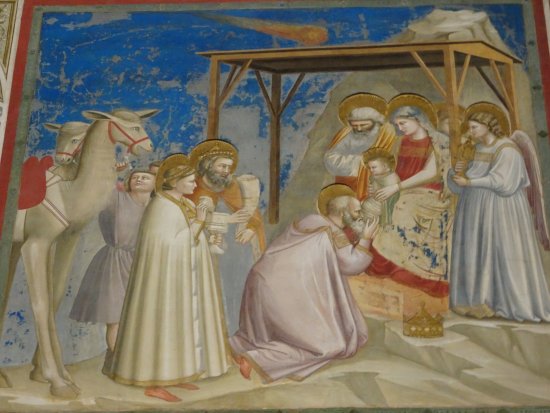
 Charles Lucas was one of Margaret Cavendish’s brothers. An anti-Royalist mob sacked their home in 1642. This was when Madge was sent off to Oxford to live with her sister. She gained a place as one of Henrietta Maria’s ladies in waiting and went into exile with her.
 At the end of the First English Civil War in 1647 the men who had fought against the king found themselves in disagreement. One group of politicians wanted to reach a settlement with the king other groups wanted more radical reforms. It is safe to say that none of them trusted one another much by the end of 1647. The Putney Debates, held at St Mary’s Church Putney in the autumn of 1647 presented the views of different factions within the army.
 During 1642 Parliament and the Crown laid out their various pieces on the chess board that was England. Each side attempted to take control of places of strategic importance. Having passed the Militia Bill, Parliament thought that it had control of the Commissions of Array and the appointment to offices such as Lord Lieutenantry responsible for the raising of armed forces. They also assumed that they would have control of each county’s official magazine (by law each county was required to have a stockpile of arms). However, this didn’t stop the king sending his own commissions nor for that matter some Lord Lieutenants declaring for the king.
 In January the Scots handed King Charles I over to the English. He had surrendered to the Scots int he hope that they would treat him better than the English and as a strategy for sowing political disharmony amongst his enemies. The Scots sold him to the English for £40,000.
 Many army officers and soldiers were unhappy about the fact that Parliament would even consider negotiating with the king. It was one of the causal factors that led to the Putney Debates. The so-called “Grandees” who had negotiated with the king were seen as having failed the Parliamentarian cause. By August five radical cavalry regiments had elected agitators to state their views. One of their demands was for universal male suffrage, i.e. a levelling. The Grandees, Cromwell amongst them, invited the radicals to debate their demands – resulting in the Putney Debates which started on the 28th October and lasted for three days.
 At the beginning of the English Civil War, in 1642, William Cavendish of Bolsover and Welbeck Abbey who was the Earl of Newcastle at that time gave Charles I £10,00 and raised a troop of 200 horsemen. In June of that year William was sent to secure Newcastle. He was on his way to becoming the king’s general in the north and about to start a military dance with Lord Ferndinado Fairfax and his son Sir Thomas Fairfax that would only end in 1644. Not that it was all plain sailing. The slide to war met with opposition and not every local lord was keen on Cavendish’s recruitment campaign.
 At the Battle of Marston Moor Newcastle’s Regiment of Foot were killed almost to a man. They remained in formation in the centre of the Royalist line and it is thought defended White Syke Close. The Parliamentarians recognising their bravery asked for their surrender but the regiment refused. By the time the Whitecoats died the battle was already lost – their deaths were futile. They were buried in mass graves where they fell. If you walk the route of the Battle of Marston Moor White Syke Close is marked on the ordinance survey map. Alternatively take advantage of a Country File walk which outlines the battle and leads you on a circular walk,