Fountains Abbey

I was delighted to find a batch of photographs I recognised today.

Fountains Abbey is a Cistercian Abbey. Apparently in the 12th century there was an outbreak of illness which saw people sleeping in tents because there was no space in the infirmary.

Fountains has many wealthy patrons as testified by the account books of the thirteenth century. despite this the abbey got into debt. This was partly because of their building projects. Edward I appointed a clerk to resolve the matter and ensure that the monks didn’t get into any deeper debt. It didn’t help that during the reign of Edward II the Scots turned up in Yorkshire to plunder and to burn. In 1319 Fountains was excused it’s taxes.

In 1443 John Neville was given the job of finding out who was “lately making a riot at the abbey.” Neville had no idea but the following year a commission was issued against “anonymous sons of inquiry” who had infringed upon the liberties of the monks. They were told that they needed to give back anything they had taken within three months or they would be excommunicated.

By 1535 the total value of the plate at Fountains was over £900. There were herds of cattle, flocks of sheep, 86 horses and 79 pigs.

Eventually the abbot and his monks were forced to surrender on 26th November 1539. It hadn’t been an easy couple of years. In addition to the abbot there was a prior and thirty monks – all of whom were required to sign the surrender in the chapter house. The abbot received a pension of £100.

Did you know there was a plan to turn Fountains into a bishopric with control of Lancashire (someone didn’t check the map methinks.)

And the original charter for the abbey is held at nearby Studley.

‘Houses of Cistercian monks: Fountains’, in A History of the County of York: Volume 3, ed. William Page (London, 1974), pp. 134-138. British History Online http://www.british-history.ac.uk/vch/yorks/vol3/pp134-138 [accessed 18 March 2021].

The Lion of Justice and his women…or rather his children

King Henry I

Henry I sometimes known as the Lion of Justice was married to Edith of Scotland, the daughter of Malcolm III and St Margaret meaning that the royal house of Wessex once again sat upon the throne, or at least quite close to it. And if you’re wondering who Edith might have been, she is known in the history books as Matilda on account of the fact that the Normans found Edith a foreign sounding name.

Henry went on to have somewhere int he region of 24 illegitimate children, many of them born to mothers unknown to history. William of Malmsebury who was a fan of Henry’s noted that “Throughout his life he was wholly free from impure desires.” The statement implies that William must have led a very sheltered or blinkered life! Until we read on to discover that the only reason Henry had so many mistresses was for “the sake of issue.” Poor King Henry I – fancy having so many women simply to increase the numbers of children with royal blood in their veins. It was a tough job but someone had to do it. It’s interesting though that an illegitimate child was a useful commodity so far as the Crown was concerned. It reflects the fact that the status of illegitimate children changed with the passage of time.

Female children could be married off in exactly the same way as legitimate ones to cement an alliance or a treaty. Sybil, the daughter of Sybil Corbet, married King Alexander I of Scotland in 1107. Another daughter, Rohese, married Henry de la Pomerai. He was a loyal supporter of the king, so the marriage may have held an element of reward for loyal service in drawing him closer to the Crown by ties of blood. Interestingly the half siblings of the Empress Matilda can be identified as bolstering support for her in the West Country during the Anarchy reflecting the importance of family ties (somewhat at odds to my more usual Wars of the Roses theme.)

William de Breteuil had no legitimate children. One of Henry’s daughters – Juliane- was married off to Eustace de Pacy, William’s illegitimate son. The marriage brought with it promises of support for Eustace against any other of William’s relations. It was the children of this union who were blinded and their noses split on the orders of their uncompromising grandfather when one of William’s hostages, the son of Ralph Harenc was blinded. Juliane attempted to kill her father with a cross bow after her two daughters were cruelly maimed.

Pharmacopoeias

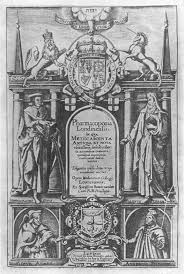
A pharmacopoeia is a handbook of medicines. The seventeenth century texts I’m perusing at the moment for a very specific cure-all are deeply underwhelming although strangely fascinating. Remedies includes the “turds” of geese, goats, hens, swallows and a peacock . One requires millipedes. Another lists amongst its ingredients discarded nail clippings. If you weren’t ill before you certainly would have been afterwards.

Many of the more exotic ingredients would have come from the mediterranean and beyond. And as navigators explored further and colonialisation took hold the ingredients of the pharmacopoeias did become more exotic – rhinoceros brain anyone?

The Pharmacopoeia Londinensis was published on the orders of James I and it effectively created a list of all official drugs – frogs lungs…if the goods you wanted to sell to an apothecary and then on to a physician were not on the Royal College of Physicians list then quite simply it wasn’t a cure. The Worshipful Society of Apothecaries was created in 1618 so now regulation was ensured. Little old ladies with herbal connections might find themselves in real bother and so could a male apothecary not following the guild’s rules. The College of Physicians which had controlled the apothecaries retained the right to license them in London but not to prevent them from dispensing medicines or treating people and the pharmacopoeia was a way of the physicians maintaining some kind of control because they dictated what was admissible to the list.

The Pharmacopoeia Londinensis continued to be published until 1854 when a new British listing was produced. By that time goat’s urine had been removed from the list.

https://history.rcplondon.ac.uk/blog/weapon-dressed-book-pharmacopoeia-londinensis

Ravenstonedale

The Gilbertine Order was founded by Gilbert of Sempringham in 1130. Most of the priories associated with the order are in Lincolnshire and on the eastern side of the country.

Eleven of the twenty-six houses were double houses, in that they accommodated both men and women but there were strict rules about segregation. The priory at Ravenstonedale does not appear to have been a double house.

It was founded circa 1200 when the manor was granted to Watton which was a double house with some 150 women and 70 men. It seems that Ravenstonedale never grew large – there were three canons and some lay brothers. The men followed the Augustinians and were all canons whilst the women were Benedictine.

There was a fish pond and a rabbit warren to feed the canons at Ravenstonedale. Effectively the canons were the Lords of the Manor so had to fulfil that role including dispensing justice.

Scandalous Watton

Watton Priory

Gilbert of Sempringham founded the Gilbertine Order. It was the only English founded order and it was also the only one with double houses. Gilbertine nuns followed the Benedictine pattern whilst the monks followed the Augustinian pattern of canons. Not all houses were double but the one at Watton in East Yorkshire was.

http://www.artandarchitecture.org.uk/images/full/0135e7d751653f793e7b91516ed773c00e0950cf.html

The story was recorded by Ailred of Rievaulx in the early 1160s. Essentially the nun in question was an oblate in that she had been in the priory since she was four years old. Interestingly, the Gilbertines had an age requirement for entry to their order – 24 for men and 20 for women. However, our nun gained admittance as a child at the request of the Bishop of York.

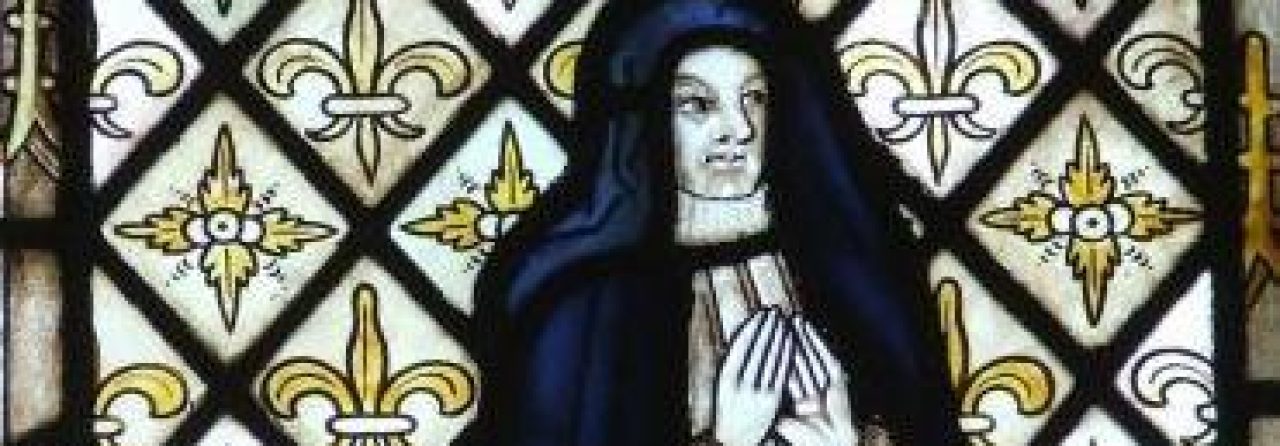
The nun became enamoured of either a lay brother or one of the canons. The attraction was reciprocated. They arranged to meet. The inevitable happened. The nun was found to be pregnant. The nun was beaten and imprisoned and when her lover captured she was forced to castrate him herself. He was returned to the male side of the house at Watton and disappears from the story.

However, the nun returned to her prison, was visited by the now deceased archbishop and two women who took the baby leaving the teenage nun in her original state of virtue. At which point she was allowed out of prison – a miracle having occurred.

It would have to be said that the Gilbertines had strict rules about segregating the canons from the nuns. Nonetheless the priory at Watton which was one of the most important Gilbertine Foundations was said to have many secret passages.

Watton was where Marjory Bruce, the eleven year old daughter of Robert the Bruce, was imprisoned by Edward I in 1306. She regained her freedom after the Battle of Bannockburn.

G. Constable, ‘Aelred of Rievaulx and the Nun of Watton: an episode in the early history of the Gilbertine order’, Medieval women, ed. D. Baker, SCH, subsidia, 1 (1978), 205–26

Armathwaite nunnery

https://historyofwomenreligious.org/women-religious-bibliography/medieval/ (Bibliography)

Armathwaite can be found in the Eden Valley near Croglin. It’s said to have been founded by William Rufus in 1089. Unfortunately Rufus wa snot known for his links with the Church and it’s now generally thought that the charter was a forgery. The nuns of Armathwaite weren’t the only ones to make their founding patron or history seem more important or to gain more definite legal ownership of property so let’s not hold a spot of light forgery against them.

Edward IV accepted their documents which included freedom from toll throughout England and there was also a claim for sanctuary. Someone claiming sanctuary had to be inside the boundary of the nunnery – there’s a pillar near the nunnery to bolster this.

Detective work finds the nunnery in 1200 mentioned in the St Bees charter when Roger de Beauchamp gives the monks lank near that belonging to the nuns of Armathwaite.

The Scottish Wars of Independence were not kind to the nuns which was why Edward II gave them leave to pasture their cattle in Inglewood Forest and excused them a debt for food purchased because their lands and income had been virtually destroyed by marauding Scots.

It’s generally accepted that nunneries weren’t so well supported as their male counterparts. Although there were some foundations and patronage by royalty and the nobility the bulk of funds seem to have come from local gentry often in the form of will bequests:

“From the fourteenth century wills on record in the diocesan registers, we learn that this nunnery had some friends and received bequests as well as the other religious institutions in the county. In 1356 Dame Agnes, the consort of Sir Richard de Denton, bequeathed 10s. and in 1358 John de Salkeld 40s. to the prioress and her sisters of ‘Hermythwayt.’ Richard de Ulnesby, rector of Ousby or Ulnesby, was good enough in 1362 to bequeath them a cow which he had in that parish, while a citizen of Carlisle, William de London, in 1376, and a country gentleman, Roger de Salkeld, in 1379, made them bequests of money.”

‘Houses of Benedictine nuns: The nunnery of Armathwaite’, in A History of the County of Cumberland: Volume 2, ed. J Wilson (London, 1905), pp. 189-192. British History Online http://www.british-history.ac.uk/vch/cumb/vol2/pp189-192 [accessed 22 February 2021].

The Wheel of Fortune

Detail of a miniature of the Wheel of Fortune with a crowned king at the top, from John Lydgate’s Troy Book and Siege of Thebes, with verses by William Cornish, John Skelton, William Peeris and others, England, c. 1457 (with later additions), Royal 18 D. ii, f. 30v. https://blogs.bl.uk/digitisedmanuscripts/2012/02/the-wheel-of-fortune.html

The wheel of fortune or rota fortunae features in Chaucer’s writing and in Shakespeare’s. Both Hamlet and Lear have something to say on the topic.

Dating from Classical times the goddess Fortuna is pictured blindfolded with a cornucopia in one hand and a wheel or a rudder in the other. The original concept of the wheel or even sphere was linked to the astrological frame in which the signs of the zodiac were placed. Boethius, writing in the sixth century, extended the idea. The problem with Fate was that it was pagan and the Church didn’t necessarily approve.

But by the medieval period the rota fortunae was being used to remind people that it was probably best to concentrate of God and the hereafter rather than earthly things because Fortuna can bring luck, fortune and power or can remove all those things at a slip of the wheel and because everyone is bound to their wheel they have no choice but to accept what Fate throws at them. Fortuna isn’t being capricious – she’s more of a Heavenly enforcer. It is God’s will whether your business venture is successful, whether there is a famine, whether you suddenly find yourself being usurped from your throne.

The concept of destiny is an important one in the medieval and Tudor world views. It is linked also to the concept of the Great Chain of Being – everything has it’s place and shouldn’t try to step out from the place that God has allotted. Another way of describing the Great Chain of Being is to call it Divine Order. Essentially the more “spirt” something has the closer it is to God so therefore the higher up the Great Chain of Being it is – ladies you will no doubt be delighted to know that we’re lower down the chain than men. You are where you are in a rigid social hierarchy because God wants it that way – so please don’t revolt because if you do the Divine Order will be upset and this will reflect across the universe…there will be storms and floods and strange and monstrous happenings.

So – we’ve all been given a place in the universe based on the Great Chain of Being. Our destinies are in the stars and allotted to us when we’re born – remember horoscopes are cast as part of the medical process and Books of Hours contain dates which are more auspicious than others for things like moving house, having blood taken and going on journeys. The wheel of fortune is in the background as the main controlling force in life – explaining all life’s successes and adversities, joys and tragedies. It helped explain all those things for which there seemed to be no explanation.

Of course the Renaissance and the concept of humanism sees things a bit differently.

Radding, Charles M. “Fortune and Her Wheel: The Meaning of a Medieval Symbol.” Mediaevistik, vol. 5, 1992, pp. 127–138. JSTOR, http://www.jstor.org/stable/42584434. Accessed 16 Feb. 2021.

February, blood letting and monasticism

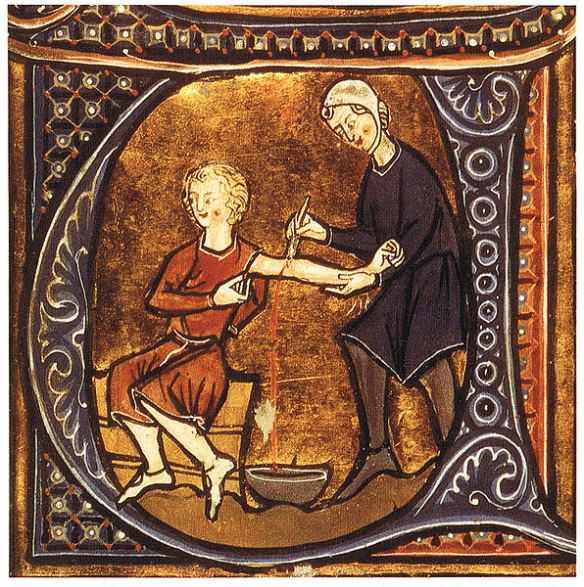
Today I’m combining February’s calendar page information (yes, I know its the middle fo the month) with monasticism. Bloodletting was an important part of medieval health. If you were a monk you would pop along to the warming-house/room, usually in the late morning or early afternoon having had a snack in the refectory first. Monastic blood letting seems to have been akin to letting a vampire do his worst because accounts suggest that monks might lose up to four pints of blood during a letting. In fact monks were so weakened by the experience that they needed to spend time recuperating without the requirement for labour and with a relaxed dietary regime. On the third day after the bloodletting, the monk joined the rest of the community for some of the offices and might start doing a spot of light reading.  

Monks, certainly Cistercians, were bled four times a year including February. Basically the idea was that blood letting was a restorative that sharpened the mind and quenched the kind of urges that might get monks into trouble. If the truth was told the quarterly blood letting probably meant that the monks had more blood taken than they had baths each year.

The ‘vein man’ – a guide to blood letting. Wellcome Images L0020781

Candlemas on the 2nd of February ended the Medieval Christmas cycle. It was also often depicted as a time to rest – there are many images of agricultural labourers toasting their feet and warming their hands in front of a roaring fire in February.

The astronomical signs for the month began with Aquarius and ended the month with Pisces. Books of hours contained the astrological symbol for each month because it helped decide on medical practices – so letting blood from mid January to mid February was good because it is good to do things that last only a short while under Aquarius. But once the star sign changed it wasn’t a good idea to have anything medical done to your feet- not sure where you stand on clipping your toe nails as my medieval medical understanding isn’t that well defined.

In fact whilst we’re on the subject of blood letting – it depended on the month as to where blood should be taken and also what condition it was good for.

An example of the ‘theory’ of melothesia in which a particular parts of the body are associated with zodiac symbols. WI no. L0047652

There is a name for the way in which parts of the body are associated with different zodiac symbols – melothesia – if you please. It had a Babylonian background so we are back to the transference of knowledge via the Arab world.

Try this link for more information about health care and monasticism: https://prizedwriting.ucdavis.edu/monasticism-and-medicine-morals-money-and-back

Beauvale Priory

Beauvale Priory was a Carthusian Priory. It’s remains are situated in Greasley, Nottinghamshire. Today it is a farm and very scrumptious tearoom.

It was built in 1343 by Sir Nicholas de Cantilupe, Lord of Ilkeston, with the approval of King Edward III. Nicholas was given permission for twelve monks and a prior to build a priory on his land and he provided them with £100 a year in rent as well. They also received the advowsons of Greasley and Selstone – so it was their right to appoint the vicars there. Other members of Debryshire’s gentry also patronised the abbey giving land and money, none the less there were occasions when the priory struggled financially.

This record of a grant records the importance of monks saying masses for the souls of the departed.

“Sir William de Aldburgh, for the soul of his lord Edward Baliol, King of Scotland, and for the soul of Elizabeth his wife, and for others his near kinsfolk, did in 1362 grant to the priory of Beauvale the hay of Willey in Sherwood. In the succeeding reign (18 Richard II) a chantry was founded in the conventual church for two of the monks to say mass for the souls of William de Aldburgh and Edward Baliol.”

The Carthusians, renowned for their scholastic understanding, were unanimous in rejecting Henry VIII’s “Great Matter.” In refusing to consider an annulment of the marriage between Henry VIII and Katherine of Aragon they were required to pay a particularly heavy price.

1535, Robert Lawrence, the Prior of Beauvale, travelled to London, as did the Prior of Axholme another Carthusian priory to discuss matters with the monks at the London Charterhouse. Lawrence had been a member of the London house, and had been transferred to Beauvale as its prior five years previously whilst John Houghton who had been Prior of Beauvale was sent to take charge of the mother house in London. The three priors decided to talk about the matter with Cromwell but he refused to discuss the matter sending them to the Tower instead. They refused to take the Oath of Supremacy and were executed.

‘House of Carthusian monks: The priory of Beauvale’, in A History of the County of Nottingham: Volume 2, ed. William Page (London, 1910), pp. 105-109. British History Online http://www.british-history.ac.uk/vch/notts/vol2/pp105-109 [accessed 7 February 2021].

Croxden Abbey, Staffordshire

Croxden in Staffordshire was a Cistercian foundation. The Cistercians or “white monks” wanted to live a more austere life than their Benedictine or Cluniac brothers. This was symbolised by the undid wool habits that gave them their name.

Croxden Abbey was founded by Bertram de Verdun in 1176, Monks from Aunay in Normandy were sent to live in the new foundation. Initially the abbey began its life at Cotton but by 1179, the monks had moved to Croxden. The first abbey was built by 1254 but the precincts were expanded during the 13th and 14th centuries. The ground plan of the monastery at Croxden is modelled on Aunay.

When Croxden Abbey was dissolved in 1538 the property was leased to Francis Bassett, a member of the local gentry and rather conveniently a servant of Archbishop Crammer.

A road which dates from the 18th century runs diagonally across the site of the nave and the south transept.