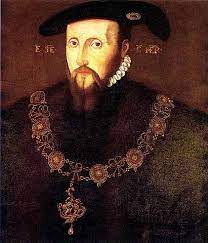
The Lord Protector’s daughter – Anne

Edward Seymour, 1st Duke of Somerset

Edward Seymour was swift to elevate himself to the Dukedom of Somerset when he took control of his nephew, Edward VI’s, Regency Council in 1547. The duke had twelve children as a result of his two marriages. His first marriage was to Catherine Filliol by whom he had two sons – or rather he thought he did but after his wife’s affair with her father-in-law came to light it all became rather complicated. John and Edward found themselves excluded from their inheritance on the grounds that no one knew if their father was actually their half-brother. Catherine was packed off to a nunnery where she conveniently died circa 1535 before nunneries became a thing of the past. I should point out that there is no existing contemporary evidence that Catherine and her father-in-law were rather closer than they should have been.
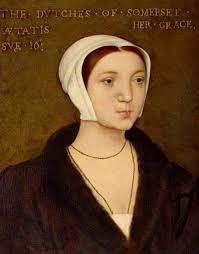
Anne Stanhope

Seymour married for a second time to Anne Stanhope. Today’s post is supposed to be about her daughter – Anne. She had more sisters including Margaret and Jane. All three of them were noted writers of their day. Anne, the oldest married John Dudley the eldest surviving son of John Dudley, Earl of Warwick as he was when the engagement was contracted and Duke of Northumberland when the marriage came to pass. John died of goal fever as a result of being locked in the Tower following froths father’s cunning but not terribly successful plan to put Lady Jane Grey on the throne.

The girls received a humanist education of the kind that included Latin, French, Italian and Greek as well as other subjects. The sisters were also supposed to be notable singers. Her first marriage was supposed to seal a political alliance between Seymour and Dudley but within weeks of the marriage Seymour was off to the Tower for a date with the headsman. When John died Anne was still only sixteen or seventeen years old. An old family friend of the Seymours arranged a second marriage to Sir Edward Unton. She and her husband had seven children, though it didn’t stop him from going off on a Grand Tour. During that time and whilst her youngest child was scarcely out of babyhood she was declared to be a’ lunatic with lucid intervals.’ She was twenty-eight years old.

Anne and her sisters composed 103 Latin distichs- choric praise in couplets and rhyming quatrains- for the tomb of Margaret of Navarre which were published in France in 1550. This then makes the three young women an important voice in the development of the female written word but at the time they were regarded as political pawns on the marriage board. Marriage to John Dudley bought disaster but also financial advantage. Elizabeth I saw to it that she received an income from her jointure. Her second marriage saw her as a footnote. There is no explanation of her insanity.

There is even less known about Margaret Seymour who may have died at a similar time to her sister Jane who was born circa 1541 and died in 1561 from tuberculosis having served for a short time as one of Elizabeth I’s ladies. It was she who was the sole witness to her brother Edward Seymour’s marriage to Lady Katherine Grey.

Demers, Patricia. “The Seymour Sisters: Elegizing Female Attachment.” The Sixteenth Century Journal, vol. 30, no. 2, 1999, pp. 343–365. JSTOR, http://www.jstor.org/stable/2544708. Accessed 30 May 2021.
Watch the lady!

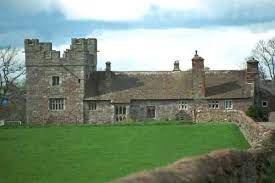
Yanwath Hall

It never does to forget that genealogical tables by their very nature are composed of women as well as men! Take Maud Clifford who was born sometime around 1442. Her parents were Thomas, 8th Baron Clifford and Elizabeth Percy , the daughter of Hotspur and Elizabeth Mortimer. It’s this Clifford who was killed at the First Battle of St Albans in 1455 – and as a consequence of his son’s desire for vengeance the new earl became one of Margaret of Anjou’s foremost supporters, the young Earl of Rutland was killed at the Battle of Wakefield and John Clifford gained the by-name “Black Face Clifford.” You can also see why the Cliffords would have joined in a feud against the Neville family thanks to their Percy mother.

Maud who was one of a large brood was married in the first instance to Sir John Harrington of Hornby – which was mildly unfortunate because the Harringtons supported the House of York. Sir Thomas, John’s father being a retainer of the Earl of Salisbury. Thomas and John were both at Wakefield and slain on the 30th December 1460. Maud’s daughters were just four and five but as co-heiresses they became wards of the Crown. In November 1461 Edward IV gave wardship to Thomas Lord Stanley but their uncle James refused to hand them or Hornby Castle over resulting in yet another regional fifteenth century feud.

Meanwhile Maud married Edmund Sutton in about 1465. He was the eldest son of John Sutton, Baron Dudley who changed sides after the Battle of Northampton from being a loyal supporter of Henry VI to being a loyal supporter of Edward IV. Edmund was at St Albans as a Lancastrian but at Towton as a Yorkist. The could had several children including Thomas, who did not become Baron Sutton of Dudley because Maud was a second wife and Edmund already had an heir. A suitable match was found with Grace Thelkeld who was one of three co-heiresses of Yanwath – and with that Thomas, effectively a younger son and confusing matters by taking the surname Dudley rather than Sutton as many of his kin chose to do, disappeared into the northern gentry when Yanwath Hall became his through right of his wife.

However, it always helps to maintain kinship ties and as it happens Thomas’s sons John and Thomas were able to find themselves a very powerful Tudor patron in the shape of their cousin Robert Dudley, Earl Leicester – which is of course why I have been reading about them. It’s also given me another challenge – to see if I can find my own photo of Yanwath Hall in the many out of sync files that I managed to retrieve.

Women’s rights…medieval style….

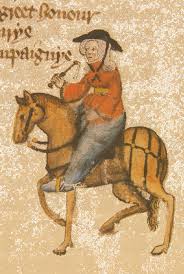
The Wife of Bath – possibly based on Alice Perrers – mistress to Edward III

As you might expect this is a money based post. A bride’s family were required to provide a dowry but as part of the agreement the groom was expected to provide for his new wife in the event that she became a widow. This was the dower and it was the evolution of the bride price and the groom turning up with a stack of gold on a shield on the morning of the wedding. The dower is one of the things required to legitimise the wedding…and wedding rings are symbolic of the gift or endowment. Conventionally a widow received a dower which was a life interest in one third of her late spouse’s estate. Obviously the husband had to hold the land outright, if it was entailed then it couldn’t be counted to the third. It didn’t even need to be set down in writing – it was a legal requirement and one of the reasons why the process of Inquest Post Mortem was so important in that it looked at an estate and decided who owned what and where any claims needed to be met.

There might also be a jointure. A jointure was the estate settled on the bride for the period of her widowhood – sometimes instead of the dower. The jointure in dictionary terms is a kind of joining in ownership that’s settled on the bride before the wedding to provide for her widowhood. A jointure came to equal one tenth of the bride’s dowry and was based on an income from the land. Failure of the bride’s family not to pay the dowry in its entirety could result in a woman not receiving her jointure (Think of Henry VII arguing with Ferdinand of Aragon about Katherine of Aragon’s jointure – resulting in the princess living in straitened circumstances after the death of Prince Arthur.)

Dowers and jointures made widows very marriageable because they kept the jointure even if they remarried.. They could also live independently and had more freedoms – think of the evolution of the femme sole status within the merchant and guild hierarchies. The concept of the “bride gift” and the dower were intertwined.

Widows had more choices about who they married next. Magna Carta forced the king to renounce his previous right to arrange the marriage of his barony as he saw fit. There were other laws that gradually removed feudal impediments from choice although in many instances a fine was required first. All of which sounds very Wife of Bath with her five husbands, steadily increasing wealth and Chaucerian smut. None the less there was an option for marrying for love rather than being bartered for the benefit of the whole family. Friedrichs points out the number of wealthy widows who married beneath them – suggesting love on the woman’s part at least.

However, and this won’t come as any great surprise, it didn’t always work out like that. Sir William Lucy managed to get himself killed during the Battle of Northampton in 1460. His widow, Margaret, was in her twenties and childless. There was a delay with the provision of her dower rights and because her jointure had been made without royal licence it was held not to be valid. Margaret was not sufficiently wealthy to make an independent choice about who she married and she was part of Warwick’s household. Her story is complicated by the fact that Edward IV took a shine to her.

Friedrichs, Rhoda L. ,”The remarriage of Elite Widows in the Later Middle Ages” Florilegium, vol 23, 1 (2006): 69-83

Femme Sole – a woman alone…and looking after her own money

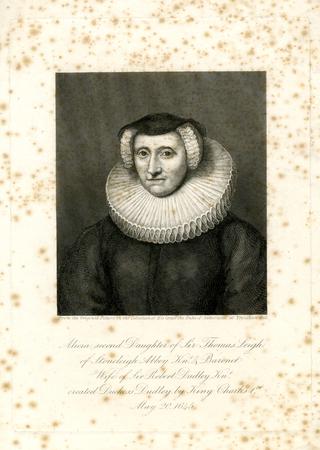
Alice, Duchess Dudley (British Museum)

Women in medieval and early modern England were not usually independent.The law deemed that a woman once she married was covert de baron ie protected by her husband. The use of baron here simply identifies the correct natural hierarchy (don’t blame me!)

However, there were some women who broke the mould and were legally designated femme sole. These women could conduct their own business transactions and would be held responsible for their own debts. The idea developed during the thirteenth century in London. Alice Perrers, the mistress of Edward III, was identified as a femme sole by the law courts – meaning that she had no husband, father or brother to look after her affairs – and was treated as though she was single. This allowed Alice to buy property on her own behalf but also made her liable for any debts that she incurred and as it turned out any debts that her deceased husband might have incurred prior to his death.

Women in an urban setting were more likely to wish to carry on their husband’s trades if he pre-deceased them. There are examples of this situation within many guild books and occasionally, but not often, women with one trade marrying into another guild craft and the couple continuing about their separate businesses. And just to be clear, canon law was quite adamant that the husband in question had to give permission for his wife to continue in her old trade. This was because the concept of debt was that it belonged not to one person but to a family – thus it would be usual for the husband to become liable for his wife’s debts if her business failed (I make no comment.). Femme sole meant that the woman could trade as though she was single and the husband’s business would be legally protected.

Other circumstances might include banishment and in the case of Alice Dudley the wife of Sir Robert Dudley, illegitimate son of the Earl of Leicester – abandonment. Alice was given access to the jointure which she would have received in the event of Robert’s death and given the status of femme sole at the same time.

Needless to say there weren’t many femme soles.

The medieval calendar in May

Trinity College Library, Cambridge – Labours of the Month – May

Time flies when you have your head down and are typing manically. Since I last posted I’ve been banished from court, gone on an adventure to the West Indies and am now absconding to Tuscany via Naples having deserted a wife and five children under the age of eight. I’ve built a galleon and pinnace and my Italian has improved – no seriously, my Italian really has improved. My only problem is that it relates to ship building and piracy and neither of those two options are something I would consider to be part of a lovely holiday. However it has finally dawned on me that despite the weather here it is May – so time for an occasional calendar post. Normal service will resume this week.

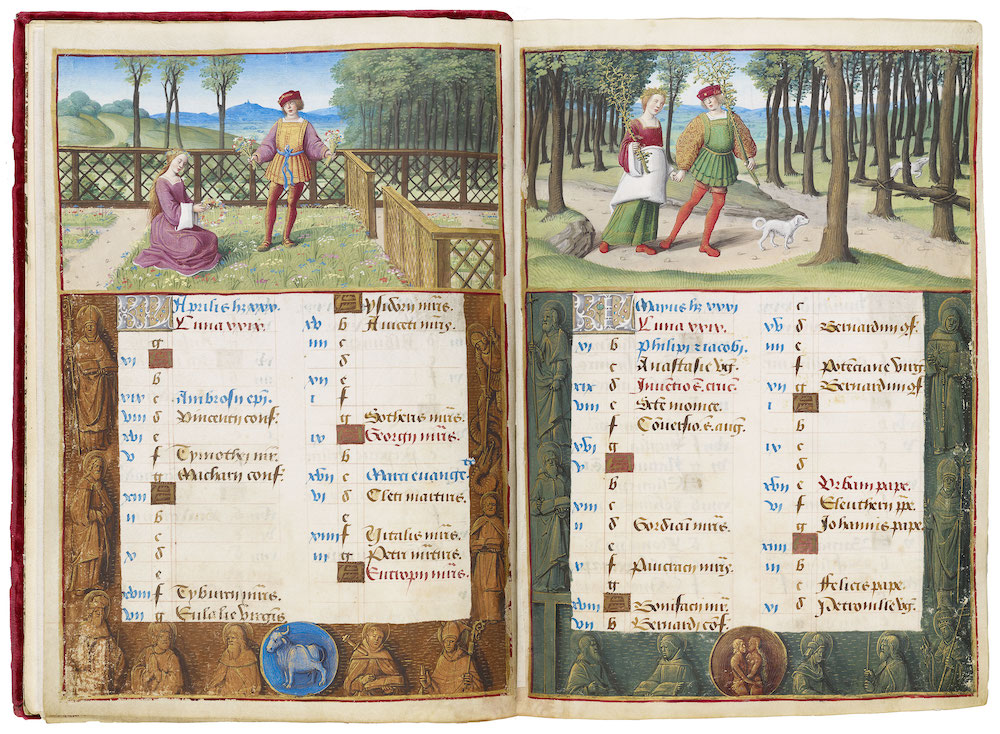
May – time for a spot of falconry or courtly love. I’m not sure whether either one of them counts as a labour. The Book of St Albans (1486) lists the kind of bird of prey that you would be allowed according to your rank. Emperors can fly eagles whilst knaves can fly kestrels – hence the book title. It was a bit of an extravagant way of labouring for food.

Unsurprisingly Henry VIII’s book of hours is about courtly love but also contains images for the two star signs of the month – Taurus and Gemini.

Morgan Library MS H.8, fols. 2v–3r  April and May. Houses of Henry VIII

A Henry VIII interlude

I came across this on the C J Sansom Appreciation Society (https://www.facebook.com/groups/15046129703/) as posted by one of its members. It made me smile and I hope that you enjoy it as well – and the C J Sansom Appreciation Society has some lovely posts.

The caption is Henry VIII’s wives if they hadn’t married him – they certainly look different when smiling.

April in Medieval Books of Hours

April’s labours involve pruning, ploughing continuing from March and shepherds tending to lambs. All in all it’s very fecund. So, er well how do I put this, spring being in the air a number of medieval books fo hours depict couples doing what happens when spring is in the air. Although in more decorous texts this involves going for a very respectable stroll rather than anything more unseemly. In the image above courtship seems to be in the air on the bottom right hand side of the page. Illustrations also include spring flowers in both nature and more horticultural surroundings – and often the astrological illustration of Aries or more often Taurus. The British Library holds early books of hours depicting feasting in April because of the feast of Easter coming after Lent.

The tres Riches Heures (April)

This particular illumination has flower picking, tree blossom and a bit of light flirtation by the looks of it. I love the detail of the fishermen in their boats.

Brinkburn Priory

Brinkburn Priory, an Augustinian foundation, is near Rothbury, hidden at the bottom of a valley – and we went it was a glorious sunny day. Brinkburn was founded in 1135 at the end of the reign of Henry I. it was probably a daughter house of Pentney in Norfolk. Brinkburn’s story is largely pieced together from its chartulary.

It’s location meant that in 1419 it was raided and robbed by the Scots. Slightly more than a hundred years later it had still not recovered so was designated a lesser monastery and dissolved. It was granted by Edward VI to John, Earl of Warwick who became Duke of Northumberland when the Duke of Somerset was toppled from power on the regency council.

I’ve posted about Brinkburn before: https://thehistoryjar.com/tag/brinkburn-priory/

The Earl of Cornwall –

King Henry I

Reginald de Dunstanville, or Reginald FitzHenry, or Rainald rather than Reginald, was one of Henry I’s illegitimate sons by Sybilla Corbet.  The Complete Peerage calculates Sybilla´s identity from the charter under which “Reginaldus, Henrici Regis filius, comes Cornubiæ” granted property to “Willielmo de Boterell, filio Aliziæ Corbet, materteræ meæ” which he had granted to “Willielmo de Boterells in Cornubia, patri…predicti Willielmi” on his marriage, witnessed by “Nicholao filio meo…Herberto filio Herberti, Baldwino et Ricardo nepotibus meis, Willelmo de Vernun, Willielmo fratre meo…Hugone de Dunstanvill…”.

He was born circa 1110 , so after Henry vowed to give up mistresses when he married Edith/Matilda of Scotland.  His path followed that of many illegitimate children of the monarchy – his title and wealth came through a marriage arranged to an heiress in this case Beatrice FitzRichard the daughter of an important Cornish landowner. Reginald became Lord of Cardinham through the marriage. Having said that most sources indicate that the marriage took place in 1140 – five years after the death of Henry I. In 1141 Reginald found himself stuck in his castle in Launceston whilst Alan of Richmond roamed the county at the behest of King Stephen. There was also the small matter of an argument with the Church which involved knocking down some building work at Launceston Priory paid for by King Stephen.

Launceston Priory https://launceston-tc.gov.uk/the-council/town-council-properties-services/launceston-priory-ruins

But I’m jumping ahead of myself. When Henry I died in 1135 Reginald was fighting in the Contentin and did not return to England until 1138. Reginald was a key supporter of his half-sister Matilda in her claim to the throne according to the Orderic Vitalis which identified him as “fratre suo Reginaldo comite Cornubiæ.”  She named him Earl of Cornwall in 1141.  The earldom of Cornwall had originally been given by William the Conqueror to Robert, Earl of Morteyne but the Morteyne or Moreton family lost the title in the reign of Henry I. Reginald certainly fought for his sister. His presence is recorded at the rout of Winchester when Robert of Gloucester was captured. Some historians identify Robert as being Reginald’s full brother but Weir identifies Henry I’s favourite illegitimate son as the child of an unknown woman from Caen. Whatever the case the number of charters identifying Reginald as the son of the king demonstrate that Reginald knew that it was important to emphasise that his power and his land ownership came from his blood and that which was given to him by his royal father.

Empress Matilda

Reginald wrested power in Cornwall back when Stephen’s alternative earl – Alan of Richmond – was captured at the Battle of Lincoln. He very sensibly opted to apologise to the Church as well. Ultimately Reginald served not only his sister but also his nephew Henry II. Records show that Reginald held 215 knights fees in Cornwall – manors capable of supporting a knight, his family, his staff and providing equipment necessary for war.

Reginald had five legitimate children and two illegitimate ones but like his father before him died with out legitimate sons so the title went into abeyance before Henry II passed it to his son John. For a brief time Reginald’s illegitimate son Henry Fitz-Count held the title but he resigned it to Henry III in 1219.  

In 1173 he was granted a charter to free burgesses of Truro. It was a this time he also became Sheriff of Devon. Launceston Priory benefited from links to the Dunstanville family as can be seen in its chartulary. The name Dunstanville is from Reginald’s grandmother Adeliza de Dunstanville. Reginald witnessed six charters for the priory.

Reginald died at Chertsey in 1175 and was buried in Reading Abbey where his father was buried.

And as a complete aside the ruins of St Stephen’s Priory Launceston were completely lost after the dissolution until they were uncovered during the Nineteenth century when a railway was built.

 ThompsonKathleen. “Affairs of State: the Illegitimate Children of Henry I.” Journal of Medieval History 29 (2003): 129-51.

Fountains Abbey

I was delighted to find a batch of photographs I recognised today.

Fountains Abbey is a Cistercian Abbey. Apparently in the 12th century there was an outbreak of illness which saw people sleeping in tents because there was no space in the infirmary.

Fountains has many wealthy patrons as testified by the account books of the thirteenth century. despite this the abbey got into debt. This was partly because of their building projects. Edward I appointed a clerk to resolve the matter and ensure that the monks didn’t get into any deeper debt. It didn’t help that during the reign of Edward II the Scots turned up in Yorkshire to plunder and to burn. In 1319 Fountains was excused it’s taxes.

In 1443 John Neville was given the job of finding out who was “lately making a riot at the abbey.” Neville had no idea but the following year a commission was issued against “anonymous sons of inquiry” who had infringed upon the liberties of the monks. They were told that they needed to give back anything they had taken within three months or they would be excommunicated.

By 1535 the total value of the plate at Fountains was over £900. There were herds of cattle, flocks of sheep, 86 horses and 79 pigs.

Eventually the abbot and his monks were forced to surrender on 26th November 1539. It hadn’t been an easy couple of years. In addition to the abbot there was a prior and thirty monks – all of whom were required to sign the surrender in the chapter house. The abbot received a pension of £100.

Did you know there was a plan to turn Fountains into a bishopric with control of Lancashire (someone didn’t check the map methinks.)

And the original charter for the abbey is held at nearby Studley.

‘Houses of Cistercian monks: Fountains’, in A History of the County of York: Volume 3, ed. William Page (London, 1974), pp. 134-138. British History Online http://www.british-history.ac.uk/vch/yorks/vol3/pp134-138 [accessed 18 March 2021].