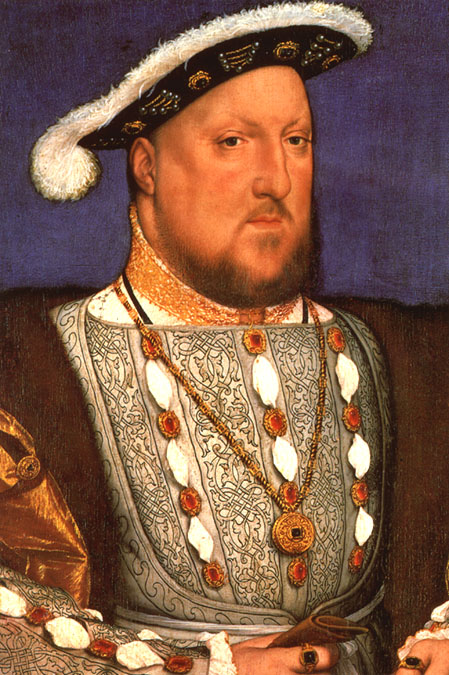
Mary – Tudor Princess, queen of France and duchess of Suffolk

tudormary03The picture behind today’s advent calendar is Henry VIII’s sister Princess Mary who was known for her beauty. Mary was betrothed to the future Charles V of Spain in December 1507 when she was thirteen prior to her marriage to the elderly King Louis of France in 1514. The marriage was delayed because of negotiations and diplomatic maneuverings and ultimately Henry saw an opportunity to ally himself with France. Mary had no say in who she would marry she was a princess after all.


Her spouse, King Louis XII, was fifty-two, feeble and “pocky” as compared to Mary’s eighteen years and acknowledged beauty. He died less than three months later and Mary was sent into isolation for six weeks to check that she wasn’t carrying a potential heir to the French throne. Mary took the opportunity to marry the man of her dreams Charles Brandon, duke of Suffolk (and a man with a dodgy marital history of his own) with the connivance of the new young handsome French king Francois I who was probably delighted to scotch the potential diplomatic plans that Henry was no doubt plotting. And, as luck would have it, Henry’s allegiances had swung back to Spain so he was indeed beginning to put forward an Anglo-Spanish alliance cemented in the persons of Charles V and his newly widowed sister Mary.


Henry was furious having forgotten his promise that Mary could marry who she wished. The pair were ultimately forgiven but not before they’d written to the furious king through the good agency of Cardinal Wolsey begging for forgiveness. Mary was Henry’s favourite sister and they did promise to pay a very large fine so it wasn’t long before they were back at court.


Our entry from Henry’s papers for December 3 1513 occurs before Mary’s engagement to Charles was broken off because Henry signed a warrant to the Great Wardrobe for a “gown of cloth of gold for the Princess of Castile.”


There may be some of you thinking, was that the same Charles V who was the nephew of Catherine of Aragon and fiancé of Henry’s daughter Princess Mary…er, well, yes – which just goes to show that Henry was nothing if not persistent.

Letters and Papers, Foreign and Domestic, Henry VIII, Volume 1, 1509-1514, ed. J S Brewer (London, 1920), British History Online http://www.british-history.ac.uk/letters-papers-hen8/vol1 [accessed 2 December 2016].


Henry VIII’s middle way for the Church of England

henryharpHenry VIII was nothing if not even minded.  He executed fifty people for not renouncing the pope – thereby becoming traitors to the king and he executed another forty for their heretical leanings between 1533 when he assumed control of the Church in England and his death in 1547.

On the 30 July 1540, just two days after Thomas Cromwell was executed, Smithfield witnessed Henry’s bizarre not to mention gruesome relies tightrope act.  Six people were executed.  Three of them, Richard Fetherstone, Thomas Abel and Edward Powell, were condemned as papists. Their crime was their failure to deny the pope. They were hanged drawn and quartered as traitors whilst the other three to die that day were burned as heretics.

Robert Barnes, a Norfolk man, was educated at Cambridge and like Lambert began life as a Catholic.  But like Lambert he was drawn to protestantism very early in his career. He was imprisoned by Wolsey but undeterred he used his incarceration as an opportunity to give out Bibles written in English.  Very sensibly he decamped to Antwerp as soon as possible where he made the acquaintance of one of Cromwell’s agents.  Interestingly he returned to England in 1531 where he became an agent employed by the Crown liaising with Lutheran Germany.  He had, after all, met Luther during his travels.  He was part of the delegation which went to Germany in 1535 to find out how the Lutherans viewed Henry VIII’s intended divorce from Katherine of Aragon.  He returned as part of Cromwell’s team negotiating for the match between Henry and Anne of Cleves.

This disastrous union would hasten Thomas Cromwell’s demise but the lines were already drawn up for a contest between Cromwell who was seen as leaning towards reform and the old guard of catholicism in the persons of the duke of Norfolk and Bishop Gardiner. One of the early signs of this conflict was when Barnes preached against Gardiner from the cross at St Paul’s. He was made to apologise and briefly stopped being Lutheran but then Cromwell was made earl of Essex and it looked to Barnes to be service as usual so he reverted to beliefs that exceeded the dictates of the Ten Articles.

Except of course Cromwell was on his way out and without the Vicar General’s protection it wasn’t long before Barnes was turned into a rather dreadful example.

William Jerome and Thomas Gerrard were executed on the same heresy charges. Jerome, another one of Cromwell’s proteges, had also preached at St Paul’s but the subject of his sermon had been that magistrates had the power to make make what was indifferent not indifferent – make of that what you will!  Gardiner added it up to identify the fact that Jerome was advising people to adhere to the king through their outward behaviour only and think what they want in private – which probably didn’t go down terribly well with Henry.  Even worse Jerome preached justification through faith alone which essentially chopped out the need for the priesthood and the Church.  Bernard considers whether this was the sort of behaviour that hastened Cromwell’s end due to his men spouting heresy pointing towards dodgy radical leanings of the master who protected them.  Certainly it may have been one of the  threads which broke Cromwell’s increasingly tenuous hold on power.

Equally it should be pointed out that whilst this interpretation is fine if you subscribe to the theory that catholicism was on the rise thanks to the duke of Norfolk dangling his pretty little niece Katherine Howard under Henry’s nose. It fails to take account of the fact that while the protestants burned, three catholics were hanged.


Foxe noted that confused and ignorant people wouldn’t know what to make of the opposing sides suffering equally on the same day.  The french ambassador expressed similar bewilderment.  They have a point but Bernard states that academics have missed the key issue ever since – that Henry was doing what Henry wanted. After all, Henry saw himself as an Old Testament kind of king with a hotline to The Almighty. It was Henry’s Church and his was the only way…if you didn’t want to end up in Smithfield.


Bernard, G.W. (2007) The King’s Reformation. London and Harvard: Yale University Press

Wilson, Derek. (2012) The English Reformation. London: Running Press

John Lambert – another of Henry VIII’s victims.

henryholbeinJohn Nicholson, or Lambert, was a Norfolk man who studied at Cambridge. He’d come to the attention of Katherine of Aragon and it was due to her nomination that he was elected fellow. However, he shifted away from the Catholicism of his birth and moved to Antwerp where he became acquainted with Tyndale.


He returned to London when it seemed that England was to have its own reformation when Anne Boleyn was in the ascendent. He taught Latin and Greek but unfortunately for him he got into a dispute  about a year after Anne’s execution when the official religious hue of the country was shifting back to its starting point. This argument was reported to the Duke of Norfolk. Norfolk accused Lambert of heresy and had him imprisoned.

During his imprisonment Lambert wrote a paper justifying his belief that Christ was not present in the bread and wine of the Eucharist which he presented to his accusers who promptly handed it over to Thomas Cranmer.

Lambert’s crime was to deny transubstantiation which at this point in the Church of England’s history made him a heretic. The Ten Articles left no room for manoeuvre in this matter. Cranmer tried him and found him guilty of heresy, which is ironic because Cranmer would himself deny transubstantiation as soon as he felt it safe to do so.

Lambert appealed his case directly to Henry VIII – perhaps he thought the monarch was a rational man with Protestant tendencies – after all he’d broken with Rome. Little did he realise that he was going to be at the heart of a show trial to demonstrate that having broken with Rome Henry intended to go no further down the road towards Protestantism. In fact even when the monasteries were being suppressed there were heresy trials and executions.  Henry didn’t have any truck with Lutherans or Zwinglians or any of the other protestant sects that were springing up across Europe. It wouldn’t be long in England and Wales before the Ten Articles shrunk into the Six Articles which were essentially catholic in view but with Henry in charge.


Henry summoned assorted bishops and theologians to Westminster rather fancying himself as a learned theologian himself – afterall he was the Defender of the Faith having launched his repost to Luther in 1521. He also arranged for an audience to gather on specially erected tiered seating.


Richard Sampson, Bishop of Chichester was the ringmaster for the day. He explained to the gathered courtiers and bishops that Lambert had appealed his case to Henry and that Henry was going to demonstrate that it was far from the case that he’d turned German in his religious sympathies. Sampson went on to say that whilst Henry had given the monks the big heave ho it was because they were an idle bunch who encouraged superstition. He also explained that in giving the Bible to the people in English it was to encourage them in their true understanding and away from the superstitious nonsense of the past – a humanist approach if you will.


Henry then exchanged words with the accused who had to explain about having two surnames which didn’t go down well with Hal but the king very graciously said that as Lambert was his subject he wanted him to have the opportunity of understanding the error of his ways and come back into the fold of the true faith even if he was an untrustworthy sort of bloke with two different names which was in Hal’s opinion just plain shifty.


Five hours later six  or so bishops including Cranmer and Gardiner  had disputed with Lambert who hadn’t budged an inch in his views during the entire time. Henry announced Lambert must die on account of the fact he didn’t patronise heretics. Cromwell recorded it as an occasion of Henry’s “inestimable majesty” when he wrote about the event  which suggests that the Vicar General might have thought that someone was reading his letters before they were delivered to their intended recipients.


As he burned on November 22 1538 at Smithfield, Lambert called out, “None but Christ.”

Those of you of a gentle disposition may wish to stop reading at this point.


Henry, allegedly, decreed that Lambert’s suffering should be extended as a warning to all other heretics so the poor man was lifted on pikestaffs from the flames as his legs burned.

Letters from Tudor England November 1535 – monasteries, marauding and a touch of treason

640px-Cromwell,Thomas(1EEssex)01Its that time of week again when I delve through Henry VIII’s letter and papers looking for the thoughts of Thomas Cromwell.

Dr Legh continued his periguination of Norfolk writing to Cromwell on November 19 1535, “there are many pretty houses here in Norfolk, both of monks and canons, which have only a prior and one with him.” He goes on to ask Cromwell what he should do about them.

Elsewhere in the southeast the next stage of the suppression was well under way. The Close Roll of that time reveals the “Surrender to the King of the Premonstratensian Abbey of St. Mary and St. Thomas the Martyr, Langdon, Kent, by Will. Dayer, abbot and the convent” on the 13th November. It notes that the surrender took place in the abbey’s chapter house. That same week the priory of St Mary and St Eanswith in Folkestone closed its doors. The following day the prior of St Mary’s in Dover surrendered along with eight other of his brethren. By the 16th of November Cromwell’s men were in Canterbury writing up their accounts. They informed Cromwell that the majority of the brothers of the suppressed houses were still in situ whilst they awaited new situations, that they’d confiscated the abbey seals so that no further business could be done and that they had checked the inventories of the suppressed houses. They commented rather touchingly of Folkestone. “It is a little house, well repaired, and the prior a good husband and beloved by his neighbours.”


It is easy to imagine that Cromwell was completely consumed by his job as Vicar General but a letter on the 15th of November from Sir William Parr reminds readers of Henry VIII’s letters and papers that Cromwell had oversight of everything. From Sir William we discover that Sir Thomas Clifford the captain of Berwick was “sore sick.” We also discover that Sir William had his eye on Clifford’s job because he asks Cromwell that if Clifford dies could he have the post because his “whole comfort rests upon it.” I can only hope that Sir William enclosed a large gratuity to help Cromwell remember Parr’s name. He might have done well to take note of another correspondent who sent a letter to Cromwell accompanied by a brace of fowl to ensure that Cromwell gave his attention to the annuity which his wife hadn’t received.


Sir William Parr’s letter does demonstrate that it was quite hard for Cromwell to escape the topic of monasteries because he continues his letter with a plea for  Pipwell Abbey in Northamptonshire. Parr offers a heartfelt testimonial to the godliness and hospitality of its inhabitants and asks that Cromwell should show them understanding.  Pipwell was near to Kettering and it had an income of less than £200 a year. The abbey was earmarked for suppression. Interestingly Sir William Parr, who would end up as the King’s brother-in-law, wrote once more to Cromwell offering to give the Vicar General £200 when it became clear that the lesser monasteries, Pipwell included, were to be suppressed. Ultimately, of course, it made no difference and Parr wrote a third time in 1538 asking about pensions for the abbot and the brothers and also that he should have the building and estate – this was duly granted. There are more letters in the archives from Parr because it rather looks as though folk helped themselves to fixtures and fittings that they shouldn’t have touched.


In addition to a spot of bother with Scottish reivers raiding the west march of England there were business matters in Calais to deal with, the ramblings of Lord Lisle and just to finish the week off Cromwell was also required to deal with an outbreak of treason. The vicar of Rye apparently didn’t take well to all those changes that were afoot in the 1530s, in particular the king becoming the Head of the Church of England. He had in his possession a booked called “Eckyus Enchiridyon…against the King’s being head of the Church.” If that wasn’t enough “when he stopped at the Black Friars here of London, friar Dr. Maydland said he would like to see the head of every maintainer of the New Learning upon a stake,—that of his principal among them,—and to see the King die a “vyolent and a shamefull” death; also “to see that myschevous hore the quene to be brent.” He knew by his science of necromancy that the New Learning should be suppressed, and the Old restored by the King’s enemies from beyond sea…” It’s always good to get a charge of witchcraft in with the treason – it makes for a nicely rounded case!


William Inold, the vicar of Rye, had already got away with offending the king once. In 1533 he had likened Henry VIII’s actions to those of King John when the medieval monarch had managed to incur papal wrath and get himself and the whole country excommunicated. Cromwell had Inold arrested on account of his seditious sermonizing but he was eventually released. The new treason laws of 1534 ensured the vicar didn’t escape a second time and the letter in the archives suggests that the evidence collected by Cromwell for the vicar’s second trial was guaranteed to ensure an unhappy end for Inold.


Henry VIII: November 1535, 11-20′, in Letters and Papers, Foreign and Domestic, Henry VIII, Volume 9, August-December 1535, ed. James Gairdner (London, 1886), pp. 271-288. British History Online http://www.british-history.ac.uk/letters-papers-hen8/vol9/pp271-288 [accessed 5 November 2016].

House of Cistercian monks: The abbey of Pipewell’, in A History of the County of Northampton: Volume 2, ed. R M Serjeantson and W R D Adkins (London, 1906), pp. 116-121. British History Online http://www.british-history.ac.uk/vch/northants/vol2/pp116-121 [accessed 11 November 2016].

Delving into Cromwell’s correspondence …again

640px-Cromwell,Thomas(1EEssex)01It’s that time of the week when I take the opportunity to ferret through Henry VIII’s 1535 papers in order to find out what Cromwell and his friends were up to during the coming week.  There’s no prizes for guessing that many of the notes were about monasteries and money.

It was becoming clear, thanks to the kinds of questions that Cromwell’s visitors had been asking across the south of England, that the king and Cromwell had plans for the Church’s belongings. As a consequence abbots and priors were beginning to dispose of their assets in an attempt to squirrel away a nest egg before the writing on the wall turned in to disconcerting fact.

Unfortunately for the brethren, and indeed sisters, they weren’t very good at fencing their goods or effecting swift or secret sales as is recorded on November 11 1535 by Thomas Legh and John Ap Rice in a letter to Cromwell. “At many places where we go they have sold lands and goods before we came, and prepared to go away and utterly relinquish their houses; as at a lewd nunnery hereby, called Crabhouse, where they sold lands to Mr. Conysbie, which we have sequestered and stayed the prioress from further alienation.”


Elsewhere there were all sorts of dodgy goings on in Llandaff which Adam Becansaw hints at but rather coyly doesn’t detail – perhaps Cromwell was of a gentle disposition after all and easily shocked. “We found the bishop and his archdeacon named Quarre guilty, not only of great ruin and decay in their mansions, but of other great faults.”


Meanwhile the Prior of Bokenham, who may or may not have been selling off the family silver, was attempting to bribe Cromwell to the tune of 26 shillings whilst trying to cosy up to the Vice Gerant with the news that some of the younger members of his priory were not ‘godly disposed,’ which, presumably, was music to Cromwell’s ears but not necessarily something which reflected terribly well upon the prior.


A rather predictable pattern is beginning to emerge – no doubt it will be continued over the next few weeks until the Pilgrimage of Grace flares up as the local populace of Lincolnshire fear that not only will their monastic houses be suppressed but that their local churches will be closed down. It will add a bit of variety into the equation when the Duke of Norfolk reaches for his quill and paper.

 
‘Henry VIII: November 1535, 6-10’, in Letters and Papers, Foreign and Domestic, Henry VIII, Volume 9, August-December 1535, ed. James Gairdner (London, 1886), pp. 262-271. British History Online http://www.british-history.ac.uk/letters-papers-hen8/vol9/pp262-271 [accessed 17 October 2016].
‘Henry VIII: November 1535, 11-20’, in Letters and Papers, Foreign and Domestic, Henry VIII, Volume 9, August-December 1535, ed. James Gairdner (London, 1886), pp. 271-288. British History Online http://www.british-history.ac.uk/letters-papers-hen8/vol9/pp271-288 [accessed 5 November 2016].


Monastic fragments- the Jervaulx Screen

IMG_8232.jpgThe Cistercian monks at Jervaulx Abbey in Wensley Dale were renowned for their horse breeding. Their skill brought great wealth which was a tad tricky for a group of people who’d taken vows of poverty.

Jervaulx’s last abbot, Adam Sedbar, was a sensible man.  He did not wish to rebel against Henry VIII.  When news reached him that the so-called pilgrims of the Pilgrimage of Grace were heading in his direction in 1536 he fled the abbey and went into hiding on Witton Fell. He only came out of hiding when the pilgrims threatened to destroy the abbey – somewhat contrary to their avowed intention of restoring them. Sedbar eventually made his way to Castle Bolton and Lord Scrope where he took no further part in events.

Despite his best attempts to remain uninvolved it was too good an opportunity for Cromwell to miss. Sedbar was implicated in the Pilgrimage and found himself in the Tower of London on treason charges. His name can still be found carved into the masonry of his prison.  The main witness against him was Ninian Staveley, one of his own monks, who was up to his neck in rebellion.  He informed on his abbot in an attempt to save his own life. The abbey and the abbot were both erased in 1537; the abbey and its estates being passed to the crown through the attainder passed against Sedbar.

img_8217

img_8224These days Jervaulx is a picturesque ruin but there is one other remarkable survival to see in St Andrew’s Church, Aysgarth.  The rood screen, so the handy guide in the church tells me, is from the Ripon School of Carving.  In fact when I looked closer I recognised the elephant on the Jervaulx screen as an old friend from Ripon Cathedral. The screen, renovated by those pesky Victorians, is beautiful but it does rather question the Cistercian rule of austerity.  The screen must have been even more spectacular when it was first installed. There’s a frieze of foliage and animals running the length of the screen – that’s where the elephant can be found- as well as a dragon, a fox, a boar, an antelope, an eagle and a lion.  The message is clear if you’re a medieval church goer.  You’re being reminded of all those sins out there waiting to trip you up.  Apparently the antelope is a warning against drink and lustfulness on account of the fact that his horns are entangled in the foliage around him. Oddly enough I wouldn’t have known that unless I’d read it in the handy guide – clearly the medieval mind was much more switched on to visual symbolism.

img_8219

IMG_8237.JPGSymbolism was the least of Aysgarth’s worries. As Tudor England became more Protestant it became more dangerous for the parishioners to keep the Jervaulx screen and the original loft and statues which accompanied it.  In 1567 several churchwardens were required to do penance  for having hidden old papist relics.  The screen inevitably was badly damaged in the ensuing centuries.  It was once part of a much larger edifice.  The statues that belonged with it were burned.


But how did the screen get to Aysgarth?  The right to present the living of the church and take an income or advowson to give it it’s correct name belonged to Jervaulx up until the suppression of the monasteries.  One theory is that the monks seeing which way the wind was blowing transported the choir screen to the church in an attempt to save something of their abbey.  Perhaps the screen was the most beautiful thing they had in their monastery and they wished to preserve it – but that is speculation.  In the second version of the story the parishioners of Aysgarth purchased the screen upon Jervaulx’s suppression.  Either way a thing of great beauty from the days of  England’s monasteries survives tucked away in the Yorkshire dales.

img_8227

As for the rest of the monks, well their reputations as breeders of horses saw them provided with employment in Middleham Castle as well as in receipt of their monastic pensions.

Howden Minster

DSC_0225.jpgToday Howden is a sleepy little town between Doncaster and York. The ancient county of Howdenshire under the jurisdiction of the Prince Bishops of Durham no longer exists as an administrative entity but in the medieval period Howden lay at the center of a thriving hub. It was a residence for the Prince Bishops of Durham to provide a headquarters in the south (I know – for those of you who think the Watford Gap is in the north, it is a concept that may be difficult to compute but Northumbrians and Cumbrians will no doubt be nodding approvingly).

As well as providing a residence well away from the turbulent Scottish border it also allowed the canons who lived in the minster precincts to administer the bishop’s lands. They set up a grammar school in about 1265 to teach Latin and song to the choristers. The school remained in use until 1925.


Before the Norman Conquest the church belonged to the monks of Peterborough Abbey but in 1080 it was gifted by Wiliam the Conqueror to Wiliam of Calais who was the Bishop of Durham at the time. Howdenshire also came under the jurisdiction of Durham. William of Calais initially aimed at creating a monastic foundation but it did not thrive so the way Howden was staffed had to be changed – more on that in a moment.


All that remains of Howden Minster today is its west end which now serves as Howden’s parish church. The Oxford Dictionary defines a minster as a large or important church. It may have cathedral status but not always. Probably the best-known minster with cathedral status in the country is York Minster. The ruins of the larger medieval foundation at Howden are cared for by English Heritage.  Double click on the image at the start of this post to open its webpage in a new window.


Just to confuse the issue still further Howden Minster used to be a collegiate church meaning that it was the residence of canons or a college of priests with the word college simply meaning an organized group with rights and duties. It was founded by Robert, Bishop of Durham, in 1266, for Secular clerks, and dedicated to St. Peter and St. Cuthbert. “There were originally five prebends, to which a sixth was subsequently added.” The canons were all priests despite the description of them as being “secular.” All the phrase means is that they weren’t Augustinian, i.e. they didn’t take monastic vows, although presumably the Bishop of Durham would have taken a dim view if they hadn’t lived a fairly monastic life with all the usual eschewing of women and wealth. Thus, very loosely, the foundation at Howden was not monastic like an abbey it was more of an administrative part of the bishop’s diocese with the canons as administrators.  They were led by a dean rather than an abbot or prior.


The community of priests was not self-supporting in the way that an abbey or a priory was self-supporting although it was self governing – hence the existence of a chapter house. The Bishop of Durham elected to use the prebendary system which sounds complicated but simply means that the canons received an income or stipend from a nearby parish church; in this case Barnby, Howden, Saltmarsh, Skelton, Skipwith and Thorpe.


Nowhere is this better demonstrated that the canons of Howden were not part of a monastic foundation than by the fact that whilst England’s monasteries were dissolved in the reign of Henry VIII it wasn’t until 1548, in the reign of Edward VI, that collegiate churches, including the one at Howden, were abolished. Thomas Cromwell’s monastic visitors did come to Howden because the record of their findings still exists. In 1535 the value of the college is given as £96 8s. 10½d. gross, and net £61 2s. 10½d. Had it purely been a monastic foundation it would have fallen well within the limits set for the identification of smaller monasteries of £200 a year or less and been dissolved in 1536.


DSC_0236.JPG

The current building was erected in the thirteenth century  in a geometric style and it is thought that masons who worked on the Notre Dame de Paris and then on the rebuilding of Westminster Abbey during the reign of Henry III (King John’s son) came north to work on Howden Minster reflecting its importance at that time.   By the fifteenth century a chapter house had been added. Another feature of the medieval minster were its chantries including one with an altar dedicated to St Cuthbert.

The income of the minster was also helped by the existence of a shrine where John of Howden was buried.  He was Eleanor of Provence’s (Henry III’s wife) confessor and gained a reputation as a saint although he was never canonised.  His death and burial in 1275 added an extra stream of income for the canons. He’d started building a new quire during his lifetime and prophesied that he would achieve his goal after his death if not before.  After his death, miracles occurred at his tomb, including one on his own funeral when he was seen to raise his arms out of his coffin.  His tomb was visited by royalty including Edward I and Henry V.


It will come as no surprise to followers of English Civil War history that Parliamentarians stabled their horses in Howden Minster or that they broke up the organ and used the pipes as whistles. In addition to Roundheads the weather wasn’t particularly kind to the minster and in 1929 arson destroyed its tower and the choir stalls which were replaced by Robert Thomson of Kilburn, the famous Kilburn Mouseman on account of the wooden mice than can be found lurking on his creations. Howden Minster is famous for the number of mice that can be spotted on its furniture and woodwork. Apparently there are nearly forty of them in residence.


DSC_0243.jpgAmazingly there are some medieval survivals in Howden including three statues, one of which is thought to present the Virgin Mary. Not everyone is in agreement as to who the lady might be but one thing is for sure she is a stunning survival and one which must have been carefully protected across the centuries.


Hoveringham – Hoxton’, in A Topographical Dictionary of England, ed. Samuel Lewis (London, 1848), pp. 566-569. British History Online http://www.british-history.ac.uk/topographical-dict/england/pp566-569 [accessed 10 October 2016].


DSC_0244.JPG

Princess Mary’s opposition to the divorce

princess mary.jpgIf Henry VIII’s marriage to Catherine of Aragon was invalid it followed that eleven-year-old Princess Mary was illegitimate. This in turn would prohibit her from the crown and make her less valuable on the international marriage market. No doubt, this was one of the reasons that Catherine remained adamant about fighting to keep her position rather than taking herself off to a nunnery as Cardinals Wolsey and Campeggio helpfully suggested prior to the Blackfriars trial where Catherine challenged the court’s authority.


Later, after Parliament enacted the necessary laws that broke with Rome and Henry’s marriage to Catherine was annulled by Thomas Cranmer the Princess Mary was used as a weapon by Henry to ensure that Catherine was compliant, although Catherine’s letters to her daughter are suggestive of shared martyrdom. The girl, now seventeen and no longer a princess but a bastard was refused permission to see her ailing mother, she lost her household and her governess. In 1533 at the point when this occurred, Lady Salisbury (Margaret Pole)  offered to pay for Mary’s household out of her own purse but the king would have none of it, or perhaps Anne Boleyn would have none of it. Chapuys, the Imperial Ambassador, reported that Anne had said she would have Mary for her chambermaid.


Mary’s opposition to the king was seen in the fact that she continued to be called the Princess Mary rather than the Lady Mary even when her servants suffered the indignity of having Mary’s insignia removed and replaced with Henry’s own. She told anyone who would listen that if she disavowed her mother that she would ‘offend God.’ It was a very personal resistance that directed itself to the king from Beaulieu where Mary was staying at the time.


When Mary’s half-sister Elizabeth was born, Mary’s chamberlain Lord Hussey was told to change Mary’s name to lady rather than princess. He tried. Mary informed him that until the instruction was received in writing then she was a princess.


Henry reacted badly. He sent officials to browbeat and threaten his daughter. In December 1533 the duke of Norfolk was required to fetch Mary to serve in her half sister’s household. He told her that she was to go to the Princess of Wales. Mary told him that the title was hers by right. Norfolk gave her half and hour and two ladies in waiting to accompany her. He did not become involved in the argument. He followed orders.


Norfolk left Mary in  Hatfield in tears but Henry complained he had been too soft on the girl. The ladies-in-waiting were removed and Anne Boleyn’s aunt Lady Shelton was put in charge of the ex-princess having been given a list of instructions about her treatment.


Henry put Mary’s refusal to comply with the change in her status down to her bad blood. It would only be after the death of Anne Boleyn that Henry would begin to soften towards his eldest, formerly legitimate, daughter and even then she would be required to submit to the king’s will before a reunion could take place.  On the 15th June 1536 Mary signed the document which recognised her parents’ marriage as unlawful and recognised Henry as the head of the Church of England.

Poor Mary; she went from her father’s pampered darling to being ill treated, neglected and isolated.  She was forced to act in direct opposition to her religious beliefs and all this had happened as her character formed. Her only allies during this time seemed to be the Spanish.  No wonder she looked towards Spain when her turn to ascend the throne arrived.  She was undoubtedly scarred by the whole experience.

Reginald Pole – White Rose and Cardinal

reginald pole.jpgThe Pole family descended from Margaret, Countess of Salisbury (the daughter of the duke of Clarence who was allegedly executed in a vat of malmsey and Isobel Neville – elder daughter of the earl of Warwick a.k.a. The Kingmaker). She had four sons; Henry (Lord Montagu), Arthur, Reginald and Geoffrey.    There was also a daughter called Ursula. Had Richard III won the Battle of Bosworth and remained childless and Margaret’s brother the young earl of Warwick been deemed unfit to rule then his heirs would have been the Poles.


Young Reginald was born in about 1500.  He was educated by the Carthusians in Sheen and from there studied at the universities of Oxford and Padua and from there to Paris; all at the expense of his royal cousin King Henry VIII.  There is a note in Henry’s accounts describing him as “Mr Pole, the king’s scholar.”

In the summer of 1530 he became caught up in the King’s Great Matter.  In addition to using the Leviticus 20:21 and checking with Jewish communities in Europe as to their interpretation of the Old Testament in order to undermine Catherine of Aragon’s countering Deuteronomy argument, Henry also sent messengers  to the great university to elicit their opinions on the matter.  On May 1 Henry asked the University of Paris for an opinion and made Reginald his “dearest relative” the chief correspondent on the matter.

Reginald seems initially to have backed his cousin.  His letters record that Paris found in Henry’s favour but that the other faction were looking for a counter-opinion. (Bernard: 214).  By the end of the year, however, Reginald appears to have been having second thoughts. It was perhaps his concern over the divorce that led him to turn down Henry’s offer of the archbishopric of York following Wolsey’s demise.  Henry must have thought that Reginald would be in favour of the divorce to offer him the post.  He needed as many bishops on his side as possible. Henry offered the post to Reginald for a second time and saw him in person to discuss the matter.  Apparently the sight of Henry was enough to convince Pole that he couldn’t go agains this own heart on the matter.  He even sent a lengthy apology on the subject which no longer exists.  In it he warned of the dispute that might arise if Princess Mary was disinherited and reminded Henry of the Wars of the Roses – which was perhaps not an entirely sensible thing to do as it reminded Henry about who had the Plantagenet blood flowing through their veins and who might have been monarchs in other circumstances.


In January 1532 Pole went off to Europe to continue with his academic studies and to keep a low profile which he did until 1535 when Henry demanded that he wanted Reginald’s opinion on the subject of Henry’s supremacy, the divorce and the break with Rome.  Henry  helpfully sent him some books on the subject. By the time Henry had his answer Sir Thomas More and Bishop Fisher were dead as were the Carthusian monks of the Charter House in Sheen who’d taught him as a boy.  Reginald described Henry as a ‘wild beast’; being like a dirty barrel and incestuous (perhaps a reaction to the fact that Henry had an affair with Anne Boleyn’s sister Mary).  It was perhaps not a response designed to win friends and influence people nor was it a very private response as it was soon published all over Europe; later Reginald would claim that it was without his consent.

Henry politely suggested that Reginald return home for a face to face discussion.

By now Pope Paul III was in charge and he suggested that perhaps Reginald’s welcome would be rather too warm if he set foot on English shores.  It can’t have helped that the Imperial Ambassador, Chapuys, had suggested that perhaps Reginald might be able to marry the Princess Mary and take the crown from Henry in 1534. The small matter of Pole’s religious orders seems not to have worried the ambassador unduly (though Pole didn’t celebrate his first mass until Queen Mary was on the throne). Chapuys had already told the Pole family to keep Reginald in Europe rather than at home where he’d most likely have ended up in the Tower at the very least.

On 22nd of December 1536 Reginald was made a cardinal having made a name for himself in Rome where his humanist education leant itself to the reform of the Catholic Church from within.  To add insult to Henry VIII’s injury Reginald was made papal legate of England in February 1537.

Reginald’s actions reminded Henry that there was such a thing as a ‘white rose faction’.  The Pilgrimage of Grace in 1536 was ultimately used to round up Reginald’s mother and brothers following the Exeter Conspiracy.  It hadn’t helped Lord Montagu that he’d sent a letter to Reginald berating him for the contents of his book on the subject of Henry’s supremacy and the break from Rome. The poor man must have squirmed horribly when Thomas Cromwell turned up to visit him especially to read chunks of his brother’s rebuttal of Henry’s actions.  Even the Countess of Salisbury had written to Reginald demanding that he come home and face the music.  Both these letters had been seen by the King’s council before they were sent to Reginald (Seward: 295).  By 1539 Geoffrey was in the Tower and he in his turned implicated the rest of his family. He, his brother and his mother would be executed.

Reginald, in Europe, found himself facing assassination attempts that would continue throughout Henry’s life was increasingly disturbed by the extent to which the Church in England faced destruction.  Ultimately he sought the help of Francis I of France and also Catherine of Aragon’s nephew, Charles V, arguing that Henry was worse than the Turkish threat.  Charles chose not to invade England and Reginald’s name found its way onto a bill of attainder in 1539. Henry VIII had come to hate his Plantagenet cousin. For Englishmen who didn’t want to lose their catholicism he became an alternative to the Tudors.


It was only when Henry VIII’s daughter Mary took the throne after the brief reigns of her half brother Edward VI and the nine days queen Lady Jane Grey that Pole returned to England after a long career as a papal diplomat.  He’d even been suggested as pope.  Mary wrote to her cousin asking for spiritual guidance, his attainder was reversed and despite a lack of concord with Mary’s spouse Philip II of Spain he stepped foot on English soil once more at Dover in 1554.  The country was Catholic once more.  He sought now to heal the breach with Rome – notable amongst the victims of Mary’s determination to wipe Protestantism from English thoughts included the burning of Thomas Cranmer who Pole replaced as Archbishop of Canterbury.

Reginald Pole died on the 17th November 1558 on the same day as Queen Mary.  Their plan to return England and Wales to Catholicism bound to fail as Protestant Princess Elizabeth was now hailed Queen Elizabeth I.

The portrait of Pole pictured at the start of this post may be found at Hardwick Hall, a National Trust property, in Derbyshire.

Bernard, G.W. (2005) The King’s Reformation. New Haven and London: Yale University Press

Seward, Desmond. (2010)  The Last White Rose: The Secret Wars of the Tudors. London: Constable


Cardinal Wolsey and the king’s women

wolseyCardinal Wolsey suffers from being the image of the Catholic Church prior to Henry VIII’s break with Rome and consequentially a figure for anticlerical comment.  He was also not careful about being nice to folk on the way up the greasy pole of ambition forgetting that he might well meet them on the way back down.  There were plenty of members of the nobility who were more than happy to bring him down to earth with a bump most notably the duke of Norfolk.  Today’s post, however, is about Cardinal Wolsey’s role in Henry VIII’s somewhat tangled love life.

Portrait_of_Anne_StaffordWolsey appears in a legal capacity in relation to Anne Stafford, the wife of Lord Hastings.  Anne was the daughter of the duke of Buckingham.  Her older sister Elizabeth was the wife of the earl of Sussex.  Both sisters served Catherine of Aragon.  A scandal broke during May 1510. We know of it thanks to the gleeful writings of Spanish Ambassador Luis Caroz.  What appears to have happened is that Henry, now that Catherine was pregnant, looked elsewhere for diversion.  He looked in the direction of his cousin Anne Stafford.  She was eight years older than him, married for the second time but childless (she went on to have eight children with Lord Hastings).  Somehow or other Elizabeth got to hear about the dodgy goings on and spoke with her brother who in turn summoned Lord Hastings.  Sir William Compton, one of the king’s friends, was caught in Anne’s private chamber.  There was a lively discussion with the duke of Buckingham announcing that his sister wasn’t for the likes of Compton or for Tudors either (he probably came to regret that particular phrase).  The upshot of it was that Hastings took his wife away from court to a nunnery where neither Compton or Henry could dally with the lady in question.  Henry VIII was deeply unhappy and banished Elizabeth and her husband from court for being a pair of tattletales which meant that the scandal came to the attention of Catherine of Aragon resulting in a very unpleasant argument between the royal couple.

Three years later Henry gave Anne a very expensive New Year’s gift well beyond what protocol or courtesy dictated giving rise to speculation that the couple resumed their relationship.  Double click on Anne Stafford’s image to open a new page and an earlier post from the History Jar on the subject.

Where does Wolsey fit into this?  Well in 1527 he had Sir William Compton charged with adultery with Anne.  Compton swore an oath that he hadn’t been up to any such thing but his will written in 1522 suggests otherwise as not only did he ask for prayers to be said for Anne but he left money for her use as well.


Let us move to the next mistress – Bessie Blount (b 1499 ish).  It is speculated that Henry’s affair with Bessie began sometime after 1513 during one of Catherine of Aragon’s periods of ill health but no one is certain of this.  There is a letter in existence from Charles Brandon (Mary Tudor’s second husband) to the king giving his very best wishes via the king to Bessie Blount and to Elizabeth Carew (who may well have been yet another royal mistress).  The letter gives rise to speculation that Brandon may have had a fling with Bessie prior to Henry showing interest, equally it might all have been part of the ritual of courtly love and have meant nothing at all or, equally, Brandon knowing the king’s interest in the ladies doing a spot of creeping. What we can be certain of is that in 1518 Catherine of Aragon miscarried a girl and that a month later Bessie Blount produced a bouncing baby boy.

Evidence suggests that Wolsey was given the task of arranging for Bessie to have somewhere suitable for her laying-in at the Priory of St Lawrence near Chelmsford or Jericho as it was known.  The evidence is based on the fact that Wolsey was absent from London for much of June 1519 which coincides with Henry Fitzroy’s birth.  Thomas Wolsey also became the child’s godfather. Fitzroy remained under the care of the cardinal until he fell from favour in 1529 when he moved under the auspices of the Howard family.

Queen Anne BoleynThe next mistress in our story proved to be Wolsey’s downfall.  Popular history has it that it was Wolsey who split the young lovers Henry Percy and Anne Boleyn from one another in 1523. Percy was the heir of the earl of Northumberland and was part of Wolsey’s household whilst Anne was nothing but a ‘foolish girl.’  George Cavendish, Wosley’s biographer, notes that the leading aristocratic families were happy to have sons in Wolsey’s household.  He was at the heart of power after all.  Cavendish says that Henry had already taken a shine to Anne Boleyn and wished to put a spoke in Percy’s plans to marry the girl. Wolsey sent Percy home with a flea in his ear to marry the girl his family had already selected for him; Mary Talbot, daughter of the earl of Shrewsbury.  In 1532 Mary Talbot claimed that Henry Percy had been pre-contracted to Anne Boleyn and thus her marriage was null and void.  Given that Henry was in hot pursuit of Anne Boleyn at that time it wasn’t the most politically astute thing to have been saying. Even though Henry no longer looked to Rome a dispensation from the Archbishop of Canterbury exists thawing that all impediments to marriage between Henry VIII and Anne Boleyn were removed  including the unknown ones!

We cannot know whether Anne and Henry Percy really did love one another or the extent to which their relationship had developed.  We have circumstantial evidence in terms of Henry Percy weeping when Anne Boleyn was condemned and also the evidence of Cavendish as well as assorted hostile ambassadors.   To find out more about George Cavendish and his version of events double click on the image of Anne Boleyn to open a new page and an earlier post.

What we do know for certain is that Wolsey was unable to unravel Henry’s marriage from Catherine of Aragon and that this was what led to his fall from favour in 1529 even though Henry is said to have declared he couldn’t afford to lose the cardinal and sent him a ring as a token of his affections when Thomas became ill.  Come to think of it Wolsey didn’t get on very well with Catherine of Aragon either.  She regarded him as pro-french and thus anti-spanish as well as being the man who ensured that she was sidelined in politics by making himself indispensable to the king.